The Boy Becomes a Preacher

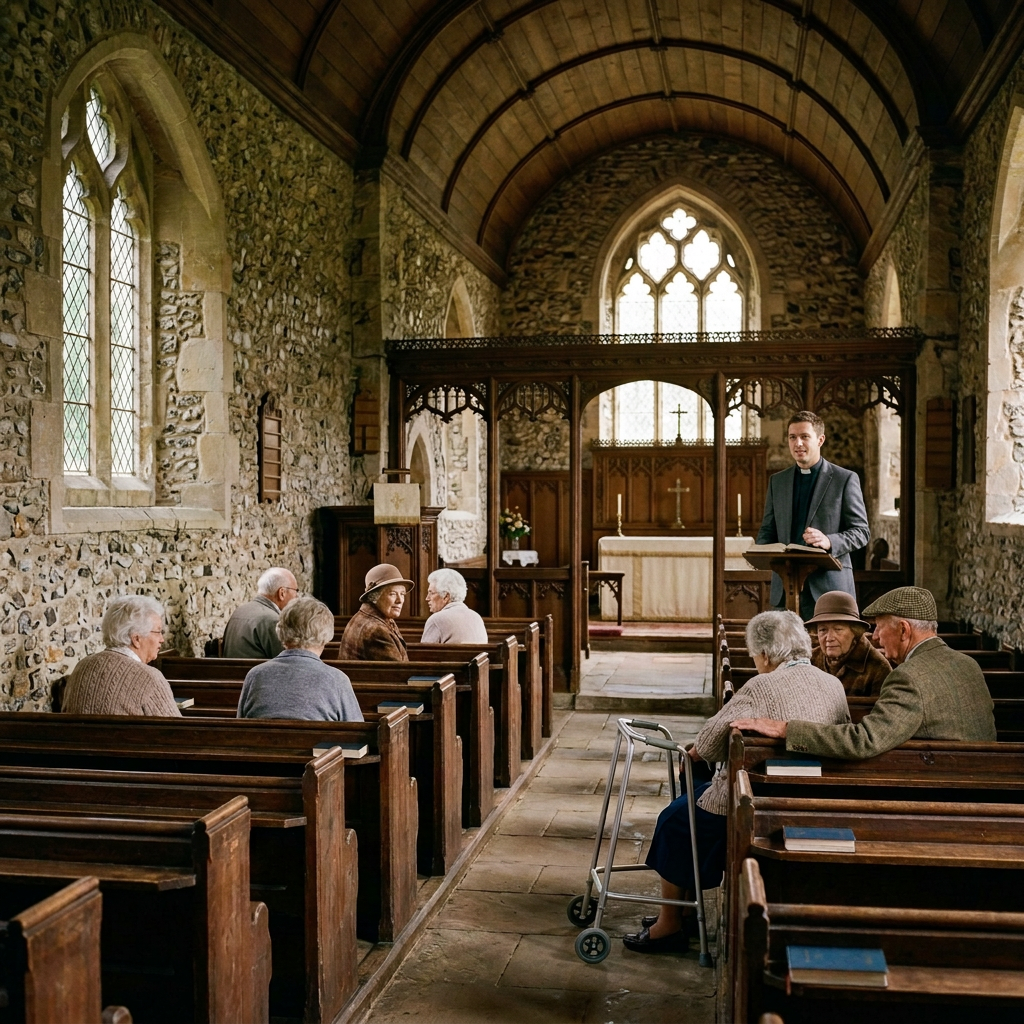
Four older adults walking through a churchyard beside a historic stone church

Rudeness Amidst the Holiday Cheer

The Bible’s Inclusivity in Creation

But Without Faith, It is Impossible to Have Religion

“I don’t have enough faith to be an atheist.”

I hear this from time to time, and it makes me sigh as I try to answer as respectfully as possible. Here’s my best effort: 

“As an atheist,” I say, “I have no faith at all. Instead, I look for truth through direct examination and critical thought.” 

It took a few years to get comfortable with the term “atheist.” I was raised to equate atheism with evil, and I had to summon my courage to come out and say I was one.

I finally got past the discomfort. However, I’m still not particularly satisfied with the term because I don’t like defining myself by what I don’t think. 

My values define me better. 

I often call myself a humanist because I value people and have spent my life helping them when possible. I value qualities that aid in the betterment of humanity, such as compassion, bravery, and generosity. I also love humor, beauty, passion, creativity, and human connection. 

I value gentleness, truth, and love, and I think those qualities can’t exist unless they are connected with each other. I hate lying and greed, which are also often associated with each other. I’m outraged by poverty, cruelty, unfairness, and violence. 

I value the scientific process, although I leaned more toward the humanities in school. I support education that teaches critical thinking, which can lead people to confront fallacies, correct mistakes, and motivate them to grow. I ask questions and engage in critical thought, and I appreciate clarity but leave room for discovery and possibility. 

Proponents of religions claim to promote virtue and wisdom, which, if true, would lead them to value many of the same things I do. But instead, they are often threatened if confronted by facts that challenge their assumptions based on their faith, and their fear can lead to denial, anger, and even violence.  

Some say my atheism is a form of religion. I don’t think so, but for the sake of discussion, if I were to establish a religion, here’s what it would include: 

First, no evangelism. By all means, let’s discuss, persuade each other, and even argue. But combining the promise of love with the threat of condemnation is manipulation, and even brainwashing.

Second, I enjoy watching events unfold, so I don’t need to guess the future and call it prophecy.   

Next, I welcome empirical study but not groundless faith.

Most religions establish rules for moral conduct. I realize that society must have various forms of legislation, and I am content to let the established entities continue to hammer those out, sometimes with my participation. But my religion does not have elaborate doctrinal laws to inflict on others. As a minister, I expended a ton of energy telling people what to think and do, but my new religion requires respecting people’s right to have their own thoughts and make their own decisions. 

Grammerly has just informed me that I’ve used the word “religion” too many times in this text, and I agree. This is why I left it behind for a life where I help others, observe what’s happening, and watch for what happens next.  

So a religion with no faith is no religion, and that suits me fine.

Essential Work (101st Post)

I’m scared like everyone else right now. I have one of those essential jobs where I come out of isolation to sell groceries to people, some of whom could be contagious. The anxiety hangs on me like an extra weight that I carry wherever I go. Sometimes it gets me down but it’s my job and there’s nothing to do but stand back up, carry on, and take precautions as best I can.

I also feel an exhilaration similar to when I was a minister and provided help in times of crisis. These days, while I may be an anonymous cashier, I get the occasional chance to encourage strangers as they pay for their groceries. Somehow, the risk makes the work feel more meaningful.

Many folks go to the supermarket because they’re hungry not only for food but for company and so shopping is their social event for the day. I smile and joke with them about how our only recreation now is Netflix and fattening food. And we’ll laugh about not having any excuses to not clean house now. Then we’ll conclude our transactions and encourage each other to stay safe and healthy.

Some people are glum and focused inward. It’s a judgment call as to whether I should respect their privacy or go in to draw them out.

“It’s kind of scary out there, isn’t it?” I might say. Sometimes it’s enough to get them to share their stories:

“I never dreamed it would get this bad….”

“My mother is 78 years old with a heart condition….”

“I don’t know when I’ll go back to work again….”

“My child has asthma….”

I remember a man who murmured how afraid he was. I said I was too and then I searched for words that wouldn’t sound too preachy and would lend him courage. I said, “There’s nothing to do but hang in there, and that’s what you and I are going to do, huh?” He nodded and squared his shoulders as he walked out.

Another young man came through the line to purchase a cake and candles.

“Whose birthday is it?” I said.

“Mine,” he said shyly.

He was twenty-two that day. I asked if he had anyone who would celebrate with him and he shrugged saying he was by himself, unable to get home to his family who lived across an ocean from him. I thought about my sons who live far from me. I wanted to shake his hand, maybe pat his shoulder… oh hell, I wanted to give him a hug, but of course, we all have to keep our distance now.

So I gave a big smile and pointed at him, saying, “Happy birthday, my friend. I am very glad you were born twenty-two years ago.”

I cried when I told Sylvia about it later.

For me, being amidst the people, saying something that helps a little, and connecting for just a moment, gives me a boost and allows me to carry my own fear with a little more grace.

I like it even though it also brings back an old fatigue that always follows the exhilaration. I let it all go when I left the ministry but I always knew I’d somehow pick it up again, this time without the baggage of religion.

I’m going to work now. It’s essential.

Will God Answer for His Actions?

The following questions often lurk in the believer’s mind, especially at times like these when we are dealing with the COVID-19 virus.

Over my time as a minister, people whispered these questions to me, often ashamed to put them into words. I’m articulating them in hopes of engaging their thinking.
I’m not asking anyone to justify their theology to me. I don’t need to have answers to these questions anymore. However, I’m happy to have a discussion and I promise to reply back gently and genuinely. I’ll monitor the comments and omit any that are hostile or disrespectful.  


Why does God allow any disease to afflict us?

I used to deflect this one by saying God isn’t really doing this to us, but that in some way we’re doing it to ourselves. But if God is Lord of everything, doesn’t that make him responsible for everything including the COVID-19 virus?


Why does he indiscriminately hurt everyone?

Some say sickness is punishment for specific sins that some people are committing. For instance, it’s popular to blame the LGBT, saying we are all suffering for their sinful lifestyle. It’s an ugly accusation, and it makes no sense. Why wouldn’t God specifically target a group with whom he is angry?

Others say we’re being punished for the general sinfulness of the world, but that’s not really fair, either. Some are worse than others and some are more innocent.

I know–one sin is as bad as another in the Christian religion (James 2:10). But c’mon! We all know that isn’t so. Angry babies aren’t as guilty as bank robbers.


How does our suffering prove God’s love for us?

Some refer to Hebrews 12:6, saying that God isn’t out to hurt us but in fact is disciplining us because he loves us so much.

Really? Abusive parents say the same thing when they beat their children.


How does allowing us to suffer reveal God’s mercy?

Many say our suffering is a natural consequence of our actions. We bring it on ourselves and we have to get ourselves out of it. The babies have to suffer right along with the bank robbers because we brought it on ourselves collectively.

So… God won’t help us out with this because it’s our fault? Isn’t he supposed to be merciful? Isn’t he interested in “saving us from our sins?” When my kids were about to hurt themselves seriously, I intervened. The heavenly father doesn’t do that, too?


Is God just… mean?

Could it be that God doesn’t really love us? Is he playing with us for his amusement and then demanding us to believe he isn’t mean, but in fact is loving and kind.? Again, I refer back to the comparison of an abusive parent.


Is God limited in his power?

Maybe God does care for us but he’s not infinitely powerful, as he’s purported to be. After the creation, the plagues, and the resurrection, maybe he tapped out and now we’re on our own.

Anytime we get this far in the conversation, someone wants to say that God’s ways are not our ways and God’s thoughts are not our thoughts (Isaiah 55:8-9), meaning that we’re not smart enough to comprehend the ways of God.

You’re telling me that God, who supposedly had a whole Bible to reveal himself to us, whose son spent all that time teaching about the kingdom of heaven, has failed in the attempt to communicate? Isn’t he great enough to overcome our weaknesses?


Is it wrong to ask questions?

Now we’re at the point where someone says I should have faith in God’s power and good intentions. We shouldn’t allow ourselves to question God. Such questions create doubt. We should not “allow Satan a foothold….”

Really? No questions at all? We’re all sort of an interested party here when it comes to COVID-19. If he’s doing this to us or simply allowing this to happen when he could stop it, is it fair for him to get angry when we ask questions?

Let’s just concede that I’m being deliberately dense, that I can’t see the truth because I don’t want to see it, and I would be much better off if I accepted God’s will without question.

Is that working for you? Are you relieved of fear? Are you experiencing that peace that passes understanding?

If you say yes, I don’t believe you.

I spent thirty-five years trying to allay the fear and anxiety that people in my churches experienced. I tried to explain away the inconsistencies. I tried to help them feel better with the blessed assurance that Jesus was theirs. But it was a temporary fix, at best.


Final Questions:

Why spend time praying to a God who doesn’t answer back, who doesn’t explain himself, and who doesn’t intervene like He promises? Why sing to him and dedicate group praise to him? What exactly has he done to deserve any of our attention as a time when we need each other so much?

People Are Being Beaten

He was cautious. Forty years ago, life was risky for a gay person. He approached a young acquaintance and asked if he was interested in a sexual encounter. The young man seemed to agree with him and they decided to meet at a deserted location. But when they met, the young man beat the guy.

The young man told his friends about it, bragging about how he had blackened the guy’s eyes, broken his nose, and cracked his ribs. His pals approved figuring the gay guy had it coming.

Forty years later, some progress has been made but it’s still risky for people of the LGBT community. They can still get beaten and in some parts of the world, they’re killed. However even if they don’t risk physical injury, they’re still often targets of ridicule and derision. They’re still regarded as unworthy of equal consideration even if the law says they must be given equal rights.

How would you feel to be regarded as “not normal”?

What if your family was embarrassed about you? How would it feel to be told that living alone was the only honorable path for you? What would you think if your church told you that they loved you “anyway,” even if you are an abomination—and, by the way, those are some of the more tolerant churches. Most churches still blame the LGBT for natural disasters and the fall of civilizations—and I wish I was joking.

It’s a sin, the religious folk say. It goes against the Bible.

I don’t care what the Bible says–they’re wrong. Quoting the Bible and claiming to speak for God makes them even more wrong.

I’ve been hoping the United Methodist Church, the denomination where I served as a minister, would make some changes in their attitude toward the LGBT. They’re going to have an expensive, divisive conference to talk about the ordination of non-heterosexual people and same sex marriage. I’ve only just now realized that no one is going to change their minds. The only thing I see happening is that the LGBT will be more resented afterwards.

I want to shout at my former colleagues: “Come on! We were supposed to be the world changers! We were supposed to be champions of the oppressed!”

Come on!

People are being beaten!

A Challenge to My Christian Friends

Tell about your theology using critical reasoning.  How do you know that what you believe is true? 

Everybody in seminary has to do this. It’s an exercise to separate fact from feeling and truth from bias.  Many are quite shaken by the assignment.

Which reminds me… before you read further, let me say two things. First, if you’re in a vulnerable state, such as grief or illness, just skip over this post. Second, if you read further and it’s too disturbing, please understand that you can walk away from your computer screen and go right back to the security of your faith. I’ll understand.

I’m asking you to show me that your God is real.  Don’t tell me to go read a book or watch a movie or listen to your special preacher.  1 Peter 3:15 says to always be ready to give an account of your hope to someone who asks. So here I am, asking. 

Ready? Let’s begin.   

Can you describe God without using imagery? 

A clever story isn’t going to get the job done.  I’ve heard a lot of them and at one time I told them from the pulpit.  Metaphors, analogies, illustrations, and other literary devices can be valuable in their descriptive powers but they don’t prove anything. 

I’m aware that this takes out your best stuff: All those great preacher stories. And the biblical images: God is love. God is light. He is Abba Father. God is a nursing mother,  the Lord is our Shepherd.  Don’t forget the more severe ones where God is a Judge or a defending warrior.  And then there’s all that stuff in Revelation.

It’s all quite dramatic but it’s not proof.  If your God is real, you shouldn’t have to rely on imagery to talk about him. 

On to the next question:  

Can your God be described without quoting the Bible?

I’m a skeptic, and you can understand that your telling me the Bible is the inspired Word of God because the Bible says so just isn’t going to cut it.  Besides, truth is truth and it can stand on its own without having to quote chapter and verse.  So tell me something true.  

And don’t tell me to just open my eyes, look up, and see…. That’s subjective stuff.  Pointing to a flower, or a rhinoceros, or the sky and telling me that God made it… that’s not proof.  Neither is it proof when events worked out favorably after you prayed–that’s still subjective.  

This is the point where most people get exasperated, throw up their hands and mutter something about casting their pearls before swine.  You’ll want to dismiss me by saying God will remain a mystery as long as I refuse to believe.  But I don’t refuse to believe. I always wanted to believe.  I’ve spent my life trying to believe.  

So don’t be ashamed of your gospel.  You want to stand up for Jesus, don’t you?  You want to win me over don’t you? Wouldn’t that be a feather in your cap?  

However, you should be fair.  I want the chance to persuade you, too, not because I want you to come over to my side and not because I’m trying to deliver you to the devil.  I aim to win you over to yourself where you can own your thoughts and make your choices.   

I want to engage in real conversation.  I’ll try very hard to be respectful. I know that many of us atheists can get cranky and perhaps you can understand where that comes from when you realize that many of them have been ridiculed, excluded, and attacked by the people they love. Some have lost everything—jobs, marriages, family, children…. But I promise I won’t be mean to you, and I’ll ask my atheist friends who comment here to do the same.  

So talk to me in the comment section. Or you can email me, if you like, at damercer1961@gmail.com.  

Church Camp

I tried to love church camp like my colleagues claimed to, but I couldn’t. Being away from my family for a week or two, exposed to nature’s bugs, skunks, and snakes, plus sleeping in an unairconditioned cabin with a bunch of preadolescent boys was never my idea of a good time.

Call me a poor sport. Call me a sissy. Just don’t call me to be a camp counselor ever again.

But more importantly than my discomfort, I have some real concerns for the kids that attend.

First, let me say I’ve hesitated to speak about this because I have dear friends who have invested themselves in giving kids good experiences in camp. They have no intention of engineering a manipulative atmosphere as revealed in the documentary, Jesus Camp.  I’ll even agree that many camp leaders, especially in United Methodist camps, are diligent in showing respect for the campers.  Furthermore, many people tell me they have great memories of attending church camp.

I believe them but I’m still concerned. I say that even with the best intentions, there’s a great deal of manipulation happening in church camps.

Tell me I’m wrong… that these elements are not in church camps:

Isolation where young ones are away from home and family.

Sleep deprivation where they wake up early and stay up late.

Exhaustion from physical activities including long hikes.

Indoctrination from the small group sharing sessions, exciting music, emotional storytelling, using scripture like incantations, and pressuring the children to give their hearts to Jesus.

Of course the kids respond to the invitation… sobbing as they stumble up the aisles, offering themselves to God, mistaking their fatigue for spirituality.

I actually helped at these camps, thinking it was good for the kids. But I’ve changed my mind and I’m sorry I was ever a part of them. Again, I don’t think those who led these camps meant to hurt anyone. They were trying to help, to give kids a good experience.

But I still think it’s wrong.

Mirror Mirror

I wrote an anonymous blog for several years called “Clergy Guy,” and it chronicled my thoughts and struggles. I’ve taken it off line and don’t know what to do with it, but I came across this entry from five years ago that I’ll share with you.  It’s about meeting my friend Larry Stevens who goes around the country singing gospel hymns mostly for nursing homes and small churches.  I met him when I was exhausted and sad. He was kind to me without knowing any details. 

I’ve edited the original post a bit.

****************

December 10, 2013

A guy showed up at the nursing home just as I was about to begin worship time. I thought he was a street person because of the worn clothes and uncut hair, but he explained that he traveled from town to town singing gospel songs to nursing home residents.  He showed me his beautiful Martin guitar that a friend gave it to him in support of his ministry. In fact he has several friends who regularly support him in his work. 

I was glad he showed up because I was very tired that day and didn’t feel like singing, so I invited him to do his thing.

He played for them for about an hour, singing the old hymns like I do, telling the same really old jokes and stories that I always tell. At the end he went to all the resident, shaking their hands and patting their shoulders, just like I do.

He held the hand of one nursing home resident and beamed into her face, and she looked over at me and said, “Pastor, he’s a lot like you!” I looked again and he did resemble me a little.

After I arranged to have a hotel room provided for him that night, I took him to lunch and bought us hamburgers. While we ate, he asked about my family. I told him we had two teenage boys. He asked if they ever gave me any problems.  I said no, that they had been free of trouble, made straight As and always made me proud.

“I wish I could claim credit for them,” I said, “But the truth is that they were born this way.”  

I always say that, but this time I went on and told him the rest of the story. “The fact is I haven’t done enough for them.  I’ve left them alone too much. I’ve worked too much, and been too tired to do much for them.”

My throat closed and my eyes filled up. I never told anyone that part. He reached up and put his hand on my shoulder without saying anything–the same exact gesture I had done for countless people. 

I looked at him some more.  He and I shared the same crinkly smile lines around sad eyes.  I could see the same dimples that people say I have behind the beard. He was almost the same size as me (which is substantial), and he had an easy manner which is how I appear to most people. He’s even diabetic like me. 

It felt like I was looking in a mirror at an image of me that was five years older than I am now. And I got to wondering if he actually was me, sent from the near future to bless me enough to keep me from cracking up….

*******************

It is five years later. At the time I thought it might be nice to simply leave my present life and travel down the road singing for people like he did.  But in fact our paths have gone separate ways as have our beliefs.  I’m hoping that he is happy where he is going, as am I. 

This is Larry Stevens and me: 

Larry Stevens and me
David Mercer and Larry Stevens

Larry Stevens is still doing his thing only he expanded his travels to include Israel and Australia.  He chronicles his travels at  https://larryeugenestevens.blogspot.com/