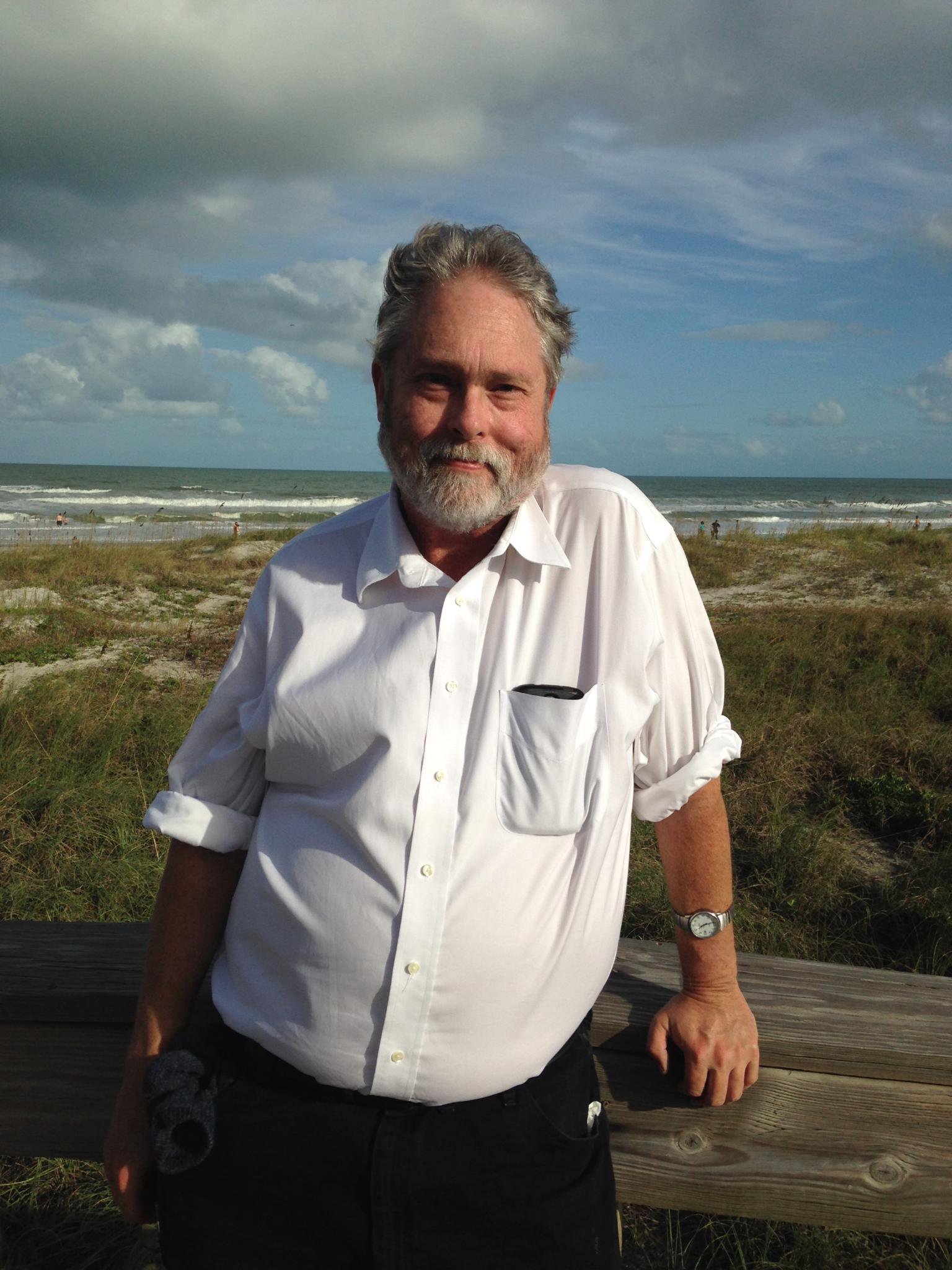
Battle Weary

Written sometime in 2014, when I was still a minister, trying to figure out what I was going to do with my life.

I don’t like to be categorized. I grew up with fundamentalists I still love but have difficulty being friends with them. I don’t always like being pegged as a liberal theologian because there’s a lot of intellectual crap that comes from that camp, too. And while I resonate with many atheists these days, so many of them are just plain assholes, I’m sorry to say. 

There’s no way to have a real conversation with folks in any of these groups. Everything is reduced to angry arguments, and no one is allowed to think. Every camp would try to define me in ways that are not accurate, even while I’m still sussing out what I think.

I can’t accept the image of the all-knowing, violent, but benevolent daddy of the heavens. But I still think there may be a spiritual component to life, and I’d like to inch my way through the darkness to find out about it, assuming it exists. And I’d like to do it without having to defend myself against multiple opponents.

I’m tired of conflict with people in church, theology, politics, and social justice issues. The battles in these arenas aren’t what I want to spend my time on. But I still want to help people. 

But I need to convalesce for a while. Is that possible? Could loved ones and enemies alike leave me alone for just a while? I want to sit in the dark, away from all the craziness and violence that rages inside and outside of me, and have some quiet. 

But I’m also tired of being alone, so… could I have some gentle people around me who like conversation, would share music, and look at art with me? 

I wouldn’t do it for the rest of my life. There’s still fire in the belly, and someone will always need help. I want to be there for them.    

But could I please rest a while? 

************************************************************

Addendum:

Nine years later, I’ve gotten some rest, and Sylvia shares conversation, music, and art with me. For someone who said he was tired, I have to admit that I like getting into a good argument these days. However, I’d much rather have good conversation.

Bathrooms, Bibles, and Sporting Events

A Christian psychologist, educator, and activist has expressed compassion for transgender people because he thinks they are confused and misdirected. But he also suggested they deserved to be beaten if they stepped into the wrong restroom. Some religious leaders say even worse things from their pulpits: that transgender people should be executed, citing ancient scriptures as their justification. But most of the conversation I hear about transgender people comes from those who vent their outrage about sports, citing a tiny percentage of transgender people who allegedly compete unfairly.

I wish I could address these people, although I’m sure they’re not reading this, or anything else. Nonetheless, I wish I could say:

Just admit that transgender people scare you, and you’d rather they went back into hiding or died because you don’t want to change your understanding of gender and biology. I understand it’s scary to grow up and learn something new because everything would be more complicated, and besides, you’d have to admit that you were wrong! But it beats your hiding behind bathrooms, Bibles, and sporting events to justify your attacks—that’s just pitiful.

It’s more complicated than that, you say? I agree, and rather than beating them up or killing them, we should take the time to listen to transgender persons (and they are persons) in order to understand them better. But that’s not happening. Instead, many would rather make laws requiring doctors to withhold treatment, teachers to withhold information, and social workers to pull children from their homes. Rather than listening, discussing, and learning, people are waging war against a very small minority.

Why? 

Why are you so scared? Transgender people are not trying to overthrow the government. They are not predatory. They’re not hurting the economy. Rather than threatening anyone, they are being threatened, often with injury and death.

To all of you who want to beat up someone in a public bathroom like the Christian psychologist suggested, I say you’re chicken. Why don’t you show some real guts and face yourself? 

Trigger Point

I had a conversation with a friend where I was triggered, setting off a chain reaction of memories and feelings going way back to childhood. Even though I was trying to be supportive and affirming, my friend criticized my use of words, saying I was no better than her enemies who hurt her and that my gestures of past support were meaningless.

A few days later, I realized my friend was triggered too, but I decided to let her take care of herself while I sorted through my own stuff.

This conversation took me back to childhood, where no matter what I did, it was not good enough. No matter how hard I tried to please him, my father would still criticize, ridicule, or vent his wrath at me. No matter how much I tried to read his mood and say the right thing, he would become enraged in the blink of an eye. And if my work were occasionally exemplary, he would be distressed and try to find a way to belittle me—even when I was a small child.

I found many people like him in church. Something about the culture attracts bullies, and conditions people to become childish, demanding, and selfish while others, maybe most, serve as their victims.

So, the Facebook conversation triggered me, and all these memories with long-suppressed feelings exploded in me. I shouted at the top of my voice in front of Sylvia:

“I have given my WHOLE LIFE to helping others. MY WHOLE LIFE, I have tried to help people find healing. MY WHOLE LIFE, I have tried to help the vulnerable. And MY WHOLE LIFE, people have criticized me for not doing it well enough, for not saying it perfectly, for not having tried hard enough.”

I shouted until I lost my voice and was still hoarse two days later.

To those who have harmed me through their dishonest, cowardly, bullying tactics, I say:

“I am ENRAGED at you who called me friend or family. How dare you take my best efforts and toss them aside like used tissue. How dare you mock, ridicule, and gossip about me behind my back.

“I have HAD ENOUGH. I have TRIED ENOUGH! I have GIVEN ENOUGH. You can find someone else to be unhappy with because I’m done with you.

When I fell silent, Sylvia said, “You’re not mad at me, are you?”

“No. Did I scare you?”

“No,” she laughed. “The cat hid under the sofa, but I thought it was sexy.’

I know that none of the individuals I’m addressing will recognize themselves. However, some of my fellow victims will feel needlessly guilty, afraid that I’m angry toward them. Perhaps they should go easy on themselves.

While this was a trigger point, it could be a turning point where I let go of this package of guilt, obligation, rage, and fatigue.

That Guy

It was late, already five minutes after closing. One customer, an older gentleman, ambled to the register with his cartful of groceries. He was pleasant enough, chatting with each of us as we rang up his groceries.  But he turned out to be That Guy.

That Guy… meaning the guy who, after all his groceries were rung up, looked at his receipt and said, “I thought the bacon was a two-for-one sale.”

I looked it up.  “Yessir, it’s on sale, but it’s buy two, get one free.”

“I guess I’ll get one more, then,” he said. “I’ll be right back.”

One of us would have quickly gotten it for him, but he wanted to do it himself.

That Guy ambled to the back of the empty store, took his time making his selection, then took a leisurely stroll back to the two of us who were waiting to help him.

“I can’t remember…,” he said. “Did I get maple-flavored bacon?”

“Yessir,” I said.

“Well, I don’t want maple.  I want the regular kind.”

We changed it for him, and then I rang it up.

“Wait,” he said. “How much is a single package of bacon.”

I told him.

“That’s too much to pay for bacon,” That Guy said.  “I don’t think I’ll buy any of it.”

I took it off the bill.

He gave us a cheerful goodbye as he shuffled off with his groceries. When he left the building, did he notice the parking lot was nearly empty?:

I wonder if That Guy thought we enjoyed his company so much that we appreciated staying late to accommodate him? Did he think his time was more valuable than ours? Did he care that the people who were waiting on him had sore feet and backs and had loved ones waiting for them to get home?

Were we even persons to him?

A Slow Fuse and Fast Food

So I had my character tested yesterday at McDonald’s when they got my order wrong, and I asked them to make it again. The girl looked peeved at having to do her job correctly, and she tossed the old order aside and took longer than necessary to remake it.

I was “hangry,” as they say these days, but I held my temper. I know what it’s like to serve the public, and I’ve vowed not to be one of those people who gets unpleasant over a hamburger.

I remember a few years back when I was not so sanguine about my fast food. It was at the same McDonald’s, and they got the order wrong like yesterday. That time I had gone through the drive-through, so I parked the car and went inside to get them to fix it.

I made a huffy remark about them getting my order wrong about half the time. The assistant manager tried to coach me: “If you say, ‘no cheese’ at the beginning, they’re more likely to get it right.”

I got exasperated at being told how to talk.

“I said no cheese, No Cheese, NO CHEESE!”

And I scared her. I was a big man shouting at a girl a third my size and age.

I clapped my hand over my mouth and took a breath.

“I’m sorry, ma’am,” I said in a quieter voice. “It’s just a burger, and I shouldn’t be so ugly to you about it. If you could just fix it for me….”

And she did.

A few weeks later, I ordered again from the same drive-through, and they got it wrong again. I parked the car, went inside, and politely asked them to fix it. I’ll give the two young men credit for trying, but they got it wrong a second time. And then a third time.

Just then, I heard another drive-through customer screaming into the speaker that their order was wrong, too. The two guys were overwhelmed and froze for a moment. They looked at each other, at the blaring speaker, and then at me.

“Take care of your customer outside,” I said quietly. “Then come back and fix my order.”

It took them a long time to get back to me. One of them handed me the bag, and I noticed his hands shaking.

“Is this your first day on the job?” I asked.

He nodded.

“I’ve had them, too,” I said. “You’ll get the hang of it.”

I drove home, brought the burgers inside, and my wife and I ate them while we watched the news. It was the evening of January 6th, and we watched the coverage again of a gang of thugs laying siege to the nation’s Capital earlier that day, hurting some of their fellow citizens and trying to harm their elected officials.

I have never been so ashamed of our country. And I didn’t want to remotely act like them over a hamburger.

But Without Faith, It is Impossible to Have Religion

“I don’t have enough faith to be an atheist.”

I hear this from time to time, and it makes me sigh as I try to answer as respectfully as possible. Here’s my best effort: 

“As an atheist,” I say, “I have no faith at all. Instead, I look for truth through direct examination and critical thought.” 

It took a few years to get comfortable with the term “atheist.” I was raised to equate atheism with evil, and I had to summon my courage to come out and say I was one.

I finally got past the discomfort. However, I’m still not particularly satisfied with the term because I don’t like defining myself by what I don’t think. 

My values define me better. 

I often call myself a humanist because I value people and have spent my life helping them when possible. I value qualities that aid in the betterment of humanity, such as compassion, bravery, and generosity. I also love humor, beauty, passion, creativity, and human connection. 

I value gentleness, truth, and love, and I think those qualities can’t exist unless they are connected with each other. I hate lying and greed, which are also often associated with each other. I’m outraged by poverty, cruelty, unfairness, and violence. 

I value the scientific process, although I leaned more toward the humanities in school. I support education that teaches critical thinking, which can lead people to confront fallacies, correct mistakes, and motivate them to grow. I ask questions and engage in critical thought, and I appreciate clarity but leave room for discovery and possibility. 

Proponents of religions claim to promote virtue and wisdom, which, if true, would lead them to value many of the same things I do. But instead, they are often threatened if confronted by facts that challenge their assumptions based on their faith, and their fear can lead to denial, anger, and even violence.  

Some say my atheism is a form of religion. I don’t think so, but for the sake of discussion, if I were to establish a religion, here’s what it would include: 

First, no evangelism. By all means, let’s discuss, persuade each other, and even argue. But combining the promise of love with the threat of condemnation is manipulation, and even brainwashing.

Second, I enjoy watching events unfold, so I don’t need to guess the future and call it prophecy.   

Next, I welcome empirical study but not groundless faith.

Most religions establish rules for moral conduct. I realize that society must have various forms of legislation, and I am content to let the established entities continue to hammer those out, sometimes with my participation. But my religion does not have elaborate doctrinal laws to inflict on others. As a minister, I expended a ton of energy telling people what to think and do, but my new religion requires respecting people’s right to have their own thoughts and make their own decisions. 

Grammerly has just informed me that I’ve used the word “religion” too many times in this text, and I agree. This is why I left it behind for a life where I help others, observe what’s happening, and watch for what happens next.  

So a religion with no faith is no religion, and that suits me fine.

I Needed to Help Someone

It was incredibly busy at the store on Christmas Eve, and I’d been having an awful day. I missed my kids and felt a lot of grief from past years. And the store’s holiday music rankled me. In our final hour, the crowd was at its largest, and the atmosphere was getting more frantic.

Long lines had formed at every register. A woman and a teenage boy brought their fully laden cart to the self-checkout. She was a little older, and I wondered if she was the boy’s grandmother. She struggled with the register, then looked up, alarmed. With a dozen people waiting behind her, she realized she’d forgotten something.

She turned to me, “I forgot the sugar,” she said. “Can you get some for me?”

“Ma’am, I would, but I can’t leave my station.”

This didn’t seem like much of a problem. Either she or the boy could simply go get it.

“I don’t want to leave him alone,” she said, looking desperate. I looked at the boy more closely. He was the size of a thirteen-year-old, but his face seemed younger.

“You’re going to have to go get it,” she said to him.

He nodded, eager to take off.

“Listen!” she said. She held his face to look him in the eye, and she talked as if he were much younger. “Go straight there and come straight back. Don’t talk to or follow anyone. Make sure you get sugar and nothing else!”

He took off, while she watched.

“He really needs help, doesn’t he?” I said.

She nodded, distressed.

“He has autism,” she said.

“Okay.”

I called to my supervisor, “Can you cover for me?”

“Of course,” she said.

I waded through the crowd and caught up with him. He was about to pick up some flour rather than sugar.

“Hi,” I said. “That looks the same, but the sugar is further down here, see?”

He picked up the sugar, and I walked with him back to his mom, who smiled gratefully.

“I didn’t understand what was going on, ma’am. I’m always happy to help.”

Helping that boy became the day’s most important moment, and it made my sadness go away. My own children may have been far away, but I could help this one.

When they were safely out the door, I cried briefly, and then went back to work.

Reflection on my Previous Life

I got out in 2016

I still cry every day. 

I let everyone down in my previous life: my church, my friends, my family, and my kids.

All I can say is I gave you everything I had.

I’m grateful for my new life, and I’m trying not to waste it.

But I still love you.

Nearly Done

This time I visit myself not long ago while I was still on the job

On a Sunday afternoon after church, the old pastor goes to the hospital to sit with the new widow.  Her husband, who suffered lifelong depression, had just carried out an oft-repeated threat and shot himself.

The pastor steps into the room and sees her sitting by the bed where the body lies, his head wrapped in a bloody rag. The Pastor sits next to her and listens as she shares the untold story of her watching him constantly over the years. If she went anywhere–the store or to church–she hurried back as fast as she could. On this occasion, the husband didn’t give her enough time to get back.    

They sit with the body for hours.  It takes all afternoon for the hospital, the funeral director, and the coroner to tend to the business of this man’s death. Eventually, the time and place of the funeral are set.

Before they take the body, the pastor stands over it and touches his arm. 

“I wish I had known,” he whispers.  “I’m sorry I didn’t help you.”

As the sun sets, everyone leaves the hospital.  As he drives home, the pastor prepares himself for the question the widow will ask him once the funeral is over, the relatives go home, and the shock has worn off:   

“Did my husband go to hell?”

He has had to answer that question many times over the years. He will take the widow’s hand and say quietly, “No, my friend. God does not punish anyone for being ill. Your husband has suffered enough and now is safe with Jesus.”

He doesn’t believe in God or heaven or hell anymore, but she’ll need to hear the words. 

He pulls into the garage. No one else is home. He changes clothes and sits in his recliner as the darkness of the evening sets in. After thirty-five years of this work, the pastor is exhausted and numb.

“Hang on,” I whisper to him, “You’re nearly done.”

A Dark College and a Cold Bench

Like the last post, I imagine going to visit myself when I was young. This was when I first attended college. 

Friday night. The sun just went down, and it’s dark at Abilene Christian University. The ministerial student sits by himself on the concrete bench by the fountain at the center of the deserted campus. Most students have found a date or are out partying in groups. 

The young man is nineteen years old, far from home, an unnoticed mediocre student. 

Whenever he speaks up in class to ask a question or offer feedback, the professors give him a puzzled look, as if they think he is a moron, but they are too polite to say so. His classmates offer sideways glances as if he’s some creature from outer space. So he grew quiet very quickly after the first day of class.

I sit next to him, my hands clasped just like his, and wait with him. The bench is just as cold and hard as I remember. While he bows his head, I look around.  It was also as I remembered, a colossal, whitewashed tomb filled with the bones of dead people—some of whom were still up and teaching.

“It’s a dreadful place,” I say to the boy. “An institution trying to maintain itself, toadying to the monied members of a stultifying religion. No wonder you feel so out of place and alone. You are alive with creativity, passion, and wonder. You will never be happy here with the dead.

I wonder why we felt we had to be here.

The boy sighs. 

“I wish someone would tell you that it doesn’t have to be this way. There are colleges out there that you would love, that would fill your mind with ideas. These people don’t deserve you! There are others who are waiting for you to enter their space, and they will light up when they see you.  I’m sorry it will take so long for you to find them and for them to find you.”

We sit in silence.

“Why don’t you call your parents? They miss you.”

The boy sighs once more, then stands and heads toward his dorm.