Please Don’t Despise Poor People

She came to my office in tears and showed me a cut-off notice for her electricity. A lot of people passed through our small town and stopped at church to ask for help. We tried but we often had to turn people down because of our limitations. However, this woman was a local whom I often saw working at two different jobs: one at the convenience store, the other at the café. I also knew that she cleaned several houses in the community. 

But as hard as she worked, she couldn’t pay all her bills. She applied for food stamps and had been turned down. 

I arranged for the church pay her bill and then I went with her to the Department of Human Services to help her apply again for aid.

The ridiculous amount of paperwork was daunting, even to me, and I was a college graduate.  The forms were in English and while the woman spoke the language well enough, she didn’t read it well.  When we waded through it all and turned it in, the case manager glanced at it and immediately gave her some emergency food stamps, then arranged for her to get regular aid. 

I’ve been hearing from some of my friends that they are tired of their tax dollars being used to enable people who were too lazy to work.  But this lady wasn’t lazy in the least. She worked as hard as anyone I knew.

There are many working poor in this country, as well as unemployed people who aren’t lazy. 

These days, I’m a cashier at the grocery store and people often buy their food with funds from the state.  They have to shop carefully because the state will only buy certain brands and amounts.  If they pick up the wrong brand or size of package, it holds up the line until we can resolve the issues.  Many of them are young women with small children and English is not their first language.  They’re often tired, frustrated, and embarrassed.

I often share with them that if it hadn’t been for food stamps when I was a young father, my own children would have gone hungry, even though I often worked two jobs at the same time. I never have the time to tell them that my wife’s family had to have help when her father became ill and couldn’t work anymore. Plus, I have a friend who often tells how her family depended on government aid when she was a child—she grew up to be a teacher and a counselor. 

I’ve been hearing from friends who are expressing their outrage that they work very hard, making it on their own, and they don’t expect the government to bail them out. Why should they be expected to share with others?

First, they’re not sharing that much.  The percentage of our taxes that go to caring for the poor is quite low compared to the cost of military expense, Social Security, Medicare, and even administrative costs. 

Second, I want to point out to people who are able to pay their bills aren’t really doing it on their own. They often have deep rooted family and community support.  Plus, we all benefit from government funds through public education, police protection, as well as a vast infrastructure that provides highways, electricity, and communication. 

Finally, I want to ask specifically some of my longtime friends: What about your Christian values? Your Bible talks a lot about caring for the poor.  Do the words of Jesus mean something to you, or is it just Sunday morning chitchat? By the way, I can tell you that your churches aren’t getting the job done.

I know that life is hard even those who have enough money (for now). But I wish folks would speak of their frustrations with more precision and knowledge without insulting people. Those people have names and like you, they’re doing the best they can.

And if you want things to change, do your homework and get in touch with your elected officials, rather than quoting wildly inaccurate, as well as hurtful, things on Facebook. 

Maybe Less Can Be More

In thirty-five years as a minister, I did my share of crisis work where I comforted people who were experiencing their worst and sometimes final moments of life. I was a pastor, a hospice chaplain, and even a volunteer ambulance driver.  I did funerals, visited the hospitals, and went out to scenes where someone had just died, either slowly or suddenly. 

It was rewarding work and after a lot of years I got good at it.

But the work also became more difficult as time went on. I felt the wounds of others more acutely and they accumulated somewhere within me. They’re still there.

In my last year, whenever I visited the hospitals or nursing homes, I’d start shaking before I entered the building. I would become dizzy and my heart would pound. I’d tamp it all down and force myself to go in and comfort the people.

A lot of things contributed to this anxiety, but suffice it to say I simply reached my limit. 

It has been nearly four years since I left professional ministry and I still feel like I’m convalescing.  The anxiety and grief can come flooding back when triggered at unpredictable moments.  A troubled person in the line at my register, a sad drama on TV, or sometimes just my thoughts during a quiet moment will trigger me and I’ll cry and shake like I did during my last year.    

On occasion, I still do funerals for those who need a humanist minister. I’m glad I can still be of help this way, but it costs me emotionally, and it takes at least a day to recover. My counselor suggested I allow myself that time instead of trying to ignore it and jump back into my normal schedule.

Maybe it’s okay to be sad about the past.

But is this all I can do from now on? Am I the guy who was once the starting quarterback but is now diminished to where I only play occasionally off the bench?

I can’t look at it like that. I have a whole life to live and it does not include becoming less as I get older. Maybe I’m quieter and less noticeable but I cannot be just… less. 

Maybe I’m still in the state of becoming and I’m actually more.  Being older, slower, more tender—maybe those are signs of development rather than diminishment.

I think I’ve been expecting to rest enough to where I can reclaim the energy I used to have and then step back into a life as intense as I once led. But I think I’m progressing to the next level of life. I choose to see becoming older and more tender as symptoms of growth and meaning rather than diminishment.

It feels like I’m less but maybe I’m more.

A Pin, a Bracelet…, and Community

I wear a lapel pin of the LGBTQ flag and a bracelet with rainbow colors. I rarely go without them because it’s my way of showing support to people I love.

A lesbian couple comes into the store regularly to shop for and deliver groceries to homes.  I commented on the Pride shirts they wore and showed them my pin and bracelet. They said I needed a shirt and I told them about the one I wear that says “Free Dad Hugs.” It made them smile and they told me I “rocked.” (I’m pretty sure that’s a good thing.) I look for them every day and wave when I see them.  

Recently, I worked at a different store and my first customer noticed the lapel pin. She spoke very little English and it took me some time to understand that she liked it. I had the feeling that we were addressing each other as parents as we smiled and wished each other well.

Later in the evening a young man came through the line and admired the pin and bracelet. He said, “Last month was Pride Month, you know.” I told him I had been aware of it. 

His eyes were a haunted mix of fatigue and defiance, as well as a touch of joy, I think.

“I’m proud of who I am,” he told me.

I said, “If it’s worth anything, I’m proud of you, too.

Then just last night, a beautiful teenage girl who bagged the groceries at my counter told me how much she appreciated my pin and my bracelet. “I haven’t told my parents yet,” she confided. She shared more with me, enough for me to realize she was probably right to wait.

She came up to me later and said, “I’ve gotten to do a lot of different tasks tonight… not just bagging. It makes me feel like I’m part of something bigger.”

Wearing the pin and the bracelet makes me feel that way too. I wonder if she and I were actually feeling the same thing: part a much bigger community.

Welcoming the Black Man

A casually dressed young man came to my register at the grocery store.  He looked down, occasionally flashing me a sullen, almost angry look as he offered terse responses to my attempt at conversation.  Empath that I am, I absorbed his negativity and I found myself feeling angry, too, and my responses toward him became curter, as well.    

A colleague came over to bag the items, he recognized the young man and greeted him with a big smile. “Hi there, young man,” he boomed. “It’s good to see you again! How have you been?”

The young fellow looked up and became a different person. The tension left his face and he offered a big, wonderful smile at the man who was glad to see him. I found myself warming to him and we began to respond more positively toward each other.   

I forgot to mention that the young man was black and so was my colleague. And just in case you didn’t know it before now… I’m an old white guy.

Not long ago, George Floyd, a black man from Minnesota was killed by a white police officer while other officers watched and did nothing. The event sparked protests throughout the nation. Some of those protests evolved into violent riots.

Racism is the current topic of conversation, surpassing even the COVID pandemic. Once again, the arguments erupt about who is racist and who isn’t,  and who is a victim and who is an oppressor.  On the one hand, I’m angered and tired of the mostly stupid protestations of white people. I’m shocked at how easily we lapse into talking about anything except the violent death of a black man at the hands of a public servant who swore to protect others.

Back to the young Black man who came through my line. For one moment, my colleague made him feel at home, and I wondered… how often does this person get to feel safe?

How would it feel to walk into a grocery store where people watched to make sure I didn’t steal anything?  How would it feel for people to be angry and hostile at me on sight? How would it feel to get into my car and worry that I might be stopped, beaten, and arrested by the police? I’m sure I’d feel pretty angry, but I’d try to keep it tamped down to avoid trouble. Is that how this man felt as he checked out his groceries at my register?  

Repressed feelings tend to come out at some point, and anger can be explosive. 

Now, consider a certain segment of the population, say African Americans, whose ancestors were slaves, whose brothers and sisters are in prison, who are often poorer than white people. Suppose they are told constantly to be quiet and not cause any trouble?

It might be hard to comply. I’m pretty sure I couldn’t. 

I’m overwhelmed at these recent events. I have nothing I can say or do that will help.  I’m just a clerk at the grocery store.  I can’t change the minds of racists. I probably can’t protect people from being mistreated.  But I’ll be as kind and helpful as I can to everyone I meet. And the next time that young man comes through my line, I will focus all my good will and respect toward him. 

This Is Not New

Today’s guest blogger is my wife, Sylvia Kirkendoll, who shares her observations of how racial injustice has changed so little in her lifetime. 

**************

This is not new.  And it shouldn’t be a surprise. The only thing that should shock anyone is that rioting still seems to be a necessary last resort because things have changed so little. 

Sure, many laws and regulations have changed. Opportunities have opened.  We elected a President who is a man of color. But those are only a start. The cancer was treated enough to reduce its outward symptoms for a time but It is still there.  Far too many people are infected with the same bigotries as their grandparents and parents and continue to pass the disease to their children and grandchildren. 
 
It’s usually not quite so blatant as it was in 1971 when buses of black children arriving at the previously all-white junior high school I attended were greeted with jeers and epithets spewing from angry white parents.
 
I’d like to say things have changed since 1978 when I watched a friend save a toddler’s life by snatching her from the path of a bus, only to have the parents react in horror that a black man had the temerity to put his hands on their child.
 
I’d like to say things have changed since 1967 when a neighbor called my mother to warn her that a young black man was trying to sell magazines door-to-door. At the time the call came, Mom was fixing the young man a cup of coffee and they were talking about his plans for college and eventually law school. Mom told the neighbor that no, she’d damned well better not call the police
 
I’d like to say that things have changed since the time the evening news played alternating clips of protests, riots, and white folks blaming it all on agitators who just want to make trouble. Mom went ballistic that time. “It’s a good thing I’m not a black man cause I sure wouldn’t live long. I’d take a gun and kill as many of the white bastards as I could before they got me.” That was more than 50 years ago, but it could be today.
 
Picnicking while black. Jogging while black. Birding while black. Gardening in your front yard while black. Taking out the trash while black. Vacationing while black. It’s just a variation on the same old theme: selling magazines while black, saving a child’s life while black, attending school while black, and on and on and on. 
 
“…I think America must see that riots do not develop out of thin air. … And so in a real sense, our nation’s summers of riots are caused by our nation’s winters of delay. And as long as America postpones justice, we stand in the position of having these recurrences of violence and riots over and over again.” 1967 – Martin Luther King, Jr.
******************
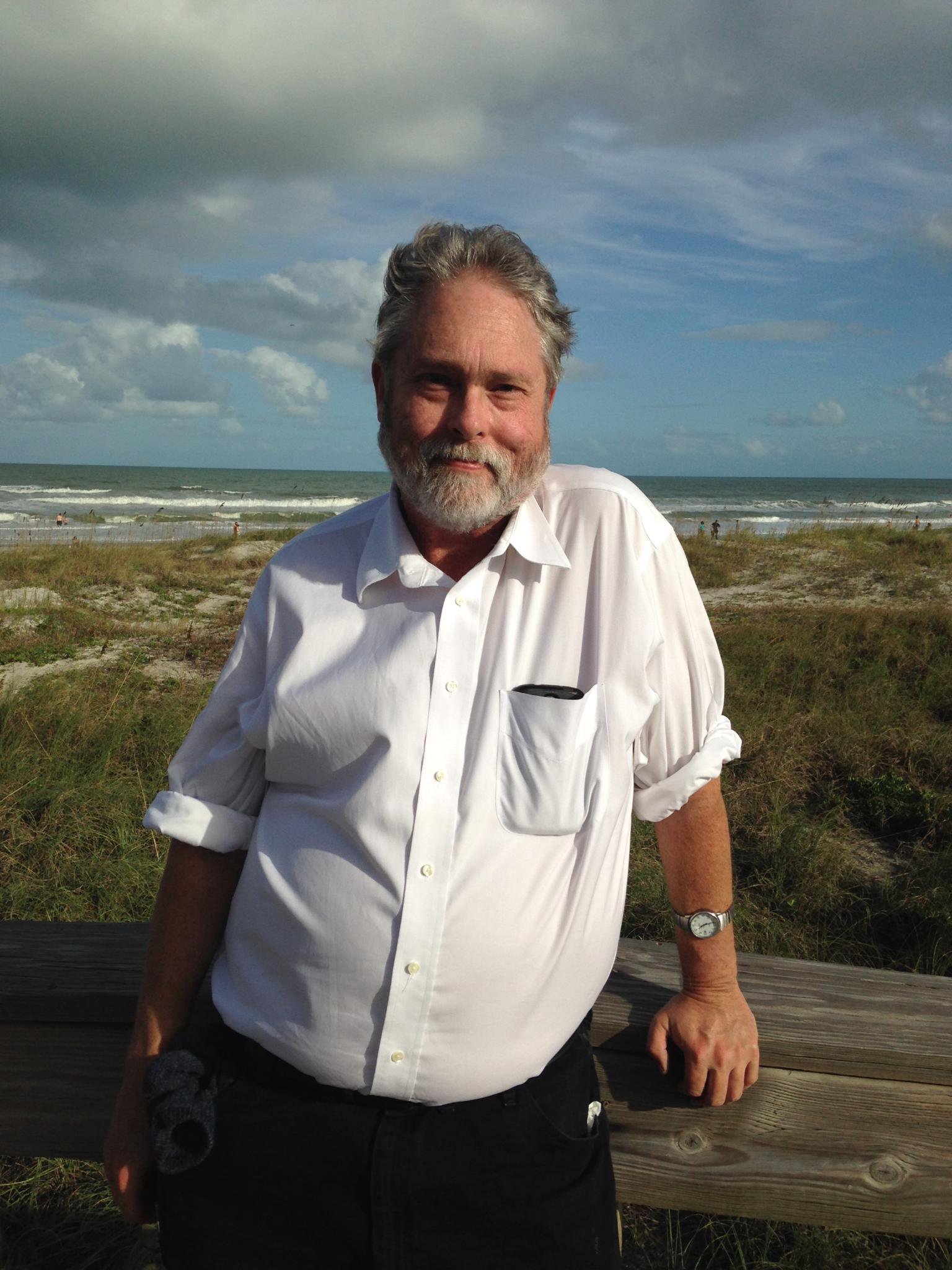
Sylvia Kirkendoll is an artist, photographer, singer, and private pilot. She works for a title company as Manager of Strategic Analytics and is married to David Mercer.

bio pic of sylvia and me
Sylvia Kirkendoll and David Mercer

A Conspiracy of Silence

My aunt was funny, brash, and loving. Athletic and adventurous in her younger days, tender and caring until the day she died, she was adored by everyone.

But she had a secret, sort of….

She was a lesbian.

Everyone knew but they never spoke of it. Perhaps it was best that way since everyone thought it was shameful and wicked. Silence saved us all from discomfort and embarrassment. It was easier.

Okay, maybe not easier, but silence at least made life safer because if she had been open about herself, she could have been in physical danger at times. More recently, I’ve wondered about the emotional and psychological pain she suffered as a consequence of her (and our) silence.

I was still a minister when I had my last face-to-face conversation with Mom before she died. It was early in the morning and we sat at the kitchen table while I told her that Christianity had been wrong to condemn the LGBTQ and I had been wrong in standing by silently. It was my intention, I told her, to begin a support group within my church where the LGBTQ in our community could come to talk and worship. However, while most of my congregation was on board, I still had to find a way to provide privacy for them because Oklahoma, like a lot of regions, is still not friendly to the LGBTQ*

Mom showed a great deal of interest, which surprised me. I thought she’d be uncomfortable, maybe even a little afraid for me. However, she asked me more about my thoughts regarding the scriptures and church doctrine. I told her that Jesus never made an issue of people’s sexuality, and he defended those who had been shamed by society. He said that people would be welcomed into heaven based on acts of love, not their religion.

She nodded and then she told me about her recently deceased sister.

Years before when they were much younger, they had attended a weeklong religious revival. On the last evening, the preacher gave the invitation and while the song played “Just As I Am,” he waited for people to come down the aisle to repent publically of their sins so they could gain forgiveness and redemption.

My aunt looked at Mom who nodded to her in encouragement. And then Mom’s sister went to the front of the church where she was baptized.

For a few moments, my aunt felt forgiven and clean. Her sins were washed away and she was now acceptable in the eyes of God. But redemption doesn’t last long in the church. My aunt remained a lesbian and she went on to have a relationship with her partner that lasted the rest of her life.

My aunt was one of the kindest people the world has known. She checked on the people around her, asking after their health and other concerns. People loved her and opened up to tell her all their problems. And she was generous, giving her time and energy to make people more comfortable. Mom said that she once watched her sister literally give away her last nickel.

“You tell me,” Mom blurted out to me that day in the kitchen, “that a woman like my sister didn’t make it to heaven!”

I assured her that she did.

I don’t believe in heaven or hell or God and Jesus anymore. They’re not real. However, the church and its conspiracy of silent condemnation are quite real.

I find myself shocked at what we did to my aunt and others like her. I’m horrified that we locked my sweet, loveable, funny aunt into a prison of silence, where she dreaded the day she would die and go to the hell we had created. And I think of my mom, who worried that she would never see her sister in heaven. And I think of the people in the LGBTQ who are offered only condemnation by their churches.

I deeply regret that I was a leader in that culture and that I stood by while the silent ones were alone in shame and fear.

I’m so sorry.

_ _ _ _ _ _ _ _ _

*I moved away from town soon after and never started that support group.

Essential Work (101st Post)

I’m scared like everyone else right now. I have one of those essential jobs where I come out of isolation to sell groceries to people, some of whom could be contagious. The anxiety hangs on me like an extra weight that I carry wherever I go. Sometimes it gets me down but it’s my job and there’s nothing to do but stand back up, carry on, and take precautions as best I can.

I also feel an exhilaration similar to when I was a minister and provided help in times of crisis. These days, while I may be an anonymous cashier, I get the occasional chance to encourage strangers as they pay for their groceries. Somehow, the risk makes the work feel more meaningful.

Many folks go to the supermarket because they’re hungry not only for food but for company and so shopping is their social event for the day. I smile and joke with them about how our only recreation now is Netflix and fattening food. And we’ll laugh about not having any excuses to not clean house now. Then we’ll conclude our transactions and encourage each other to stay safe and healthy.

Some people are glum and focused inward. It’s a judgment call as to whether I should respect their privacy or go in to draw them out.

“It’s kind of scary out there, isn’t it?” I might say. Sometimes it’s enough to get them to share their stories:

“I never dreamed it would get this bad….”

“My mother is 78 years old with a heart condition….”

“I don’t know when I’ll go back to work again….”

“My child has asthma….”

I remember a man who murmured how afraid he was. I said I was too and then I searched for words that wouldn’t sound too preachy and would lend him courage. I said, “There’s nothing to do but hang in there, and that’s what you and I are going to do, huh?” He nodded and squared his shoulders as he walked out.

Another young man came through the line to purchase a cake and candles.

“Whose birthday is it?” I said.

“Mine,” he said shyly.

He was twenty-two that day. I asked if he had anyone who would celebrate with him and he shrugged saying he was by himself, unable to get home to his family who lived across an ocean from him. I thought about my sons who live far from me. I wanted to shake his hand, maybe pat his shoulder… oh hell, I wanted to give him a hug, but of course, we all have to keep our distance now.

So I gave a big smile and pointed at him, saying, “Happy birthday, my friend. I am very glad you were born twenty-two years ago.”

I cried when I told Sylvia about it later.

For me, being amidst the people, saying something that helps a little, and connecting for just a moment, gives me a boost and allows me to carry my own fear with a little more grace.

I like it even though it also brings back an old fatigue that always follows the exhilaration. I let it all go when I left the ministry but I always knew I’d somehow pick it up again, this time without the baggage of religion.

I’m going to work now. It’s essential.

Will God Answer for His Actions?

The following questions often lurk in the believer’s mind, especially at times like these when we are dealing with the COVID-19 virus.

Over my time as a minister, people whispered these questions to me, often ashamed to put them into words. I’m articulating them in hopes of engaging their thinking.
I’m not asking anyone to justify their theology to me. I don’t need to have answers to these questions anymore. However, I’m happy to have a discussion and I promise to reply back gently and genuinely. I’ll monitor the comments and omit any that are hostile or disrespectful.  


Why does God allow any disease to afflict us?

I used to deflect this one by saying God isn’t really doing this to us, but that in some way we’re doing it to ourselves. But if God is Lord of everything, doesn’t that make him responsible for everything including the COVID-19 virus?


Why does he indiscriminately hurt everyone?

Some say sickness is punishment for specific sins that some people are committing. For instance, it’s popular to blame the LGBT, saying we are all suffering for their sinful lifestyle. It’s an ugly accusation, and it makes no sense. Why wouldn’t God specifically target a group with whom he is angry?

Others say we’re being punished for the general sinfulness of the world, but that’s not really fair, either. Some are worse than others and some are more innocent.

I know–one sin is as bad as another in the Christian religion (James 2:10). But c’mon! We all know that isn’t so. Angry babies aren’t as guilty as bank robbers.


How does our suffering prove God’s love for us?

Some refer to Hebrews 12:6, saying that God isn’t out to hurt us but in fact is disciplining us because he loves us so much.

Really? Abusive parents say the same thing when they beat their children.


How does allowing us to suffer reveal God’s mercy?

Many say our suffering is a natural consequence of our actions. We bring it on ourselves and we have to get ourselves out of it. The babies have to suffer right along with the bank robbers because we brought it on ourselves collectively.

So… God won’t help us out with this because it’s our fault? Isn’t he supposed to be merciful? Isn’t he interested in “saving us from our sins?” When my kids were about to hurt themselves seriously, I intervened. The heavenly father doesn’t do that, too?


Is God just… mean?

Could it be that God doesn’t really love us? Is he playing with us for his amusement and then demanding us to believe he isn’t mean, but in fact is loving and kind.? Again, I refer back to the comparison of an abusive parent.


Is God limited in his power?

Maybe God does care for us but he’s not infinitely powerful, as he’s purported to be. After the creation, the plagues, and the resurrection, maybe he tapped out and now we’re on our own.

Anytime we get this far in the conversation, someone wants to say that God’s ways are not our ways and God’s thoughts are not our thoughts (Isaiah 55:8-9), meaning that we’re not smart enough to comprehend the ways of God.

You’re telling me that God, who supposedly had a whole Bible to reveal himself to us, whose son spent all that time teaching about the kingdom of heaven, has failed in the attempt to communicate? Isn’t he great enough to overcome our weaknesses?


Is it wrong to ask questions?

Now we’re at the point where someone says I should have faith in God’s power and good intentions. We shouldn’t allow ourselves to question God. Such questions create doubt. We should not “allow Satan a foothold….”

Really? No questions at all? We’re all sort of an interested party here when it comes to COVID-19. If he’s doing this to us or simply allowing this to happen when he could stop it, is it fair for him to get angry when we ask questions?

Let’s just concede that I’m being deliberately dense, that I can’t see the truth because I don’t want to see it, and I would be much better off if I accepted God’s will without question.

Is that working for you? Are you relieved of fear? Are you experiencing that peace that passes understanding?

If you say yes, I don’t believe you.

I spent thirty-five years trying to allay the fear and anxiety that people in my churches experienced. I tried to explain away the inconsistencies. I tried to help them feel better with the blessed assurance that Jesus was theirs. But it was a temporary fix, at best.


Final Questions:

Why spend time praying to a God who doesn’t answer back, who doesn’t explain himself, and who doesn’t intervene like He promises? Why sing to him and dedicate group praise to him? What exactly has he done to deserve any of our attention as a time when we need each other so much?

Drowning in the Baptismal Waters

She was eleven years old.

She had been at an evangelical church camp–a week full of morning Bible studies and evening assemblies with emotionally charged music, stories, and sermons. On the final night, the guest preacher spoke of their need to be forgiven of their sins to be saved from eternal hell and to beg for the gift of heaven.   

The girl walked up the aisle and said she wanted to be baptized.  The people applauded and shouted “Amen!” Her tears flowed freely and the preacher explained it was because the Holy Spirit had gotten hold of her.   

I was one of the spiritual guides at that camp and I was assigned to “counsel” her on the spot. While she sat in the pew, sobbing, I knelt in front of her so I could see her face. 

“Have you been baptized before?” I asked. 

“Yes, but I need to do it again,” she said.

“You don’t really have to,” I said. “You’re already saved.”  

“Yes, I do,” she insisted. “Because I’ve been so bad since then!” 

“Why don’t you wait till you go home and you can talk about it with your parents?” I suggested. 

“No! I have to do it now!”

I was afraid she was about to reach a new level of hysteria.  I said, “Okay, but first let’s call your parents on the phone. They’ll want to know.”

She nodded.

As I led her from the crowd, she said in a broken voice: “I’m so happy…”

After talking to her parents, she decided to wait until she got home where she could be baptized in her own church. I was relieved that we slowed things down so she could rest and be with her family first.   

“I’ve been so bad,” she said. 

At eleven years of age, what could she have done that was so bad? Did she sass her parents? Had she snuck out at night to be with her friends? Had she gone “all the way”?

Did these things make her evil? Did she deserve to burn in hell forever? That’s what we taught her.  In fact, there were many lesser things, including “bad thoughts,” that would send her to hell.  Her only escape was to have special words said over her and then dunked (again) underwater.

It was a long time ago and I’ve had darker questions since then.

What if she had been molested?  What if someone had told her it was her fault? It has taken me a long time to see that our religion could be a tool to prey on the vulnerable.  The baptismal waters come closer to drowning them rather than cleansing them.     

I’m ashamed that I was part of a system that says people are evil and deserve to burn eternally.

At the time, I thought of myself as a reformer who was changing the church from the inside in Jesus’ name. I did my best to shield people like this girl from abuse but I was merely helping adjust things enough to allow an unhealthy institution to continue functioning.

I wish I had never been a part of it. Yet I also wish I had helped her more while I was there.

“Honey,” I could have said, “I don’t care what you’ve done, there’s nothing evil about you. You are a wonderful person. You don’t need to be saved. If there is a god, I’m sure he likes you fine.”

In fact, I wish I had stood up and told all the kids the same thing and then said, “You’re all marvelous, just as you are, and you don’t have to listen to this crap.  In fact, we can all stand up, march out of this place, go home, and be happy.

“C’mon. I’ll go first.”   


They Can’t Forget Me If They Never Knew Me

So I got an invitation in the mail to attend the 35th reunion of my college—a private religious university where I got my undergrad degree in ministry.  The envelope was addressed to me and my former spouse. They got my new address right but not my new life. 

It’s interesting how much my old Alma Mater tries to maintain contact with me because when I attended, no one even saw me, much less knew my name. If I were to attend the reunion, I would remember a great number of my former classmates but they wouldn’t remember me.  

I guess I can’t really blame them. I didn’t speak much in the classes, or outside of them, for that matter. When I did I felt like I was intruding on their private conversations.  They often looked at me as if I was odd and perhaps stupid, and I came to see them the same way. I didn’t jockey for attention on campus in any of the prescribed ways.  I was too busy working and going to class to do any of their deadly dull activities. 

I’m sure all of my professors are dead now because they were old then. In fact, they had taught my father’s classes thirty years before. They were an odd, mostly sweet group of guys with their moldy suits and musty lesson plans, none of whom could remember me even when I attended. It may not have been their fault. I just couldn’t bring myself to sit on the front row like others did, panting like a puppy about to wet itself to show how excited I was to be there.  

I was never one of them and in hindsight I realize I never wanted to be. So, no, I don’t plan on going back to visit friends I never actually had.