Truth, Lies, and Blue Skies

In a Peanuts cartoon, Linus is looking up in the sky thoughtfully as Lucy walks by.

“Lucy,” he asks earnestly, “Why is the sky blue?””

Lucy says emphatically, “BECAUSE IT ISN’T GREEN!!!” and then walks away.

Linus says, “That just shows how stupid I am. I thought there would have been a more complicated reason.” 

https://www.gocomics.com/peanuts/1958/08/14

I saw this kind of conversation occur regularly in the churches I knew. An innocent asks a question and is chided for doing so. 

The biggest grudge I have against religion (particularly conservative religion) is that it urges people to lie even as it touts its message as truth, usually called “The Truth.”  

Religion leads us to hide our real flaws even as we show off a false humility. We say to each other the things we think we’re supposed to say rather than what we really think. Preachers stand and speak things with a certainty that they couldn’t possibly have unless they are crazy. The most harmful dishonesty of all is how we force ourselves to believe in something because someone told us we were supposed to. And it’s downright wicked that religions use intimidation, accusation, and fear to control people and then call it love. 

When preachers meet, they often discuss how dysfunctional their congregations are, but it’s the unreality of religion that makes everyone dysfunctional. I think that’s why we see so much scandal in our churches.  Everything is a cover up, so of course some of what we hide is going to be quite scandalous. 

It’s ironic that the ideas of faith, spirituality, and infinity (or eternity) are limitless concepts meant to stir our imagination and inspire us to reach beyond the known to the realm of ideas, dreams, and questions, and yet these are the things that religion tries its damndest to stamp out.

I think religion will always be mortal enemies with science, which teaches to search for what actually is true. It’s also ironic that while science uses metrics, logic, and mathematics to examine, reexamine, ask questions. and adjust itself as needed, it also allows for imagination and dreams.

So is there a point to be made other than offering another reason why I think religion sucks?

How about this? This is for all the people in the churches I once preached to:

The search for truth begins and ends with questions rather than convictions. You know those questions that you’re afraid to even think about? Start with them.

I recommend an easy to read book by David Hayward, entitled, “Questions Are the Answers.”

A Conspiracy of Silence

My aunt was funny, brash, and loving. Athletic and adventurous in her younger days, tender and caring until the day she died, she was adored by everyone.

But she had a secret, sort of….

She was a lesbian.

Everyone knew but they never spoke of it. Perhaps it was best that way since everyone thought it was shameful and wicked. Silence saved us all from discomfort and embarrassment. It was easier.

Okay, maybe not easier, but silence at least made life safer because if she had been open about herself, she could have been in physical danger at times. More recently, I’ve wondered about the emotional and psychological pain she suffered as a consequence of her (and our) silence.

I was still a minister when I had my last face-to-face conversation with Mom before she died. It was early in the morning and we sat at the kitchen table while I told her that Christianity had been wrong to condemn the LGBTQ and I had been wrong in standing by silently. It was my intention, I told her, to begin a support group within my church where the LGBTQ in our community could come to talk and worship. However, while most of my congregation was on board, I still had to find a way to provide privacy for them because Oklahoma, like a lot of regions, is still not friendly to the LGBTQ*

Mom showed a great deal of interest, which surprised me. I thought she’d be uncomfortable, maybe even a little afraid for me. However, she asked me more about my thoughts regarding the scriptures and church doctrine. I told her that Jesus never made an issue of people’s sexuality, and he defended those who had been shamed by society. He said that people would be welcomed into heaven based on acts of love, not their religion.

She nodded and then she told me about her recently deceased sister.

Years before when they were much younger, they had attended a weeklong religious revival. On the last evening, the preacher gave the invitation and while the song played “Just As I Am,” he waited for people to come down the aisle to repent publically of their sins so they could gain forgiveness and redemption.

My aunt looked at Mom who nodded to her in encouragement. And then Mom’s sister went to the front of the church where she was baptized.

For a few moments, my aunt felt forgiven and clean. Her sins were washed away and she was now acceptable in the eyes of God. But redemption doesn’t last long in the church. My aunt remained a lesbian and she went on to have a relationship with her partner that lasted the rest of her life.

My aunt was one of the kindest people the world has known. She checked on the people around her, asking after their health and other concerns. People loved her and opened up to tell her all their problems. And she was generous, giving her time and energy to make people more comfortable. Mom said that she once watched her sister literally give away her last nickel.

“You tell me,” Mom blurted out to me that day in the kitchen, “that a woman like my sister didn’t make it to heaven!”

I assured her that she did.

I don’t believe in heaven or hell or God and Jesus anymore. They’re not real. However, the church and its conspiracy of silent condemnation are quite real.

I find myself shocked at what we did to my aunt and others like her. I’m horrified that we locked my sweet, loveable, funny aunt into a prison of silence, where she dreaded the day she would die and go to the hell we had created. And I think of my mom, who worried that she would never see her sister in heaven. And I think of the people in the LGBTQ who are offered only condemnation by their churches.

I deeply regret that I was a leader in that culture and that I stood by while the silent ones were alone in shame and fear.

I’m so sorry.

_ _ _ _ _ _ _ _ _

*I moved away from town soon after and never started that support group.

Will God Answer for His Actions?

The following questions often lurk in the believer’s mind, especially at times like these when we are dealing with the COVID-19 virus.

Over my time as a minister, people whispered these questions to me, often ashamed to put them into words. I’m articulating them in hopes of engaging their thinking.
I’m not asking anyone to justify their theology to me. I don’t need to have answers to these questions anymore. However, I’m happy to have a discussion and I promise to reply back gently and genuinely. I’ll monitor the comments and omit any that are hostile or disrespectful.  


Why does God allow any disease to afflict us?

I used to deflect this one by saying God isn’t really doing this to us, but that in some way we’re doing it to ourselves. But if God is Lord of everything, doesn’t that make him responsible for everything including the COVID-19 virus?


Why does he indiscriminately hurt everyone?

Some say sickness is punishment for specific sins that some people are committing. For instance, it’s popular to blame the LGBT, saying we are all suffering for their sinful lifestyle. It’s an ugly accusation, and it makes no sense. Why wouldn’t God specifically target a group with whom he is angry?

Others say we’re being punished for the general sinfulness of the world, but that’s not really fair, either. Some are worse than others and some are more innocent.

I know–one sin is as bad as another in the Christian religion (James 2:10). But c’mon! We all know that isn’t so. Angry babies aren’t as guilty as bank robbers.


How does our suffering prove God’s love for us?

Some refer to Hebrews 12:6, saying that God isn’t out to hurt us but in fact is disciplining us because he loves us so much.

Really? Abusive parents say the same thing when they beat their children.


How does allowing us to suffer reveal God’s mercy?

Many say our suffering is a natural consequence of our actions. We bring it on ourselves and we have to get ourselves out of it. The babies have to suffer right along with the bank robbers because we brought it on ourselves collectively.

So… God won’t help us out with this because it’s our fault? Isn’t he supposed to be merciful? Isn’t he interested in “saving us from our sins?” When my kids were about to hurt themselves seriously, I intervened. The heavenly father doesn’t do that, too?


Is God just… mean?

Could it be that God doesn’t really love us? Is he playing with us for his amusement and then demanding us to believe he isn’t mean, but in fact is loving and kind.? Again, I refer back to the comparison of an abusive parent.


Is God limited in his power?

Maybe God does care for us but he’s not infinitely powerful, as he’s purported to be. After the creation, the plagues, and the resurrection, maybe he tapped out and now we’re on our own.

Anytime we get this far in the conversation, someone wants to say that God’s ways are not our ways and God’s thoughts are not our thoughts (Isaiah 55:8-9), meaning that we’re not smart enough to comprehend the ways of God.

You’re telling me that God, who supposedly had a whole Bible to reveal himself to us, whose son spent all that time teaching about the kingdom of heaven, has failed in the attempt to communicate? Isn’t he great enough to overcome our weaknesses?


Is it wrong to ask questions?

Now we’re at the point where someone says I should have faith in God’s power and good intentions. We shouldn’t allow ourselves to question God. Such questions create doubt. We should not “allow Satan a foothold….”

Really? No questions at all? We’re all sort of an interested party here when it comes to COVID-19. If he’s doing this to us or simply allowing this to happen when he could stop it, is it fair for him to get angry when we ask questions?

Let’s just concede that I’m being deliberately dense, that I can’t see the truth because I don’t want to see it, and I would be much better off if I accepted God’s will without question.

Is that working for you? Are you relieved of fear? Are you experiencing that peace that passes understanding?

If you say yes, I don’t believe you.

I spent thirty-five years trying to allay the fear and anxiety that people in my churches experienced. I tried to explain away the inconsistencies. I tried to help them feel better with the blessed assurance that Jesus was theirs. But it was a temporary fix, at best.


Final Questions:

Why spend time praying to a God who doesn’t answer back, who doesn’t explain himself, and who doesn’t intervene like He promises? Why sing to him and dedicate group praise to him? What exactly has he done to deserve any of our attention as a time when we need each other so much?

What Do I Call Myself?

It’s hard to find the words to describe myself.

Am I a nonbeliever? An agnostic? A heretic?  An infidel?  These terms suggest that I have lost my identity and am reacting erratically  like a bouncing pinball. But I haven’t lost myself. I’m growing up.

 “What happened that made you lose your faith?” asked a friend. 

There was no one event.  Others like me have said it is like “dying from a thousand cuts,” meaning that it happened gradually.

I remember the first time I seriously questioned my belief nearly two decades ago. I was sick and unhappy, and I prayed hard for help.  I didn’t need much–just some kind of reassurance, some indication that the loving God about whom I preached was really there.  It never happened.  How could I not question his existence?  With the exception of one friend, everyone shushed me and told me not to let my mind entertain doubts. 

I did what they told me. I decided that no matter what, I would continue to believe. I continued to develop my career as a minister. I went back to school and got my Master of Divinity.  When I felt doubt I told myself what I told other people: “You still have a choice.”

I chose to believe until I gave up. 

You know what? I lost some friends, a career, and a marriage, but life didn’t end for me. It started to get better.  I started to grow rather than diminish.  A year later, I have a little more peace and feel a little less broken. I have love and happiness. I have new thoughts and new opportunities. 

So back to the question: What do I call myself?

That’s easy.  I am David

What Will Happen When I Die?

What happens to us after this life? I’m dying to know….

My consciousness… that presence behind the eyes that processes my thoughts and experiences–does it drift away and go somewhere else?   Does it turn off with a small blip like the screen of a computer? Is it like sleep where the consciousness relaxes and simply lets go so it can live in its dreams? Does it ever awaken again?

As I get older and the physical brain atrophies will there actually be less identity or will it still be there fully formed, gradually imprisoned a small increment at a time, subject to slower blood flow and fragile brain cells ? When the body comes to a full stop, will the mind be released to return to its complete version, or will it simply fire one last synapse before it’s gone?

What happens when a body comes to a sudden violent stop? Does the consciousness disappear instantly, or does it wander about like someone who lost everything when a tornado destroys her home in an instant?

When I see the body of a loved one at a funeral, I find myself watching for the chest to rise and fall, allowing myself a small hope that maybe it has all been a mistake and the person is still alive.  It’s nearly impossible to accept that a life simply ceases.  But there doesn’t seem to be proof one way or the other about an afterlife unless we accept the accounts of people who were technically unalive and then brought back.  Is there really a bright light for us to go toward where people wait to welcome us? What about those of us who are sure we’ve seen loved ones after their deaths? About half of those surveyed say they have experienced this. Do we discount those reports simply because we don’t understand how it could be true?

Is there another state of existence? Those interested in quantum physics have been discussing the idea of different dimensions existing within each other, but it’s becoming passé these days.   Others say that our individuality fades into a collective consciousness.  Perhaps that’s what Jesus was trying to say when he prayed, “May we all be one, Father… I in thee, and thee in me, and they in us.”

Or is it all just a physical and chemical thing, where the life impulse dies when the body succumbs to the law of entropy and becomes integrated with the rest of the earth, and the only reincarnation is when the atoms come together again in a reformation of life? I have to admit that’s kind of amazing.

All I know is that this life is passing quickly which sometimes fills me with an urgency to make everything count while I still exist. Other times, I remember to be less urgent and simply enjoy each moment. Often, I am filled with relief to know that one day I’ll be finished. I will have done my best but now I get to stop. And if it is a matter of simply blinking out of existence, that’s okay with me.

Angry Outcasts

I want to talk about those people who didn’t just fade away from church. They walked out and slammed the door, stating they will never enter a church building again.

They once participated wholeheartedly in their churches. They were bathed in church customs, learned the doctrines, memorized biblical passages, and took notes with pens of different colors during the sermon.  They went to Sunday school, prayer meetings, Vacation Bible School, and church camp. They evangelized their friends and went on mission outreaches. They tithed. They came early and stayed late, often doing menial chores in the church building. They weren’t just faithful members… they were the best members.

But…

At some point they began to be plagued by nagging doubts and questions:

“If God loves the world so much why does he allow…?”

Or…

“If God is so powerful, why doesn’t he…?

Or…

“How can the pastor and my teachers be so certain that they are right?”

And…

“What if none of this is true?”

When they gave voice to these unwelcome thoughts, their friends, family, and pastors shushed them, warning them to guard their minds against such things.  When they persevered with their questions, loved ones reacted with even more pressure, warning them not to let the Devil seduce them lest they fall from the kingdom of God.

Finally, they could no longer tolerate the force-feeding. They summoned every ounce of courage they had to say aloud that they just didn’t believe anymore.  As a result, they lost everything: family, community, often their jobs. The people they once depended on for love and acceptance now despised and rejected them.

Is it any wonder they’re angry? From their perspective, they’ve been lied to all their lives.  They’re not just angry–they are enraged because they feel like they were brainwashed.  They look around and see that much of the world still believes the things they once believed and they want to scream, “NO, THIS IS NOT TRUE!

Yet as furious as they are, they’re also lonely and displaced, and they miss that sense of belonging they once had. They hear the siren’s song of the hymn: “come home… come home….” But most of them can’t. They won’t ever again relinquish the right to think for themselves.

I have many things to say about this subject. But I want to end this post by saying something that I wish I’d been saying from the pulpit for the last thirty-five years:

Parents, your children are more important than your religion.

As they become grown, you have to respect their right to believe (or not believe) as they wish. You want them to visit you? You want to see your grandchildren? Then stop trying to force them back into your religion.

I know, I know. You don’t want to lose them to hell.  But you could lose them right now if you don’t back off.  Religion is about faith. So how about showing some faith in the people you love that they’ll find their own way? They might even turn out to know more than you.

Silent Reckoning

I finally admitted to myself that while I prayed constantly, God never answered back. No words came to me. The feelings I experienced were my own.  And the events that happened after I prayed had only the meaning I attributed to them. 

It was painful.  I had poured out my life in service to someone who did not find me worthy of a response.

Friends tried to encourage me, saying that perhaps God is so great that I simply could not understand his communication. I accepted this thought for most of my life.  But I came to the conclusion that if God was all powerful, surely he could find a way to get through to me. (BTW, the story of God sending his Son is not direct communication, either). 

In one of my final one sided conversations with this unseen, unheard entity, I said “I will continue to care for people and do the things I assume are important to you because they’re important to me, too. If you decide someday to talk to me about that, I’m right here.”  As usual, I got no response but I quit expecting one and I went about my work. 

I still prayed publicly for the sake of my people.  I reflected their thoughts and hopes.  And I relied on the liturgies written by others. But my personal outpouring stopped.

God has remained silent, too.    

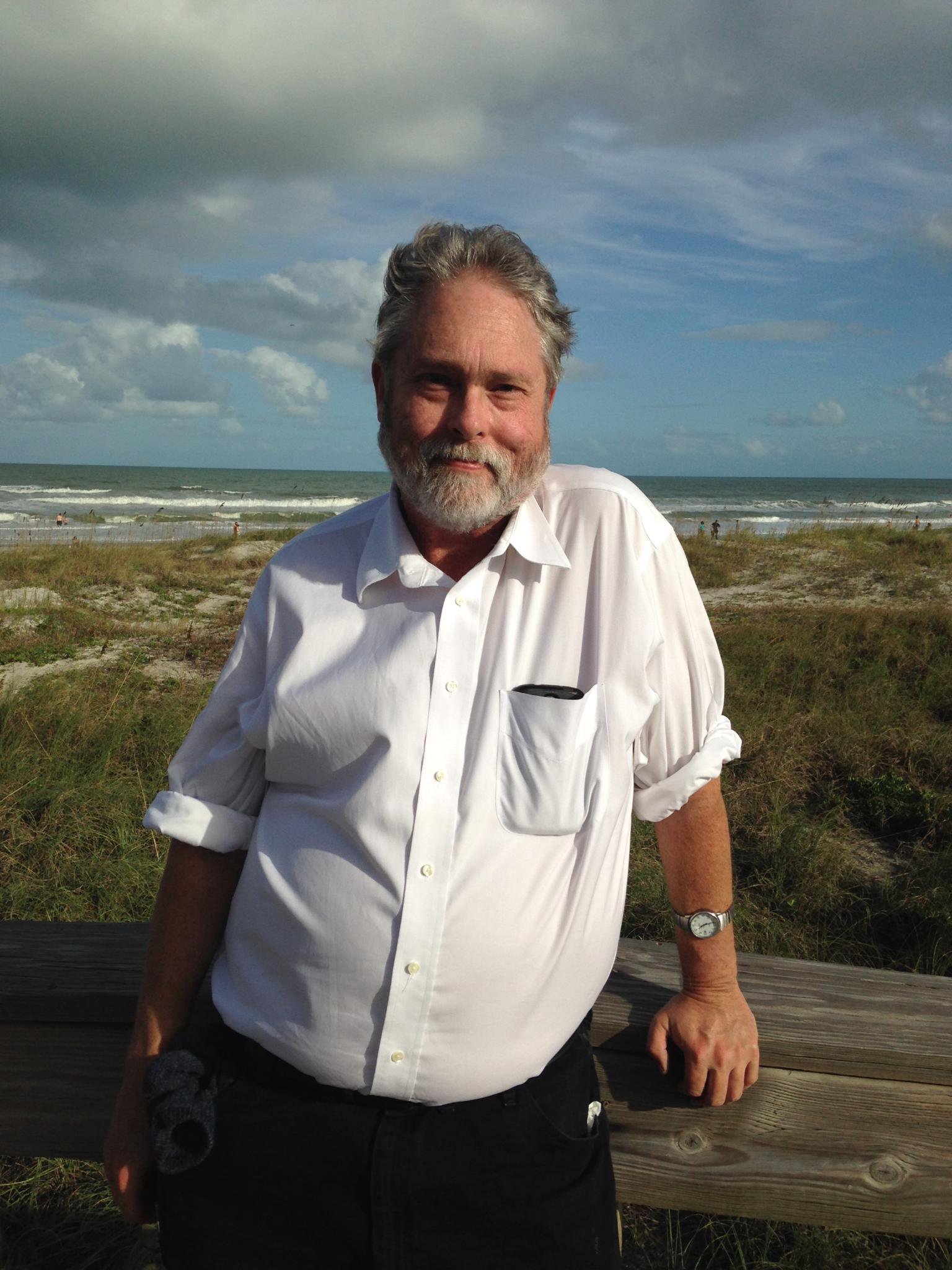
Photo by Sylvia Kirkendoll Mercer

First Look at the Ocean


I finally got to show them the ocean. 

Photo by David Mercer, 2016

I promised a long time ago I would show it to them.  The older one was in first grade. The younger one hadn’t started preschool yet. I had wanted them to stand next to this mysterious organism to feel its rhythms and consider its unseen depths. 

It took a long time.  School, work, meager finances, and fatigue got in the way. Getting time off, driving hundreds of miles and securing lodging along the way was difficult. It had to be backburnered but I never forgot. It took two decades, two plane tickets, and a journey that included letting go of a career, a marriage, and my religion. But I didn’t forget my promise, even if they didn’t remember my making it.

I took pictures of them when they first saw it, like when they were kids at Christmas and I wanted to capture their reaction as they opened an especially delightful gift.  I took one from behind as they surveyed the beach and the waves for the first time. 

Photo by Sylvia Kirkendoll, 2016

There’s another of the three of us. The happiest looking person is me. My sons’ facial expressions are minimal as they typically are at big moments.  I don’t know how they felt but that’s okay.  My goal was to get them there. What they do with their moment… well they may need to take some time to unpack all that.