Trigger Point

I had a conversation with a friend where I was triggered, setting off a chain reaction of memories and feelings going way back to childhood. Even though I was trying to be supportive and affirming, my friend criticized my use of words, saying I was no better than her enemies who hurt her and that my gestures of past support were meaningless.

A few days later, I realized my friend was triggered too, but I decided to let her take care of herself while I sorted through my own stuff.

This conversation took me back to childhood, where no matter what I did, it was not good enough. No matter how hard I tried to please him, my father would still criticize, ridicule, or vent his wrath at me. No matter how much I tried to read his mood and say the right thing, he would become enraged in the blink of an eye. And if my work were occasionally exemplary, he would be distressed and try to find a way to belittle me—even when I was a small child.

I found many people like him in church. Something about the culture attracts bullies, and conditions people to become childish, demanding, and selfish while others, maybe most, serve as their victims.

So, the Facebook conversation triggered me, and all these memories with long-suppressed feelings exploded in me. I shouted at the top of my voice in front of Sylvia:

“I have given my WHOLE LIFE to helping others. MY WHOLE LIFE, I have tried to help people find healing. MY WHOLE LIFE, I have tried to help the vulnerable. And MY WHOLE LIFE, people have criticized me for not doing it well enough, for not saying it perfectly, for not having tried hard enough.”

I shouted until I lost my voice and was still hoarse two days later.

To those who have harmed me through their dishonest, cowardly, bullying tactics, I say:

“I am ENRAGED at you who called me friend or family. How dare you take my best efforts and toss them aside like used tissue. How dare you mock, ridicule, and gossip about me behind my back.

“I have HAD ENOUGH. I have TRIED ENOUGH! I have GIVEN ENOUGH. You can find someone else to be unhappy with because I’m done with you.

When I fell silent, Sylvia said, “You’re not mad at me, are you?”

“No. Did I scare you?”

“No,” she laughed. “The cat hid under the sofa, but I thought it was sexy.’

I know that none of the individuals I’m addressing will recognize themselves. However, some of my fellow victims will feel needlessly guilty, afraid that I’m angry toward them. Perhaps they should go easy on themselves.

While this was a trigger point, it could be a turning point where I let go of this package of guilt, obligation, rage, and fatigue.
It Was Nice to Meet You

We made our way through the hallways of the nursing home, entered a small room, and approached the hospital bed. 

“Mama,” my aunt said, “David is here. He came to see you.”

“Hi David,” she said.

“Hi, Nana. How do you feel?”

“Just fine.” 

She was ninety-three and had endured many bouts with death, but now her time was near.

She was a small feisty woman, sometimes clairvoyant, and always full of love, humor, nurture, and music. She had always been poor, yet she was generous. Affection flowed easily from her that could heal people, plants, and animals. 

She was motionless, too tired to open her eyes, and her voice was weak. Dementia had set in; however, although she couldn’t remember where she was or who standing at her bedside, her affection still showed.    

“Nana,” I brought my two children so they could meet you.”

I held them up one at a time. They were small, shy, and wordless, and she couldn’t see them anyway with her eyes closed. 

“This is Jonathan.”

“Hi Jonathan,” she said. 

“This is Joshua.”

“Hi Joshua,” she said.

“We won’t stay long, but I wanted to see you and tell you I love you.”

“I love you, too.”

I don’t know how long we stood there. I wanted to tell her over and over that I loved her. I wanted to say I was sorry for not having seen her enough. I wanted her to know my children. And I wanted to thank her….

“We should go now,” I said. “You need your rest. Bye, Nana.”

“Bye-bye,” she said, “It was nice to meet you.”

Was she addressing my children, or did she forget who we were, trying to bluff her way through the end of the conversation?

It was the last thing she said to me.

It was nice to meet you. What did that mean?

When I think of my relationships, it feels like our encounters are very brief, no matter how long we’ve known each other. We meet for a moment and then we move on. Friends move in and out of our lives, children grow up fast, and loved ones die too soon… always too soon. 

“Wait… I’m not ready for you to go,” I want to say.

I try to hold onto the moment and make it count. But I can’t slow it down, and I’m always surprised when it’s gone. Grief piles up over the years and weighs me down. Is there a way to be grateful and happy to have had the moments and then move on without such crippling sadness?

Nana survived many hard things. She had nothing, including her memories when she died. And yet she loved until the end. Maybe that’s the secret.

And maybe another secret is accepting that life is full of fleeting moments, and even if we share many of them with someone we love, it’s still brief. In which case, it was good to meet them. 

A Conspiracy of Silence

My aunt was funny, brash, and loving. Athletic and adventurous in her younger days, tender and caring until the day she died, she was adored by everyone.

But she had a secret, sort of….

She was a lesbian.

Everyone knew but they never spoke of it. Perhaps it was best that way since everyone thought it was shameful and wicked. Silence saved us all from discomfort and embarrassment. It was easier.

Okay, maybe not easier, but silence at least made life safer because if she had been open about herself, she could have been in physical danger at times. More recently, I’ve wondered about the emotional and psychological pain she suffered as a consequence of her (and our) silence.

I was still a minister when I had my last face-to-face conversation with Mom before she died. It was early in the morning and we sat at the kitchen table while I told her that Christianity had been wrong to condemn the LGBTQ and I had been wrong in standing by silently. It was my intention, I told her, to begin a support group within my church where the LGBTQ in our community could come to talk and worship. However, while most of my congregation was on board, I still had to find a way to provide privacy for them because Oklahoma, like a lot of regions, is still not friendly to the LGBTQ*

Mom showed a great deal of interest, which surprised me. I thought she’d be uncomfortable, maybe even a little afraid for me. However, she asked me more about my thoughts regarding the scriptures and church doctrine. I told her that Jesus never made an issue of people’s sexuality, and he defended those who had been shamed by society. He said that people would be welcomed into heaven based on acts of love, not their religion.

She nodded and then she told me about her recently deceased sister.

Years before when they were much younger, they had attended a weeklong religious revival. On the last evening, the preacher gave the invitation and while the song played “Just As I Am,” he waited for people to come down the aisle to repent publically of their sins so they could gain forgiveness and redemption.

My aunt looked at Mom who nodded to her in encouragement. And then Mom’s sister went to the front of the church where she was baptized.

For a few moments, my aunt felt forgiven and clean. Her sins were washed away and she was now acceptable in the eyes of God. But redemption doesn’t last long in the church. My aunt remained a lesbian and she went on to have a relationship with her partner that lasted the rest of her life.

My aunt was one of the kindest people the world has known. She checked on the people around her, asking after their health and other concerns. People loved her and opened up to tell her all their problems. And she was generous, giving her time and energy to make people more comfortable. Mom said that she once watched her sister literally give away her last nickel.

“You tell me,” Mom blurted out to me that day in the kitchen, “that a woman like my sister didn’t make it to heaven!”

I assured her that she did.

I don’t believe in heaven or hell or God and Jesus anymore. They’re not real. However, the church and its conspiracy of silent condemnation are quite real.

I find myself shocked at what we did to my aunt and others like her. I’m horrified that we locked my sweet, loveable, funny aunt into a prison of silence, where she dreaded the day she would die and go to the hell we had created. And I think of my mom, who worried that she would never see her sister in heaven. And I think of the people in the LGBTQ who are offered only condemnation by their churches.

I deeply regret that I was a leader in that culture and that I stood by while the silent ones were alone in shame and fear.

I’m so sorry.

_ _ _ _ _ _ _ _ _

*I moved away from town soon after and never started that support group.

Essential Work (101st Post)

I’m scared like everyone else right now. I have one of those essential jobs where I come out of isolation to sell groceries to people, some of whom could be contagious. The anxiety hangs on me like an extra weight that I carry wherever I go. Sometimes it gets me down but it’s my job and there’s nothing to do but stand back up, carry on, and take precautions as best I can.

I also feel an exhilaration similar to when I was a minister and provided help in times of crisis. These days, while I may be an anonymous cashier, I get the occasional chance to encourage strangers as they pay for their groceries. Somehow, the risk makes the work feel more meaningful.

Many folks go to the supermarket because they’re hungry not only for food but for company and so shopping is their social event for the day. I smile and joke with them about how our only recreation now is Netflix and fattening food. And we’ll laugh about not having any excuses to not clean house now. Then we’ll conclude our transactions and encourage each other to stay safe and healthy.

Some people are glum and focused inward. It’s a judgment call as to whether I should respect their privacy or go in to draw them out.

“It’s kind of scary out there, isn’t it?” I might say. Sometimes it’s enough to get them to share their stories:

“I never dreamed it would get this bad….”

“My mother is 78 years old with a heart condition….”

“I don’t know when I’ll go back to work again….”

“My child has asthma….”

I remember a man who murmured how afraid he was. I said I was too and then I searched for words that wouldn’t sound too preachy and would lend him courage. I said, “There’s nothing to do but hang in there, and that’s what you and I are going to do, huh?” He nodded and squared his shoulders as he walked out.

Another young man came through the line to purchase a cake and candles.

“Whose birthday is it?” I said.

“Mine,” he said shyly.

He was twenty-two that day. I asked if he had anyone who would celebrate with him and he shrugged saying he was by himself, unable to get home to his family who lived across an ocean from him. I thought about my sons who live far from me. I wanted to shake his hand, maybe pat his shoulder… oh hell, I wanted to give him a hug, but of course, we all have to keep our distance now.

So I gave a big smile and pointed at him, saying, “Happy birthday, my friend. I am very glad you were born twenty-two years ago.”

I cried when I told Sylvia about it later.

For me, being amidst the people, saying something that helps a little, and connecting for just a moment, gives me a boost and allows me to carry my own fear with a little more grace.

I like it even though it also brings back an old fatigue that always follows the exhilaration. I let it all go when I left the ministry but I always knew I’d somehow pick it up again, this time without the baggage of religion.

I’m going to work now. It’s essential.

What I Said Then; What I Say Now

I was at a retirement home, giving my thoughts on a passage of scripture.  They knew I had once been a minister and that I now no longer believed. 

A woman asked me, “What would you say if your child asked you, “Did Jesus really walk on water? Did he really feed five thousand people? Would you tell them that it really happened just as it exactly as it says in the Bible? 

I took a moment to gather my thoughts.

“When my children were little,” I said,  “I did tell them that I thought it happened just as it said in the bible because back then I did believe. However, I would answer differently today.  I’d say something like… ‘Many good people believe these things really happened. However, it doesn’t seem likely that these things could occur. So, no, I don’t believe they did.’”

She nodded… accepting my answer, which was good because it was the only one I had.

A year or so before I left Christianity and was still wrestling with my beliefs, I taught a confirmation class for the young teens in my church. I reviewed church teachings with them and I talked about heaven, forgiveness, and the salvation through Jesus Christ.

I can still say what I said then:

“Your parents baptized you when you were little and raised you to hear the teachings of the church. But confirmation is your chance to take ownership of your thoughts and beliefs.  Nobody can make you. Not your parents. Not me. Even God won’t.” 

They all chose to go ahead with the ceremony because, in truth, they were still too young to decide for themselves. Evaluation of family beliefs usually happens during the college years when they are being trained to think critically for themselves. That’s when they start deciding for themselves what they believe.

I have always shied away from telling people what they HAVE to believe.  I still do.

On the other hand, I’m more than happy to say what I think is true, and I will argue strenuously with grownups who know (or should know) how to think for themselves. 

You Told Me To… and I Did

“What happened to you, David?

“When you were young, we were so proud. You grew up in our church. You knew the answers in Sunday school. You sang the hymns. You were baptized at the proper age of twelve. Later, you went to the youth gatherings and said the sweetest prayers. We watched you go off to Bible college and we knew you’d become a fine little preacher.

“What happened to you? Did we do something to cause you to fall away?”

Well… Let me put it to you this way:

You said to pray every day, and I did. But when I whispered to you that it didn’t seem like anyone was listening, you said to try harder, so I did, and it didn’t help.

You said to study the Bible, and I did. But when I became an expert in biblical studies and told you that the Bible said things you never told me about, you were indignant.

You said to tell the truth, and I did. But you didn’t like hearing something other than what you’d always heard and so you urged me to hush before I got into trouble.

You said to love the unlovely, and I did. But I found that you didn’t mean the homeless, and Blacks and Hispanics and those homosexuals.

You ask what happened to me. The answer is I did what you told me to do. In some ways,  I still do.

“Now hold on, you can’t blame us. We never claimed to be perfect but it’s not our fault that you fell from the one true way. You have to take responsibility for your own actions. You have to think for yourself.”

I do. My life is my own. You don’t have to take any blame for how I turned out.

Can’t We Still Be Friends?

Religious belief is not a matter of intellectual choice or emotional attachment.  For most of us it’s a powerful legacy passed on to us and it’s not easy to leave.  However, when we do, we leave behind a community which can include profound friendships, parents, siblings, grandparents, cousins, spouses, and even children.

I did not experience the angry exchanges as other newly outed atheists have.  People were gracious to me. I wasn’t fired from my job. I voluntarily left my career.  But many people I have known and loved the longest have faded away.

It’s understandable enough. Our paths take different directions that can separate us.  I don’t work alongside them, anymore.  I relocated so I don’t run into them at the supermarket.  But there’s no denying that many have chosen not to engage with me anymore.

A few stayed with me. They know who they are and I appreciate them.  I also think many people keep a quiet watch over me but they can’t appear too friendly without risking their other relationships. I get that, and I sympathize. 

Of course, breaks in relationships are often messier than I just described.  I look back and see real mistakes I made that contributed to some of my losses.  However, it’s clear to me that I’ve lost people because I no longer share their religion.

I was hoping I could have my own thoughts, express my views, and even debate them strenuously, yet stay friends. Is that possible? I still love these people and would never reject them. In fact, I’m still here for them.


Angry Outcasts

I want to talk about those people who didn’t just fade away from church. They walked out and slammed the door, stating they will never enter a church building again.

They once participated wholeheartedly in their churches. They were bathed in church customs, learned the doctrines, memorized biblical passages, and took notes with pens of different colors during the sermon.  They went to Sunday school, prayer meetings, Vacation Bible School, and church camp. They evangelized their friends and went on mission outreaches. They tithed. They came early and stayed late, often doing menial chores in the church building. They weren’t just faithful members… they were the best members.

But…

At some point they began to be plagued by nagging doubts and questions:

“If God loves the world so much why does he allow…?”

Or…

“If God is so powerful, why doesn’t he…?

Or…

“How can the pastor and my teachers be so certain that they are right?”

And…

“What if none of this is true?”

When they gave voice to these unwelcome thoughts, their friends, family, and pastors shushed them, warning them to guard their minds against such things.  When they persevered with their questions, loved ones reacted with even more pressure, warning them not to let the Devil seduce them lest they fall from the kingdom of God.

Finally, they could no longer tolerate the force-feeding. They summoned every ounce of courage they had to say aloud that they just didn’t believe anymore.  As a result, they lost everything: family, community, often their jobs. The people they once depended on for love and acceptance now despised and rejected them.

Is it any wonder they’re angry? From their perspective, they’ve been lied to all their lives.  They’re not just angry–they are enraged because they feel like they were brainwashed.  They look around and see that much of the world still believes the things they once believed and they want to scream, “NO, THIS IS NOT TRUE!

Yet as furious as they are, they’re also lonely and displaced, and they miss that sense of belonging they once had. They hear the siren’s song of the hymn: “come home… come home….” But most of them can’t. They won’t ever again relinquish the right to think for themselves.

I have many things to say about this subject. But I want to end this post by saying something that I wish I’d been saying from the pulpit for the last thirty-five years:

Parents, your children are more important than your religion.

As they become grown, you have to respect their right to believe (or not believe) as they wish. You want them to visit you? You want to see your grandchildren? Then stop trying to force them back into your religion.

I know, I know. You don’t want to lose them to hell.  But you could lose them right now if you don’t back off.  Religion is about faith. So how about showing some faith in the people you love that they’ll find their own way? They might even turn out to know more than you.

I Was Lonely

In my journals which I’ve written all my adult life, one of the things I said repeatedly since the beginning that that I was lonely.

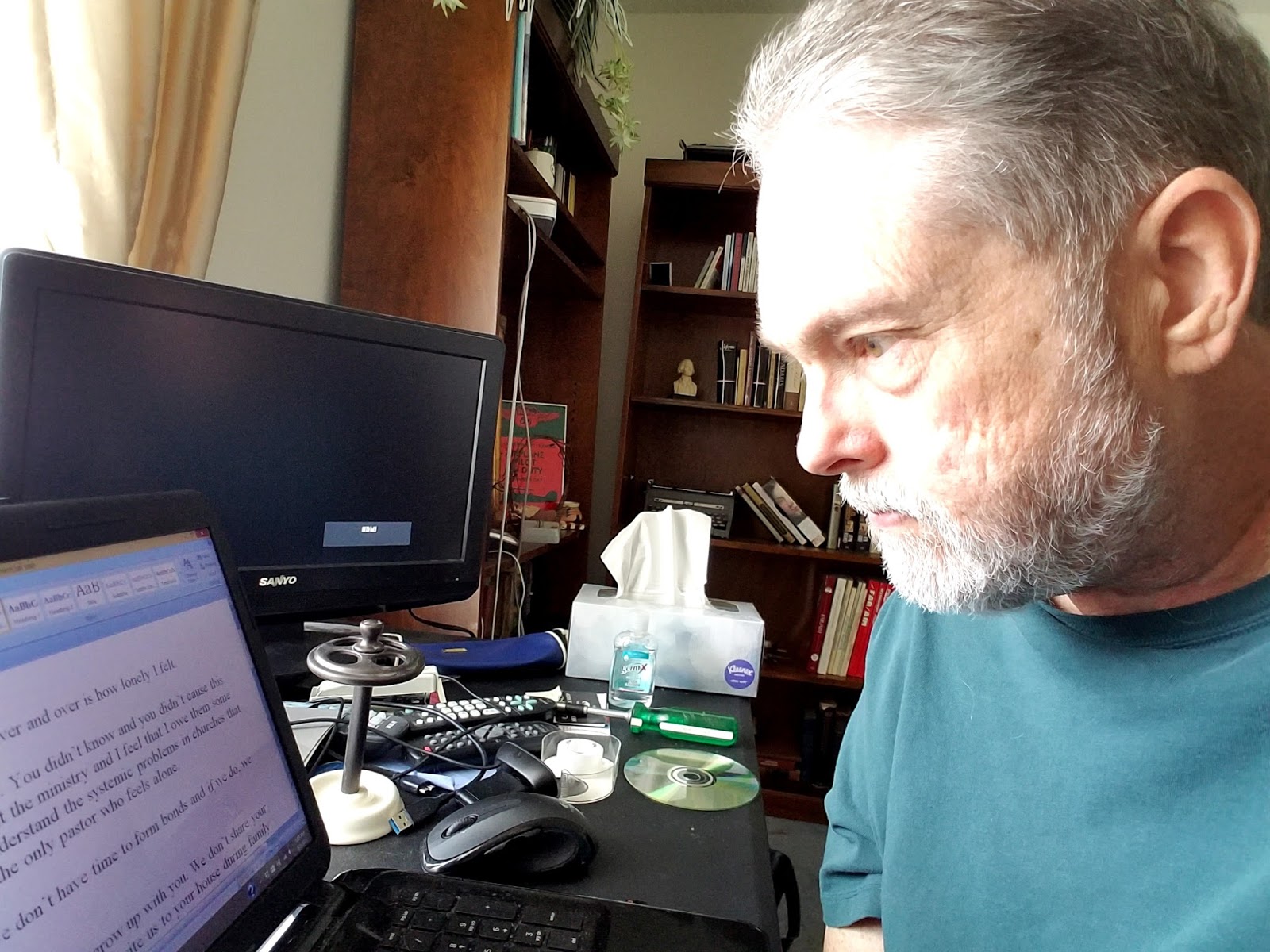
If I was once your minister, please don’t feel guilty. You didn’t know and you didn’t cause this. I’m telling it now because I hurt people when I left the ministry and I feel that I owe them some explanation.  Also, perhaps it will help people understand the systemic problems of church that cause pastors to be lonely. Believe me, I’m not the only pastor who feels this way. 

First, we have to move frequently. We don’t have time to form bonds and if we do, we have to leave them behind when we go to the next assignment.

Second, small town pastors are always outsiders. We didn’t grow up with you. We don’t share your history. We’re not your family. If you are nice enough to invite us to your house during family gatherings at holidays, we’re uncomfortable. Additionally, we often don’t have the time or resources to visit our own families.

Third, it costs too much to be friends with the pastor. If you had tried to get close to me you might have gotten hurt by church politics. Someday I’ll write at length about that but for now I’ll just say that most of the few friends I’ve made along the way… they don’t go to church anymore. 

I always said that loneliness is just part of the job that a minister endures.  But as I got older I became unhappier and lonelier, and I just couldn’t endure it anymore. 

I had no one to talk to. Every week, sometimes twice a week, I slipped away to talk to a counselor, which helped a lot but not enough to make up for the isolation.  I couldn’t tell anyone of my personal problems. I couldn’t talk about my theological struggles. I couldn’t talk about my problems at work.

I just ran out of resources to cope.