Carrying Other People’s Grief

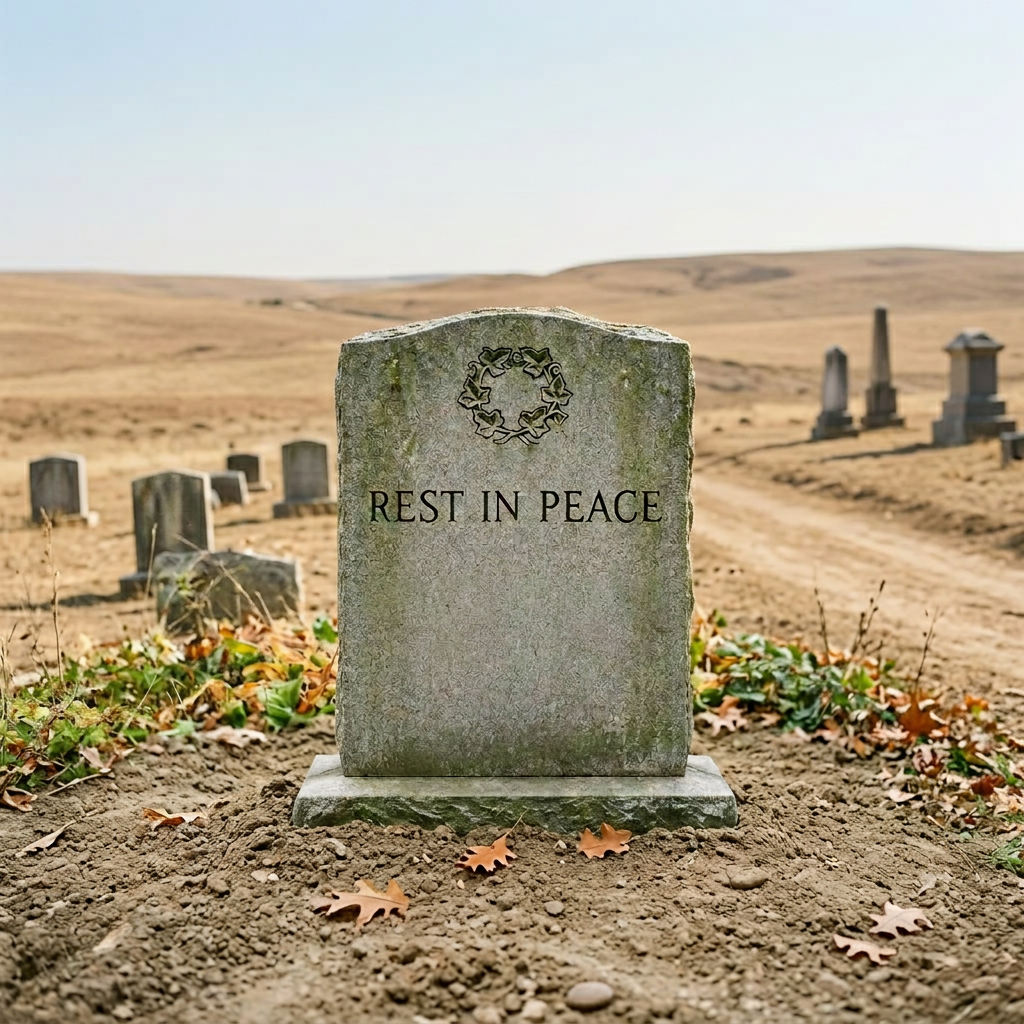
Gravestone with inscription Rest in Peace Eleanor M. Davis 1932–2018 in a leafy cemetery

The Power of Being Quiet

Sad Strength

The people at the self-checkout station were jammed together as they struggled with the machines to make their purchases.

I went to approve a woman’s wine purchase. She was a senior citizen like me, and I teased her, asking if she was at least twenty-one–because I’m cute like that.  

“Oh yes,” she said, adding what many people tell me: “I wish I were twenty-one again.”

“Do you really want to go back,” I challenged with a laugh.  

Most people take a beat and agree that it might not be so great to return to an earlier age, although it would be nice to have the energy of our youth.

But this lady answered differently.

“Oh yes, I would go back,” she said.

“Not me,” I said, and I laughed again.

“I would so I could have my son back,” she said, almost matter-of-factly.

I’d been keeping watch over all the people, but I paused to look only at her.

She was weary, yet she radiated a particular strength I’ve seen in women like her—mothers who had lost a child and experienced crippling grief yet somehow managed not just to endure but come back with ferocious energy, determined to make the world better.  

She became the person that others turned to in their moments of grief.

I saw this in her. And she saw that I saw it.

“The simplest things (like a wine purchase and a chatty cashier) can bring it all back,” I said.

“It’s okay,” she hastened to say. “I know I’ll get to see him again.” (I presumed she meant heaven).

“But,” she continued, “I would go back if I could have him again.”  

“Who wouldn’t?” I said. “I hope today has joy for you, as well, ma’am.”

She offered her sad, forceful smile and said, “I hope that for you too, sir.”

She reached up to put a hand on my shoulder. I could feel the strength in her touch.  

I Needed to Help Someone

It was incredibly busy at the store on Christmas Eve, and I’d been having an awful day. I missed my kids and felt a lot of grief from past years. And the store’s holiday music rankled me. In our final hour, the crowd was at its largest, and the atmosphere was getting more frantic.

Long lines had formed at every register. A woman and a teenage boy brought their fully laden cart to the self-checkout. She was a little older, and I wondered if she was the boy’s grandmother. She struggled with the register, then looked up, alarmed. With a dozen people waiting behind her, she realized she’d forgotten something.

She turned to me, “I forgot the sugar,” she said. “Can you get some for me?”

“Ma’am, I would, but I can’t leave my station.”

This didn’t seem like much of a problem. Either she or the boy could simply go get it.

“I don’t want to leave him alone,” she said, looking desperate. I looked at the boy more closely. He was the size of a thirteen-year-old, but his face seemed younger.

“You’re going to have to go get it,” she said to him.

He nodded, eager to take off.

“Listen!” she said. She held his face to look him in the eye, and she talked as if he were much younger. “Go straight there and come straight back. Don’t talk to or follow anyone. Make sure you get sugar and nothing else!”

He took off, while she watched.

“He really needs help, doesn’t he?” I said.

She nodded, distressed.

“He has autism,” she said.

“Okay.”

I called to my supervisor, “Can you cover for me?”

“Of course,” she said.

I waded through the crowd and caught up with him. He was about to pick up some flour rather than sugar.

“Hi,” I said. “That looks the same, but the sugar is further down here, see?”

He picked up the sugar, and I walked with him back to his mom, who smiled gratefully.

“I didn’t understand what was going on, ma’am. I’m always happy to help.”

Helping that boy became the day’s most important moment, and it made my sadness go away. My own children may have been far away, but I could help this one.

When they were safely out the door, I cried briefly, and then went back to work.

Who Do We Tell?

A Hispanic man about my age came through the line at work. As I rang up his groceries, I asked him how he was. With a quiet voice, he told me his mother just died.

I lifted my eyes from the register to look at his sad face. 

“I’m sorry, what did you say, sir?

“My mother just died.

My Spanish is limited, and I struggled to find the words. 

“¡Qué lástima!” “What a pity!” 

I would like to have hugged him, but the counter was in our way, and I didn’t know if it would be appropriate. When I was a pastor, I would have come around the counter or even vaulted (well, climbed) over it to hug him. I’m not sure why I didn’t even think of it now.

I reached across the counter to shake his hand.

“Lo siento, señor” I whispered.  “I’m sorry.” He nodded in appreciation.

¿Enferma?” I inquired, wondering if she had been sick.   

“No sé.” He didn’t know. He told me in broken English that she was in Venezuela and he couldn’t go back to see her.

“Oh, that’s terrible!” I said.

He shrugged and said, “It’s okay, it’s okay, it’s okay.”

As he walked away, I said, “Dios te bendiga” which means “God bless you.” It’s not what I really wanted to say, but it was all I knew, and he appreciated it.

A forty-five-second exchange isn’t enough to help, but honestly, when you reach out to support someone who is grieving, no gesture is enough.

It’s interesting what we will blurt out to strangers. 

When my father died, I went to work that day and didn’t tell my boss or coworkers for a couple of hours.  In fact, the first person I told was a regular customer. She comes to the self-checkout most evenings to buy a bottle of wine after work. She asked me how my day was going, and I said quietly that my dad had just passed away.

She had been looking away and turned her head sharply to look at me. 

“Wait!” she said. “What did you just say?”

I told her again. 

“I’m so sorry,” she said. “Can I give you a hug?”

“Sure.”

She wrapped her arm around my neck and told me she was sorry. Then she went on her way while I carried on at work.    

A few minutes later, I told my boss and then some of my coworkers, most of whom hugged me, too.

Telling someone makes an event more real, I suppose. I shared it with someone I was familiar with but not deeply connected to… almost like a rehearsal before I told the more significant people in my life. Perhaps that’s what this gentleman was doing, as well.  Starting small with someone safe at the grocery store. 

But I also wonder if he had anyone else to tell. Since I left the church, I have found it harder to build my own community. How do people find their friends?  And with whom do they share their griefs? Please tell me there are more people out there than the guy at the cash register.

Conflict with Daddy

I’m experiencing some complicated grief over my father. I won’t speak for the rest of the family, but he left behind many unresolved conflicts between him and me. Some might think I should remain silent and just go on with my life. Believe me, I want to move on but I don’t think I can until I say some things that I’ve held inside for too long.

******

I must have been thirteen.  I was listening to some classical music on our old stereo when Daddy came striding through the living room. He paused and waved his arms to the music. 

“I would love to conduct an orchestra,” he announced. “Wouldn’t you?”

“Um…” I said, “Well… I’m not sure. It’s kind of hard.”

“Really?” he said. “I guess you’re not as much a leader as I am.”

“Probably not,” I agreed with a shrug.

In fact, I often dreamed of conducting orchestras and choirs.  I was already more advanced in music than my dad and I was aware that conducting is difficult, and I knew I wasn’t ready to do it. Because I was only thirteen, I figured he had to be right about his assessment of my leadership skills. For what it’s worth, I went on to conduct choirs.

I was nearly middle-aged before I realized how terribly competitive my dad was with me, even when I was young.  When he couldn’t compete, Daddy settled for belittling me.

Once, he went to my high school to talk to the principal and found out my test scores were higher than 99 percent of other students in the country. Rather than being proud of me, he was astounded to the point of being distressed. He couldn’t believe that I scored so much higher than he did when he was in school. 

“Maybe it’s because kids aren’t as smart as they were when you were in school….” I suggested.

“That must be it!” he said. I’m not sure why I supported his need to be superior, but I have felt self-loathing from having done so throughout my life.

He could not endure my receiving honor.  He missed most of the concerts I sang in, and he skipped my high school, college, and seminary graduations.

I could never beat him in arm wrestling, even when I was a young man in my twenties and my biceps bulged from weightlifting.  Somehow, I couldn’t let myself win. He crowed about it for years. 

He often said, sometimes with sadness, other times with scorn, that I was much weaker than him.  I wasn’t strong enough to work as hard as he did. I couldn’t stand up to pressure like he could. And I believed it.

A few years ago when I started my life over, I introduced Sylvia to him.

“Poor Davey,” He said to my new wife. “He just had to get away from the ministry. The church can be so mean. I guess I was able to stay in it because I’m tougher than he is.”

In the weeks since his death, I feel like a veil has lifted and I see more clearly now, often with a burning rage.  I need to say some things that I never allowed myself to say when he was alive:

“I surpassed you a long time ago. I’ve worked harder than you ever have. I was always smarter, stronger, and more mature than you, even when I was a kid.

“I didn’t bully loved ones like you did to feel important. 

“While you may have had bigger audiences as a preacher, I’ve cared for more individuals than you can imagine. 

“And I didn’t leave the church because they were mean to me. I left because I couldn’t believe in a delusion anymore. You were never brave enough to entertain the thoughts and ask the questions I had. 

“Anytime I tried to address these conflicts I had with you, you filled the air with venom and confusion, and went back to your adoring parishioners.

I’ve kept quiet until you were in your grave, but I will not go to my grave keeping your secrets, much less believing the lies.” 

It Was Nice to Meet You

We made our way through the hallways of the nursing home, entered a small room, and approached the hospital bed. 

“Mama,” my aunt said, “David is here. He came to see you.”

“Hi David,” she said.

“Hi, Nana. How do you feel?”

“Just fine.” 

She was ninety-three and had endured many bouts with death, but now her time was near.

She was a small feisty woman, sometimes clairvoyant, and always full of love, humor, nurture, and music. She had always been poor, yet she was generous. Affection flowed easily from her that could heal people, plants, and animals. 

She was motionless, too tired to open her eyes, and her voice was weak. Dementia had set in; however, although she couldn’t remember where she was or who standing at her bedside, her affection still showed.    

“Nana,” I brought my two children so they could meet you.”

I held them up one at a time. They were small, shy, and wordless, and she couldn’t see them anyway with her eyes closed. 

“This is Jonathan.”

“Hi Jonathan,” she said. 

“This is Joshua.”

“Hi Joshua,” she said.

“We won’t stay long, but I wanted to see you and tell you I love you.”

“I love you, too.”

I don’t know how long we stood there. I wanted to tell her over and over that I loved her. I wanted to say I was sorry for not having seen her enough. I wanted her to know my children. And I wanted to thank her….

“We should go now,” I said. “You need your rest. Bye, Nana.”

“Bye-bye,” she said, “It was nice to meet you.”

Was she addressing my children, or did she forget who we were, trying to bluff her way through the end of the conversation?

It was the last thing she said to me.

It was nice to meet you. What did that mean?

When I think of my relationships, it feels like our encounters are very brief, no matter how long we’ve known each other. We meet for a moment and then we move on. Friends move in and out of our lives, children grow up fast, and loved ones die too soon… always too soon. 

“Wait… I’m not ready for you to go,” I want to say.

I try to hold onto the moment and make it count. But I can’t slow it down, and I’m always surprised when it’s gone. Grief piles up over the years and weighs me down. Is there a way to be grateful and happy to have had the moments and then move on without such crippling sadness?

Nana survived many hard things. She had nothing, including her memories when she died. And yet she loved until the end. Maybe that’s the secret.

And maybe another secret is accepting that life is full of fleeting moments, and even if we share many of them with someone we love, it’s still brief. In which case, it was good to meet them. 

The Good and Faithful Servant

It had already been night for several hours.  After a long day, we had our normal rush of customers just as we were closing the store. A coworker who had been standing at the register for several hours became sick and began to sink to the floor. But a customer saw she was in distress and moved quickly to catch her. 

He eased her to the ground, held her head in his lap, and asked for someone to call an ambulance. Then he spoke quietly to soothe the woman until help arrived. 

We moved the remaining customers to other registers so the ambulance attendants could do their work.  An older man came through my line and said to me, “The same thing happened to my wife earlier this year.  She fell when she had a stroke and died right then.”

At that point, we were relieved to see my coworker revive a bit.   

I turned back to the older gentleman.  “I’m so sorry you lost your wife, sir.”  I wondered if he might be emotionally triggered so I asked if he was okay.

“I’m fine,” he said, and then he pointed to the man holding my friend. “That’s my son.”

A million things went through me. I was worried about my coworker and also feeling this man’s grief as he remembered his loss. And that man who was taking care of my friend…. Was he also feeling the grief of losing his mother? Did he get a chance to hold his mother when she was ill? Or was this a chance to do what he wished he could have done for his mother?  While my mind churned, I moved quickly to check out our final customers.  

The ambulance came and took her to the hospital and the man who had held her came to my register to join his father.

“I think she’s going to be okay,” he said. (In fact, I have heard that she is feeling better now).

“Thank you for helping my friend, sir,” I said. “Well done.”  

“It was God that helped me,” he said. 

I nodded.   

 “Perhaps I should say, ‘Well done, good and faithful servant.’”

He smiled and blinked to hold back the tears in his eyes. 

Grief and Ice Cream

In addition to being the minister for a church in a small town in Central Texas, I was a volunteer for the community’s emergency medical service. One afternoon, a call came in that an accident had occurred at the place that stored seed and fertilizer for the farm community.  When we arrived on the scene we found people digging furiously into tons of fertilizer that had come down when its bin had given way, pouring its contents on top of the man who was standing under it. 

His friends and his two grown sons dug, not even knowing where he was.  Finally, they found him. He wasn’t breathing, and he wasn’t going to, but they tried the defibrillator on him anyway, repeatedly. 

I was horrified at the scene. My eyes filled up and I wanted to sob, but I realized I was supposed to be the helper, so I swallowed back the feelings and went to work.  In addition to being the ambulance driver, I was the chaplain for our team. I went and stood next the two grown sons who watched their father’s crushed body not being revived.  They were big burly young men, shocked and speechless. I don’t remember what I said to them—I think I was trying to be clever.  They just nodded as if they could understand me through their shock.  Then I reached up and hugged each of them, telling them how sorry I was. 

For the rest of that afternoon, I listened to people who had been on the scene—emergency crew and onlookers, all of them needing to process what had happened. 

I was twenty-four years old. 

By early evening I was emotionally exhausted. But my ministerial duties demanded that I attend to one more task: the ice cream social at church.  I’d have much rather sat in a dark room of my house, but I had to go because I was, you know, the minister.

Ice cream and cake were served outside in the courtyard of the church building. Everyone brought their homemade ice cream, except for Frances, who brought Blue Bell and tried to convince us she had made it herself. We didn’t care because we all liked Blue Bell. 

I didn’t feel like joking or smiling or helping.  I got in line and a little boy was in front of me.  He was around five years old, blond, blue eyed, quiet and thoughtful. I helped him fill his bowl and then asked if I could sit with him. He nodded. 

We sat in the cool grass under the evening shade. He and I agreed that homemade vanilla was the best flavor then attended to the business of eating in silence.  I learned that evening that little children are restorative. 

The things I learned that day are:

I have to feel the feelings but keep myself intact so I can help others.

People don’t always need me to speak as much as they need to talk.

Sometimes healing is found in eating ice cream outside with a kid.

Connecting

The first few sermons I preached were in Abilene Texas at the Central Church of Christ while I attended college.  Gosh, I was really terrible! Those sweet people listened patiently to a twenty-one year old kid tell them how to think and be.

On one occasion my text was John 11, the story of Jesus raising Lazarus from the dead. Most of what I said was quite unmemorable, but one thing stands out in my mind:  

“Perhaps the most powerful moment of this story.” I marveled, “is not that Lazarus was raised, but that Jesus saw the grieving people and wept for them.” 

As I said these words I looked up from my notes and “saw” my audience, too, which included several recently widowed people.  I saw the clutched tissues, heard the quiet sniffling, and met their red eyes.  Not only did I say something they needed to hear about a caring god, but I connected with them and was moved by their sadness.  At that moment I learned that the most powerful thing to happen in the pulpit does not come from eloquence or charisma, but from connecting with the people and feeling what they feel. 

I experienced the power of my audiences’ feelings many times over the years. Their angst could be a force that would engulf me and weigh me down. Occasionally, my words helped but connecting with them was what made people feel a little better.   

It didn’t happen every time. Sometimes the audience didn’t trust me enough or I was too tired to carry the burden. But it happened more as I got older and worried less about performance and focused instead on the people.