A 97-Year-Old’s Baptism

A Conspiracy of Silence

My aunt was funny, brash, and loving. Athletic and adventurous in her younger days, tender and caring until the day she died, she was adored by everyone.

But she had a secret, sort of….

She was a lesbian.

Everyone knew but they never spoke of it. Perhaps it was best that way since everyone thought it was shameful and wicked. Silence saved us all from discomfort and embarrassment. It was easier.

Okay, maybe not easier, but silence at least made life safer because if she had been open about herself, she could have been in physical danger at times. More recently, I’ve wondered about the emotional and psychological pain she suffered as a consequence of her (and our) silence.

I was still a minister when I had my last face-to-face conversation with Mom before she died. It was early in the morning and we sat at the kitchen table while I told her that Christianity had been wrong to condemn the LGBTQ and I had been wrong in standing by silently. It was my intention, I told her, to begin a support group within my church where the LGBTQ in our community could come to talk and worship. However, while most of my congregation was on board, I still had to find a way to provide privacy for them because Oklahoma, like a lot of regions, is still not friendly to the LGBTQ*

Mom showed a great deal of interest, which surprised me. I thought she’d be uncomfortable, maybe even a little afraid for me. However, she asked me more about my thoughts regarding the scriptures and church doctrine. I told her that Jesus never made an issue of people’s sexuality, and he defended those who had been shamed by society. He said that people would be welcomed into heaven based on acts of love, not their religion.

She nodded and then she told me about her recently deceased sister.

Years before when they were much younger, they had attended a weeklong religious revival. On the last evening, the preacher gave the invitation and while the song played “Just As I Am,” he waited for people to come down the aisle to repent publically of their sins so they could gain forgiveness and redemption.

My aunt looked at Mom who nodded to her in encouragement. And then Mom’s sister went to the front of the church where she was baptized.

For a few moments, my aunt felt forgiven and clean. Her sins were washed away and she was now acceptable in the eyes of God. But redemption doesn’t last long in the church. My aunt remained a lesbian and she went on to have a relationship with her partner that lasted the rest of her life.

My aunt was one of the kindest people the world has known. She checked on the people around her, asking after their health and other concerns. People loved her and opened up to tell her all their problems. And she was generous, giving her time and energy to make people more comfortable. Mom said that she once watched her sister literally give away her last nickel.

“You tell me,” Mom blurted out to me that day in the kitchen, “that a woman like my sister didn’t make it to heaven!”

I assured her that she did.

I don’t believe in heaven or hell or God and Jesus anymore. They’re not real. However, the church and its conspiracy of silent condemnation are quite real.

I find myself shocked at what we did to my aunt and others like her. I’m horrified that we locked my sweet, loveable, funny aunt into a prison of silence, where she dreaded the day she would die and go to the hell we had created. And I think of my mom, who worried that she would never see her sister in heaven. And I think of the people in the LGBTQ who are offered only condemnation by their churches.

I deeply regret that I was a leader in that culture and that I stood by while the silent ones were alone in shame and fear.

I’m so sorry.

_ _ _ _ _ _ _ _ _

*I moved away from town soon after and never started that support group.

Prayer? Try Rubbing a Lamp

Focus on the Family said in a meme:


I don’t wish.

I pray.

Because God is not a genie.


There was a time when I would have said the same thing with pride and conviction, holding myself up as an example of holy living.  I might have thrown in a few words to show off my humility but I came off as a bit pompous, nonetheless. 

No Matter How Much You Say a thing, It Doesn’t Make It True.

It always seemed to me that, no matter how much they deny it, most people really do speak to their God as a genie. Perhaps they don’t have to rub a lamp, but they have to keep their hearts clean and shiny, and say the correct words before they can get what they want.  Then, if they don’t get what they want, they are doing something wrong. Or some swear that God actually has answered their prayers, even if there is no evidence. 

I always wanted more than the genie experience.  I preached that praying should be a constant communion of spirits.  I tried to practice it, too.  I poured my heart out for hours at a time, hoping for that presence that “walks with me and talks with me, and tells me I am his own.”

However, that image of God turned out to be as unreal as a genie in the lamp. 

Praying Makes Us Helpless

To me, prayer is admission of helplessness. It indicates that I’m all out of ideas and I need someone to work some magic for me. 

Religious folk will acknowledge this helplessness and then insist that it’s a good thing, perhaps referencing sheep as metaphor.  If we are truly good, they say, we’ll recognize that we are always in a state of helplessness. We cultivate this helplessness in order for God to take a greater role in our lives. 

“We must become less that He might become more.” the preacher says with quiet intensity.

In other words, it gives the genie a chance to work. 

I confess that when I’m exhausted, desperate, and out of ideas, I find myself going back to the praying. 

“If you’re there, after all,” I say, “this would be a great time to appear and help out.”

But he doesn’t. And that’s my cue to go rest and regroup.    

I’ve written my own meme to remind me that I live differently now:


I don’t pray.

I think.

And I act.


People Are Being Beaten

He was cautious. Forty years ago, life was risky for a gay person. He approached a young acquaintance and asked if he was interested in a sexual encounter. The young man seemed to agree with him and they decided to meet at a deserted location. But when they met, the young man beat the guy.

The young man told his friends about it, bragging about how he had blackened the guy’s eyes, broken his nose, and cracked his ribs. His pals approved figuring the gay guy had it coming.

Forty years later, some progress has been made but it’s still risky for people of the LGBT community. They can still get beaten and in some parts of the world, they’re killed. However even if they don’t risk physical injury, they’re still often targets of ridicule and derision. They’re still regarded as unworthy of equal consideration even if the law says they must be given equal rights.

How would you feel to be regarded as “not normal”?

What if your family was embarrassed about you? How would it feel to be told that living alone was the only honorable path for you? What would you think if your church told you that they loved you “anyway,” even if you are an abomination—and, by the way, those are some of the more tolerant churches. Most churches still blame the LGBT for natural disasters and the fall of civilizations—and I wish I was joking.

It’s a sin, the religious folk say. It goes against the Bible.

I don’t care what the Bible says–they’re wrong. Quoting the Bible and claiming to speak for God makes them even more wrong.

I’ve been hoping the United Methodist Church, the denomination where I served as a minister, would make some changes in their attitude toward the LGBT. They’re going to have an expensive, divisive conference to talk about the ordination of non-heterosexual people and same sex marriage. I’ve only just now realized that no one is going to change their minds. The only thing I see happening is that the LGBT will be more resented afterwards.

I want to shout at my former colleagues: “Come on! We were supposed to be the world changers! We were supposed to be champions of the oppressed!”

Come on!

People are being beaten!

What Will Happen When I Die?

What happens to us after this life? I’m dying to know….

My consciousness… that presence behind the eyes that processes my thoughts and experiences–does it drift away and go somewhere else?   Does it turn off with a small blip like the screen of a computer? Is it like sleep where the consciousness relaxes and simply lets go so it can live in its dreams? Does it ever awaken again?

As I get older and the physical brain atrophies will there actually be less identity or will it still be there fully formed, gradually imprisoned a small increment at a time, subject to slower blood flow and fragile brain cells ? When the body comes to a full stop, will the mind be released to return to its complete version, or will it simply fire one last synapse before it’s gone?

What happens when a body comes to a sudden violent stop? Does the consciousness disappear instantly, or does it wander about like someone who lost everything when a tornado destroys her home in an instant?

When I see the body of a loved one at a funeral, I find myself watching for the chest to rise and fall, allowing myself a small hope that maybe it has all been a mistake and the person is still alive.  It’s nearly impossible to accept that a life simply ceases.  But there doesn’t seem to be proof one way or the other about an afterlife unless we accept the accounts of people who were technically unalive and then brought back.  Is there really a bright light for us to go toward where people wait to welcome us? What about those of us who are sure we’ve seen loved ones after their deaths? About half of those surveyed say they have experienced this. Do we discount those reports simply because we don’t understand how it could be true?

Is there another state of existence? Those interested in quantum physics have been discussing the idea of different dimensions existing within each other, but it’s becoming passé these days.   Others say that our individuality fades into a collective consciousness.  Perhaps that’s what Jesus was trying to say when he prayed, “May we all be one, Father… I in thee, and thee in me, and they in us.”

Or is it all just a physical and chemical thing, where the life impulse dies when the body succumbs to the law of entropy and becomes integrated with the rest of the earth, and the only reincarnation is when the atoms come together again in a reformation of life? I have to admit that’s kind of amazing.

All I know is that this life is passing quickly which sometimes fills me with an urgency to make everything count while I still exist. Other times, I remember to be less urgent and simply enjoy each moment. Often, I am filled with relief to know that one day I’ll be finished. I will have done my best but now I get to stop. And if it is a matter of simply blinking out of existence, that’s okay with me.

I Love the Trees

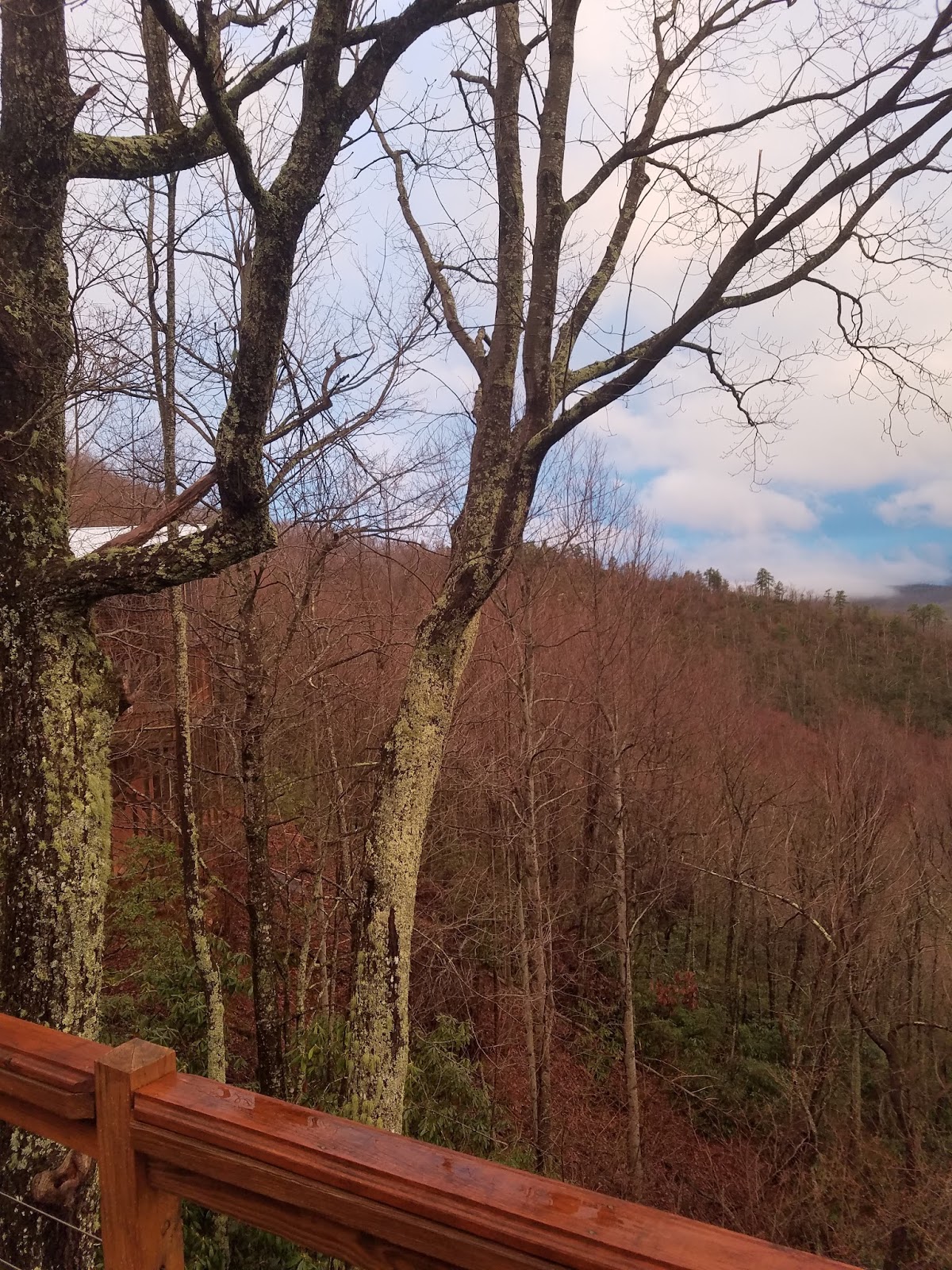
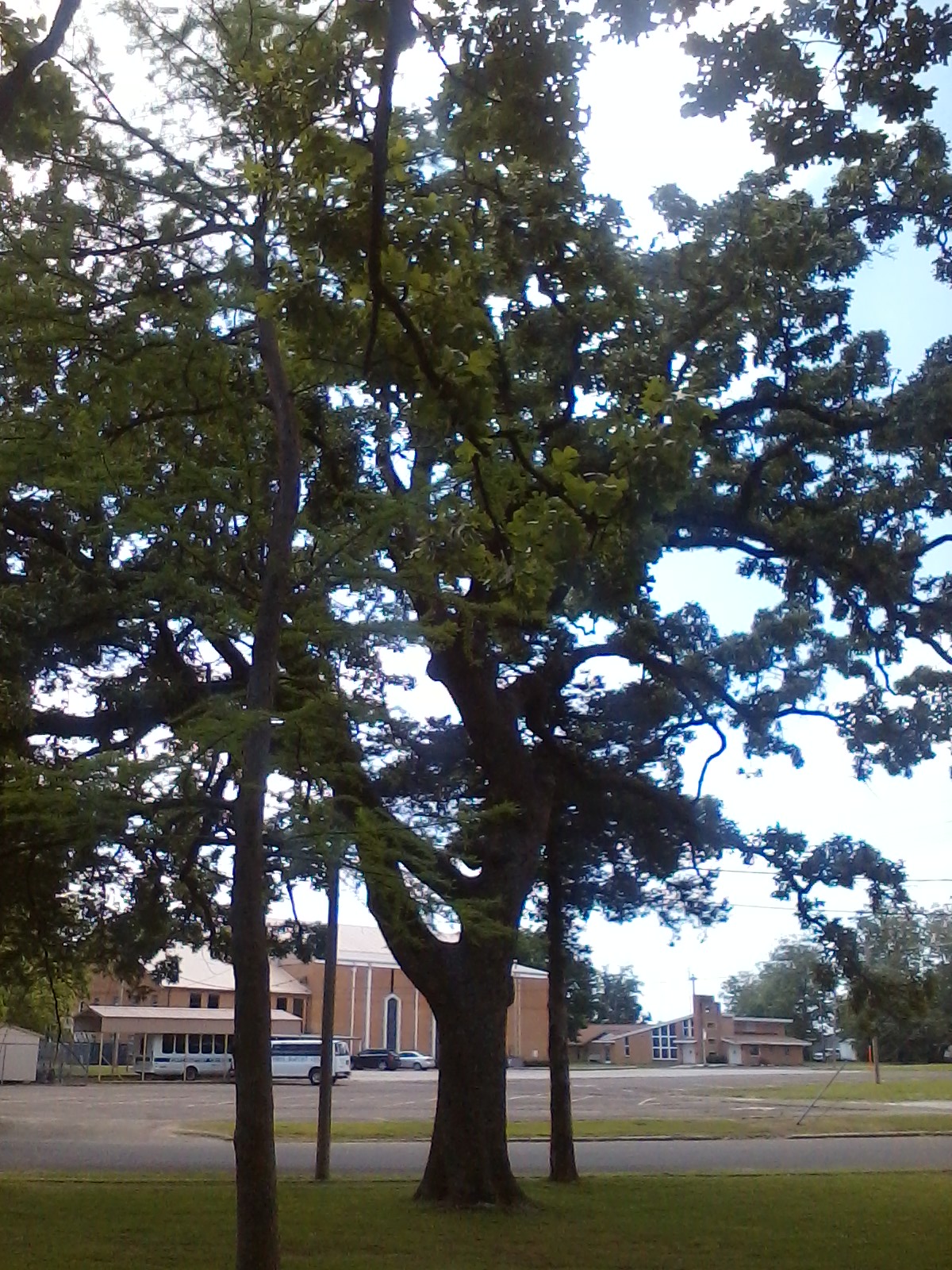
In Idabel, I loved walking among the trees near my home. Tall pines felt like older siblings watching over me as I walked on a carpet of needles and cones.  At the right time of year, pecan trees left a snack on the ground for me to munch.  Others offered full leaves to shade me in the summer and dazzle me with their colors in the fall.  In the winter, they showed their bare forms like not so shy maidens disrobed for their men’s admiration. In the spring they garbed themselves with colored blossoms.

I lived among trees when I was a child but was soon taken to live in the plains, where I spent most of my life. Once I was back with them I realized how much I missed them.

In the politics of my southern culture, “tree hugger” is a disparaging term, but I think I really am one of those people. I know for sure that trees have held and hugged me.  When I was little, I would play among them and climb into the crook of my favorite to read a book.

What if all things, animate and otherwise, are connected spiritually? Science tells us that there is a constant exchange of atoms and molecules in which we all participate, sharing unseen particles with each other right now as well as with those of the past and future. What if connection goes even deeper than that and we are actually a part of each other? I may walk among trees, but I am also a part of the trees and the trees are a part of me. Jesus once prayed for oneness: “I in thee, and thee in me, and they in us.” Would that oneness include not only persons but also the trees, soil, air, sea, and stars?

It’s such a great thought and I love entertaining it. But if it’s true, why do we get so lonely? Is it possible to simply change our state of awareness so we can enjoy oneness with everything?

photos by David Mercer