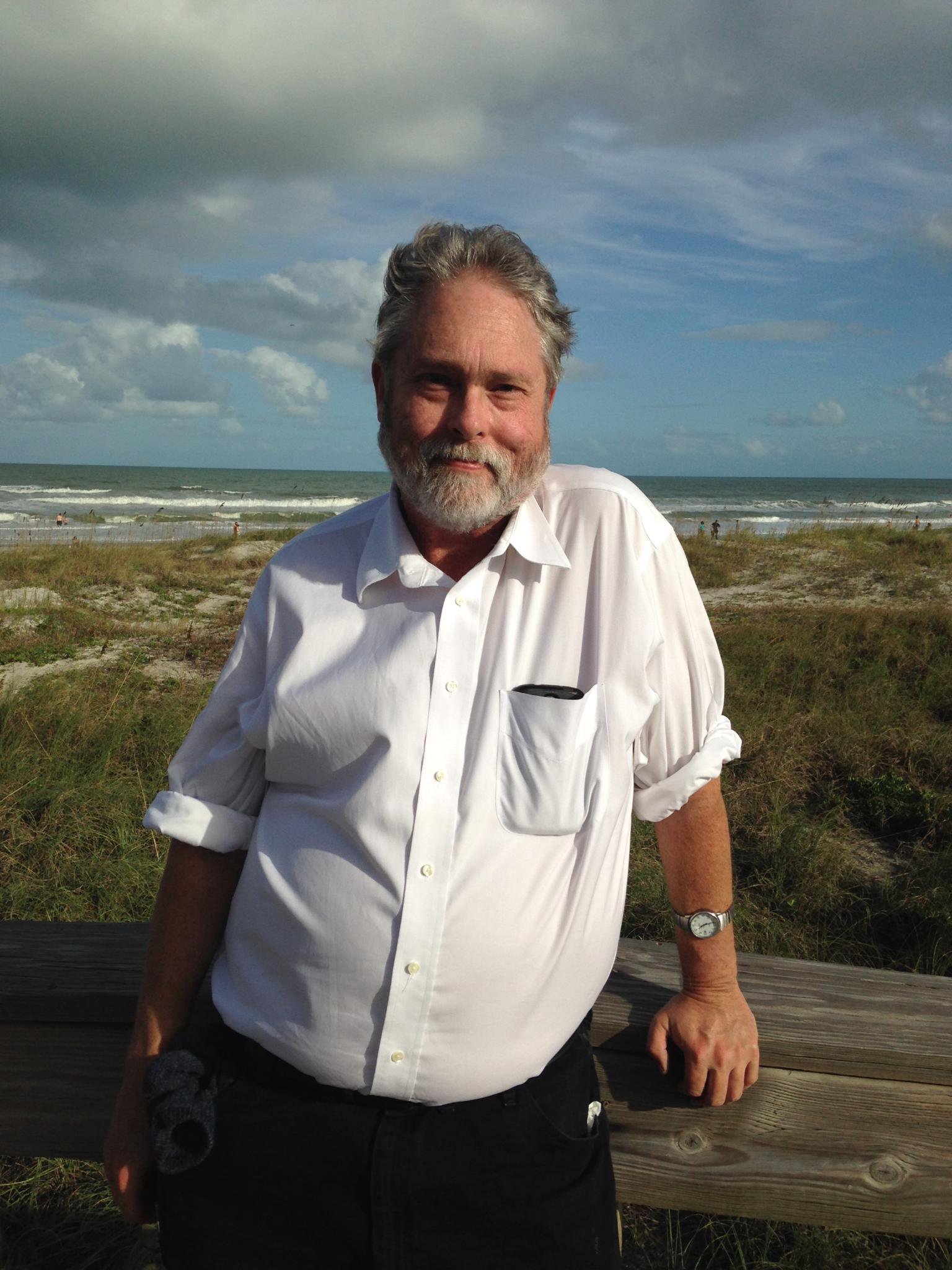
What I Said Then; What I Say Now

I was at a retirement home, giving my thoughts on a passage of scripture.  They knew I had once been a minister and that I now no longer believed. 

A woman asked me, “What would you say if your child asked you, “Did Jesus really walk on water? Did he really feed five thousand people? Would you tell them that it really happened just as it exactly as it says in the Bible? 

I took a moment to gather my thoughts.

“When my children were little,” I said,  “I did tell them that I thought it happened just as it said in the bible because back then I did believe. However, I would answer differently today.  I’d say something like… ‘Many good people believe these things really happened. However, it doesn’t seem likely that these things could occur. So, no, I don’t believe they did.’”

She nodded… accepting my answer, which was good because it was the only one I had.

A year or so before I left Christianity and was still wrestling with my beliefs, I taught a confirmation class for the young teens in my church. I reviewed church teachings with them and I talked about heaven, forgiveness, and the salvation through Jesus Christ.

I can still say what I said then:

“Your parents baptized you when you were little and raised you to hear the teachings of the church. But confirmation is your chance to take ownership of your thoughts and beliefs.  Nobody can make you. Not your parents. Not me. Even God won’t.” 

They all chose to go ahead with the ceremony because, in truth, they were still too young to decide for themselves. Evaluation of family beliefs usually happens during the college years when they are being trained to think critically for themselves. That’s when they start deciding for themselves what they believe.

I have always shied away from telling people what they HAVE to believe.  I still do.

On the other hand, I’m more than happy to say what I think is true, and I will argue strenuously with grownups who know (or should know) how to think for themselves. 

Atheism Versus the Easter Bunny

Referring to a prominent atheist, the Christian comedian would say,

“Hey, I don’t believe in the Easter Bunny but I don’t make a career out of it.”

The Baptist performer made his career traveling the world using his funny stories as a tool for evangelism.  He was, and still is quite effective, with his blend of humor and pathos and I used to think his line about the Easter Bunny was funny.  

But let’s turn this around a bit and say, hypothetically, that instead of God, the comedian believed in something silly, like… the Easter Bunny, and made his career out of that belief.  What if he performed all over the country basing his message on this belief? 

And what if, when challenged, he took on a serene, sanctimonious look as he gave his witness: 

“I know it’s true,” he might say, “because I feel the Easter Bunny in my heart.  My parents taught me it was true and I still get a warm feeling when I sing the sweet childhood songs that proclaim the power of the Bunny.  I meet regularly with others to have special Bunny Study Groups and we encourage each other when our doubts haunt us.  Plus, once when I was hunting Easter eggs I had almost given up hope but then the Spirit of the Bunny spoke to my heart and showed me where I could find some—and I did! More than my basket could hold! So don’t tell me the Bunny isn’t real!” 

What if billions of people said the same thing? 

In that context, I think I could understand how someone might choose to make a career arguing against the existence of the Easter Bunny.   

Sure, it’s a silly scenario.  However, billions of people actually do profess a belief in a deity they have never seen, heard, or smelled, and they use the same, uh, reasoning to justify their belief.  And so, yes, some of us resist the concept although we rarely make a living from doing so.

Someone might ask me, “Why make things so unpleasant by arguing? Why not go on with your life and let people believe as they do?  Why can’t we all have mutual respect for each other?” 

Mutual respect sounds pretty good to me, and it would be a great starting place.  We could all be quiet and let everyone have their own thoughts.

So how about this:

I’ll get quiet when the Evangelical Christians do.  When they stop their global campaign, I’ll stop writing and talking.  I’ll stop speaking up when they stop trying to condition the minds of little children with songs, stories, and threats.  When they quit trying to force the schools and the government to carry their message for them, I’ll stop protesting.

Many Christians accuse atheists of having a hidden agenda, which I think takes a special blend of nerve and insanity, considering that their highest priority is to convert the entire world.

By the way, there’s nothing secret about the atheist agenda.  Simply stated, we won’t be forced to believe in God.

It may not be much of a career but it’s a powerful cause.  

Not Experiencing God

In the last blog entry I asked readers, “Can you describe God without quoting the Bible or using imagery?” I was trying to show that it can’t be done because God can’t be proven.

Several people communicated their thoughtful replies. I want to be respectful but I’m going to argue back.  

Some said that there had to be someone who created everything that exists. “Just look around you, David. Does it make sense that all this just HAPPENED?”  

I’m told that physics actually does explain how everything “just” happened.  However, I’m not a scientist and neither are the people who posed this argument and it didn’t seem productive to continue this discussion.

Except I want to make this observation:

This argument reduces God to a vague entity, a hint that something out there might be behind the appearance of the universe. This is very different from the God of Christianity, which describes a heavenly father who loves people passionately, responds to prayer, communes with our spirits, and remains in charge of everything that is. 

Christianity has formed massive bureaucratic institutions, produced endless volumes of doctrine, and has influenced governments. And the argument for this God’s existence is that there might be something out there that created everything?  

That’s very weak. 

Another argument is that God is immeasurable and the fact that God cannot be proven indicates that God actually exists.  So, not seeing any evidence of God actually reveals his existence…?    

That’s very weak, too. 

Some admitted that their understanding of God was based only on personal experience: their inner feelings and thoughts. They saw God through their interpretation of events in their lives.

I am reluctant to refute someone’s subjective experiences. But I’ll offer my experiences in comparison:    

By faith I believed God to be true. I committed a life of service to this God. I did my best to help the people who followed him. I spent years in school honing my theology as well as my skills as a pastor. I prayed, meditated, worshiped, and studied. My experience is that no one answered me except my own thoughts. 

At some point when my energy failed and I felt utterly alone, I gave up believing. And I’ll tell you something else. If this God really does exist, I don’t care. I won’t continue to pursue a relationship with someone who has ignored me my entire life.

I know there are other people who are haunted by similar thoughts but are reluctant to tell anyone. So I’m saying it for them and I’m here if they want to talk. 

Still Here and Still Me

I saw people at my mother’s funeral that I hadn’t seen in forty years.  The last time we were together, I had pimples and I was thin with thick dark hair.    

I have since evolved.

Now I’m thick with thinning gray hair, and the pimples are gone but the liver spots are blooming. 


But I’m still here and I’m still me. I’m still humorous, musical, creative, passionate, loving, and enormously graceful on the dance floor (Remember I said I was still humorous?).     

And to those who have been a part of my life, you haven’t gone away either. You are still with me in my mind.  Our conversations, feelings, experiences… they’re still inside me. They are part of the mix that is my identity.  

My mother died and I’m sad about it.  But I share DNA with her. The memories, her words, laughter, tears, music, squabbles, and struggles… they stayed with me. I don’t have to wait for an unseen heaven to realize that she didn’t really leave me.

I’ve traveled a long way from where I spent most of my life, and I live more privately now. But my friends from childhood, churches, and other communities have stayed with me in my mind through all the big changes.  I’ve had lots of tears and confusion but as they fade, I observe that I still have great love. 

I’m still me and I’m still here.  But I’m still evolving too.

What Do I Call Myself?

It’s hard to find the words to describe myself.

Am I a nonbeliever? An agnostic? A heretic?  An infidel?  These terms suggest that I have lost my identity and am reacting erratically  like a bouncing pinball. But I haven’t lost myself. I’m growing up.

 “What happened that made you lose your faith?” asked a friend. 

There was no one event.  Others like me have said it is like “dying from a thousand cuts,” meaning that it happened gradually.

I remember the first time I seriously questioned my belief nearly two decades ago. I was sick and unhappy, and I prayed hard for help.  I didn’t need much–just some kind of reassurance, some indication that the loving God about whom I preached was really there.  It never happened.  How could I not question his existence?  With the exception of one friend, everyone shushed me and told me not to let my mind entertain doubts. 

I did what they told me. I decided that no matter what, I would continue to believe. I continued to develop my career as a minister. I went back to school and got my Master of Divinity.  When I felt doubt I told myself what I told other people: “You still have a choice.”

I chose to believe until I gave up. 

You know what? I lost some friends, a career, and a marriage, but life didn’t end for me. It started to get better.  I started to grow rather than diminish.  A year later, I have a little more peace and feel a little less broken. I have love and happiness. I have new thoughts and new opportunities. 

So back to the question: What do I call myself?

That’s easy.  I am David