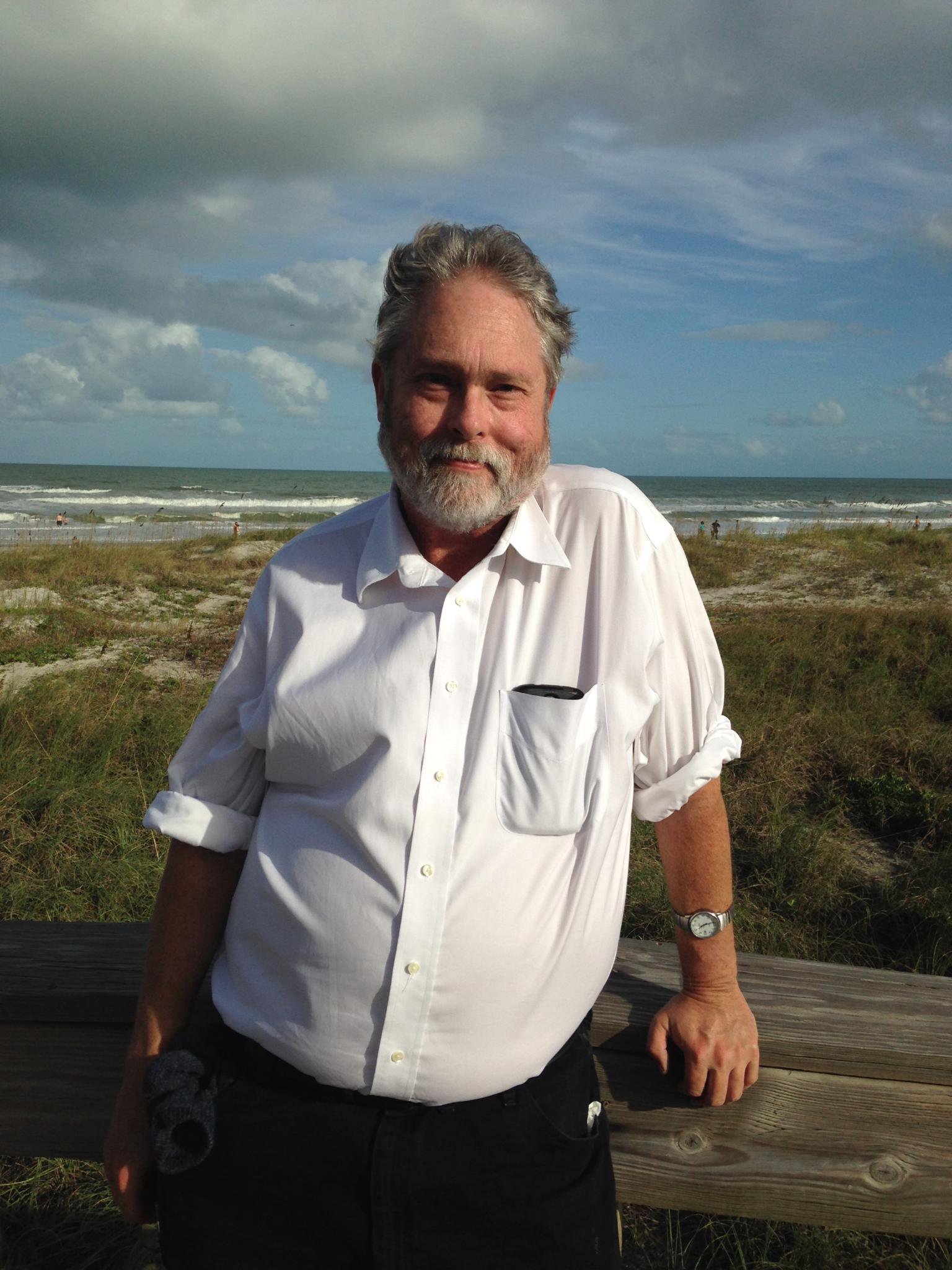
I Don’t Have to Go Back

I’m so appreciative of the medical community these days and I’m often concerned at how stressed they are. Even before Covid, many of them were overworked. I don’t know how they keep at it day after day.  I wish I could show them support or even step in to work with them like I did when I was a minister where I was present for people during their times of suffering.

I was glad and honored to do it, but you know what? Hospital visitation and the other things didn’t come naturally to me. I was always squeamish  as a kid. Needles and blood made me feel faint. As a young minister, I often found myself shaking as I entered a hospital room to visit a parishioner. A couple of times, I lost my nerve and left before I went in. But I persevered, learning how to push my anxieties aside. It was important to be with people during their vulnerable moments. In addition to visiting the hospitals, I volunteered to drive an ambulance for a small community, and was a hospice chaplain, often sitting with people during their last moments as they lay in their hospital beds. 

Those early anxieties returned to me the last couple of years before I quit the ministry. By that time, even walking into the nursing home to perform music for the residents made me shake all over. My counselor suggested that my carrying the secret of no longer believing in God took a lot of energy and so doing the work of ministry, especially during those intense moments, was much more draining.      

I’ve mentioned before that all those memories remain in my mind.  Watching a medical drama on TV can trigger a lot of emotions that lurk just under the surface of my consciousness.

I’m not sure I could ever go back to doing that work in a professional capacity. And that seems a shame because I have the skills and experience for it. It makes sense that I might at least volunteer my services somehow as a humanist chaplain.  But I don’t think I can. Maybe I did as much as I could and my shift is over.

But letting it go is not easy.  I’m relieved at the thought of being released from that duty, but I also feel guilt and obligation, especially when there’s more suffering and grief than ever. 

But I took my turn and I don’t have to go back to it. Maybe that’s more than okay. People tell me to enjoy the life that I have now.  I’m still learning how to do that.

Roadside Reacquaintance

We were heading home in Craig’s red Jeep after a long day of attending classes at the university, expecting to arrive home by two a.m.  At midnight we stopped on the shoulder of I20 just outside of Fort Worth so Craig could check something under the hood. 

At that hour, the interstate was pretty quiet. A beat-up sedan pulled up behind us and a young man climbed out. He was barefoot and shirtless. His jeans were too big and he wore no belt so he held them up with one hand.  Inside the car, at least six other young men and women lay tangled together motionless.

He weaved his way toward us.  

“Y’all need any help?” he drawled.

“No thanks,” Craig said, “We’re fine.”  And he slammed the hood down.

“Are you sure? Looks like y’all might be havin’ some trouble.”

Then he looked down, surveying himself, and said,  “I’m sorry I look so bad.”

The six other people in his car stared at us with glassy eyes. 

“We’re ok,”  Craig said. “We were just leaving.”

“Where are y’all headed,” he inquired.

Don’t tell him.  Don’t tell him. Don’t tell him, I prayed.

“Um…, back home” Craig said.

He peered into Craig’s face. 

“What’s your name.”

“Um…,” my friend said again.

You’re CRAIG! Aren’t you?”  

“Yes.”

The boy put out his hand. 

“You remember me?  You once SAVED MY LIFE!” 

It turns out that a few years before, when he was a teen, Craig had counseled him, guiding him past his suicidal ideation. Admittedly, the boy might have needed to work through a few more issues, but at least he was alive.

In fact, countless people are still alive because of Craig’s work. 

Craig slipped into a redneck vernacular to converse with his new/old friend.

“Oh, hell, we’re fine. There’s nothin’ wrong with this Jeep.  I was just checking the oil.” 

Then the guy peered over at me and said, “Do I know you, too?”

“I don’t think so.”

“You might,” Craig said helpfully.  David is a chaplain for Hospice.”

This time he reached out to shake my hand.

“I thought I recognized you! You came to our house when my grandmother was dying. You remember?”

“Sure!” I lied.  “How is everyone in your family…?”

After a few minutes of chitchat, he got back into his car with his still motionless comrades.  We got back into the Jeep and headed for home.

“Do you remember him?” Craig asked.

“Nope,” I said. 

We crossed paths with many people in our respective jobs. Those were intense years and I worked hard every day, sometimes visiting people until late at night. A lot of it is a blur in my memory now.   One of the reasons I write is to remember more clearly.

But sometimes all I remember is the blur.

Coffee Klatch

I took a break on my motorcycle ride for coffee at McDonalds. I sat near a group of guys who were wearing the standard retired guys’ attire of Florida:  T-shirts, long shorts, knobby knees, and pasty skin.  There are similar coffee klatches everywhere on weekday mid mornings.  

They were comparing the business models of Walmart and Dollar Store, trying to ascertain which had the better bottom line. Their sources were like:

“I walked into a Dollar store and I saw….”

“My brother-in-law once worked for Walmart, and he said…”

“Don’t let anybody fool ya, these guys are all…”

Not exactly titans of industry.  It was more like those uninformed political discussions with raised voices and bug eyes, only more boring.  Honestly, I’ve known more interesting nursing home residents who couldn’t talk and needed help wiping the drool off their chins.  

I like good conversation about people we’ve known,  adventures we’ve had, and life lessons we’ve learned.  We could share our unrealized dreams or make up stories about the heroes we once were. We could talk about literature and movies. If we want to be bored, we could talk about our children and grandkids, but that would be okay.

Additionally, I don’t want to just hang out with old men. I like being with women, men, and children of all ages. I’ll especially want to talk with children.

I’m pretty close the age of these guys. In a few years, the highlight of my day could very well be coffee with other old people. That might be okay but I hope to hell that somebody will shoot me if my conversation devolves into this kind of mindless drivel.

Grief and Ice Cream

In addition to being the minister for a church in a small town in Central Texas, I was a volunteer for the community’s emergency medical service. One afternoon, a call came in that an accident had occurred at the place that stored seed and fertilizer for the farm community.  When we arrived on the scene we found people digging furiously into tons of fertilizer that had come down when its bin had given way, pouring its contents on top of the man who was standing under it. 

His friends and his two grown sons dug, not even knowing where he was.  Finally, they found him. He wasn’t breathing, and he wasn’t going to, but they tried the defibrillator on him anyway, repeatedly. 

I was horrified at the scene. My eyes filled up and I wanted to sob, but I realized I was supposed to be the helper, so I swallowed back the feelings and went to work.  In addition to being the ambulance driver, I was the chaplain for our team. I went and stood next the two grown sons who watched their father’s crushed body not being revived.  They were big burly young men, shocked and speechless. I don’t remember what I said to them—I think I was trying to be clever.  They just nodded as if they could understand me through their shock.  Then I reached up and hugged each of them, telling them how sorry I was. 

For the rest of that afternoon, I listened to people who had been on the scene—emergency crew and onlookers, all of them needing to process what had happened. 

I was twenty-four years old. 

By early evening I was emotionally exhausted. But my ministerial duties demanded that I attend to one more task: the ice cream social at church.  I’d have much rather sat in a dark room of my house, but I had to go because I was, you know, the minister.

Ice cream and cake were served outside in the courtyard of the church building. Everyone brought their homemade ice cream, except for Frances, who brought Blue Bell and tried to convince us she had made it herself. We didn’t care because we all liked Blue Bell. 

I didn’t feel like joking or smiling or helping.  I got in line and a little boy was in front of me.  He was around five years old, blond, blue eyed, quiet and thoughtful. I helped him fill his bowl and then asked if I could sit with him. He nodded. 

We sat in the cool grass under the evening shade. He and I agreed that homemade vanilla was the best flavor then attended to the business of eating in silence.  I learned that evening that little children are restorative. 

The things I learned that day are:

I have to feel the feelings but keep myself intact so I can help others.

People don’t always need me to speak as much as they need to talk.

Sometimes healing is found in eating ice cream outside with a kid.

Excellence in Bagging

I’m terrible at bagging groceries. I look like I have a third elbow that I’m trying to coordinate  into the mix of hands, arms, those infernal plastic bags, and the items that come flying across the counter at me. 

I’m gradually getting better at it thanks to good advice and experience. Also, there’s Richard, who inspires me. 

He often bags for me when I’m working the register, and he’s truly a force to behold. He moves faster than anyone I know and when I work with him, I move faster too. We make an impressive team, with the customers often marveling at our speed and efficiency.  And we’re the two oldest guys in the store, which gives me enormous satisfaction and I have to stifle the urge to stick out my tongue at the young ones.

We compared ages the other day. Richard is sixty-four. And as I’ve said enough times to become tedious, I’m nearly sixty.   I told him that he moves like a younger man and he said the same of me, which is what old people tell each other when they’re not comparing aches and pains.

Richard is handsome, Haitian, and charms the children, men, and especially the ladies while he moves at lightning speed.  He switches quickly from French to Spanish to English to engage with customers.  He’s not the only multilingual worker at our store.. I myself speak English, a little bit of Spanish, and a few remnants of Pig Latin.

To improve my own bagging skills, I started channeling Richard a bit, and it helped. However, I caught myself speaking with a French accent and I sound more like Pepe Lepew than Richard, so I stick with my normal Redneck West Texas dialect. 

One evening we served a vacationing family who noted how fast we two old guys were. They were especially appreciative of how accommodating Richard was—he retrieved a balloon for the child, presenting it to her as if she was a visiting princess.  He stepped away for a moment and the dad commented on how wonderful Richard was.

“If you got a minute, sir,” I said, “perhaps you could step over to customer service and mention that Richard did a good job for you.”

And that’s just what he did. Whenever a customer takes the trouble to commend a worker by name to management, the worker gets a free sub sandwich (actually half a sandwich, but it’s nice).  I also got a sandwich because good things happen when you hang with quality folks.

If I was still a preacher, I would probably ruin the flow of this narrative by offering five points on how to be a good example at work.  instead, I encourage you to notice some of the amazing people that work at your grocery store… like Richard.

A Soul Behind the Words

She was bipolar.  I knew her when she lived in the nursing home. When she was manic she would request to see me and then talk nonstop the whole time I visited.  She told me she needed to write a book about her life because people needed to know about her. I think she tried to tell me the entire content of her book each time I visited, but it came out incoherent:

“When I was a kid we always… And I had a dog…… I once had the prettiest dress… What was her name? At school I was the best at…On Sundays, my mother always made… I think everyone will want to read this, don’t you?…”

She never wanted me to go.  If I said I was leaving and leaned forward to stand up, she would talk faster and more frantically until I sat back in my chair.  Then she would slow down but never stop.  Finally, when I really had to leave, I would stand up while she talked, step away while she talked, open the door while she talked, and walk out while she talked.  Once she screamed my name repeatedly as I walked down the hall away from her room . 

I continued to visit her because I loved her and I could sympathize with her wanting to reach out to make herself known.  I’ve spent my life listening and trying to understand what people are saying, but a conversation with her would exhaust me.

One time I tried something different where I practiced a kind of mindfulness with her.  I got quiet as her chatter picked up the tempo and instead of listening hard to suss out what she was saying, I tuned it all out and tried to imagine connecting with the real person trapped behind the illness. The faster she talked, the stiller I became, not just with my body but in my mind.  At one point I reached out and took her hand. 

“See the person behind the words,” I told myself.

And two souls sat together. One was unable to stay silent while the other kept watch as both of us reached out to each other.

When it came time to leave, she was still talking.  But as I stood up she interrupted herself to say…. “You are so handsome!”

And then she was quiet.

I patted her cheek and promised to come see her again soon.   

I once had a Native American friend tell me that his spirit could talk to the spirits of other people. I wonder if that’s what I was doing.  Or is it enough to simply recognize the deepest part of a person that exists behind the words?

She never wrote her book. She left behind some scribblings which were often strewn around her room, looking similar to my study, come to think of it. But it is important that she lived, that she mattered, and that she was known. 

Connecting

The first few sermons I preached were in Abilene Texas at the Central Church of Christ while I attended college.  Gosh, I was really terrible! Those sweet people listened patiently to a twenty-one year old kid tell them how to think and be.

On one occasion my text was John 11, the story of Jesus raising Lazarus from the dead. Most of what I said was quite unmemorable, but one thing stands out in my mind:  

“Perhaps the most powerful moment of this story.” I marveled, “is not that Lazarus was raised, but that Jesus saw the grieving people and wept for them.” 

As I said these words I looked up from my notes and “saw” my audience, too, which included several recently widowed people.  I saw the clutched tissues, heard the quiet sniffling, and met their red eyes.  Not only did I say something they needed to hear about a caring god, but I connected with them and was moved by their sadness.  At that moment I learned that the most powerful thing to happen in the pulpit does not come from eloquence or charisma, but from connecting with the people and feeling what they feel. 

I experienced the power of my audiences’ feelings many times over the years. Their angst could be a force that would engulf me and weigh me down. Occasionally, my words helped but connecting with them was what made people feel a little better.   

It didn’t happen every time. Sometimes the audience didn’t trust me enough or I was too tired to carry the burden. But it happened more as I got older and worried less about performance and focused instead on the people.

Pangs of Envy

As a teenager I was envious of a fellow member of our church youth group.  His parents were rich and they lived in a nice house and they had nice things including an airplane that he got to fly– something he mentioned in every conversation. He was handsome and the girls literally slobbered on themselves when he beamed his smile at them. And he was the most spiritual person in our youth group, saying the longest, most eloquent prayers which often included his airplane.  Seriously, he worked very hard to be the conscientious, spiritual, humble, athletic, heroic girl magnet that he was.   

Photo by Rachel Claire on Pexels.com

I didn’t want to be jealous.  He really is a good guy.  He grew up to be a surgeon and then he sold the practice and opened up a medical mission in a developing nation. 

He was chosen outstanding alumnus at Abilene Christian University, and he was asked to speak at chapel on the first day of the semester. I watched it on YouTube during my break at the grocery store, munching on potato chips.  He is still handsome at sixty–like a movie star who has decided to make his hair gray to acknowledge he’s aging but still sexy.  He opened with a few words in a foreign language and then spoke of his mission work, challenging the students to go out and make a difference.  

I don’t have the nice suit like he wore when he spoke. I traded it for a store apron.  I may have an advanced degree but I don’t have the religious pedigree anymore. The sacrifices I’ve made will not be written up in ACU Today and my college will definitely not be inviting me to come back to speak in chapel. In fact, I’m sure I carry the honor of being the least remembered alumnus of Abilene Christian University, having been forgotten even while I attended. 

I don’t really know why I’m envious. In earlier years I would have enjoyed being admired in this community that once meant everything to me.  But I quit wanting that a long time ago. Now, I’d rather be an atheist and own my own mind than someone who dedicates his work to a delusion like my handsome friend still does.   

But I admire the guy.  He could have chosen a much easier life but instead focuses on healing people. If he does it because of his religion… well, we can argue the merits of that, maybe.  But for whatever reason, he chooses to do good, and that’s admirable.

I choose to do good things too, between and sometimes during shifts at the grocery store. The handful of people whose opinion I care about already think well of me.

Still, I feel a pang of envy every now and then but I can recognize it and  make fun of myself over it. 

Vulnerability at the Cash Register

I’ve collected more significant moments at the cash register that involved how old a person was and the alcohol they were buying..

First, even though he was pretty close to my age, a man acted a little hurt that I approved his alcohol purchase without checking his ID.

“Don’t worry, sir,” I said. “After all, James Bond is over twenty-one, too.”

“Nice recovery,” he laughed.    

We can all use reassurance even in the lighthearted moments.

One lady knew how to give reassurance.  She grinned when she showed her ID, and she pointed at her birthday, showing that she was sixty. 

“Wow, that’s hard to believe,” I said.  “I mean I’m almost sixty.”  

She smiled and said, “And you still sexy.”  Then she high-fived me and be-bopped out of the store.

“You just made my day, ma’am.” I called out.

Another lady was buying a beer at the self- checkout when I approached to verify her age. She was middle-aged and I teased her, saying “I need to see that you’re at least twenty-one.”

She gave me a sly look and said, “I could be twenty-one for you, if you want me to be.”  It was part jest and part challenge. 

‘Um…” I said eloquently. 

She smiled. 

“I wonder if you’ve already had one or two of those,” I said, pointing at the beer, going for the laugh..

“Maybe you could get a beer and join me,” she pressed, eyebrows arched, smile bigger now. 

“I think you’re on vacation and trying to be just a little bit bad,” I smiled back.  “Hope you have a great time.”

I wiped the sweat off my forehead when she left. I was still processing that little encounter when she came back through the line.

“I just needed one more thing she said.”

I was out of clever retorts so I repeated my wish for her to have a nice vacation, looked around and said, “Who is next please?”

I’ll be honest. I was flustered and felt like an awkward teenager. I think she enjoyed that. But–and this is subjective on my part–I sensed loneliness behind her banter.    

Then there was the woman who was so tickled to be carded that she squealed that she was going to tell all her friends. She reached up and hugged me around the neck–something I think she does easily and often. I was moved as I often am when someone reaches out and touches me. I thanked her for it and so she gave me another. 

What’s my take away from these little encounters? 

I think we all show a little more vulnerability than we intend to and some of us are better than others at offering encouragement during those moments.    

I’m Done

I’m done. 

I know I know. I was done five years ago when I quit church, religion, and career.  But I’ve come to realize that I’m really, really done.  I mean it… truly… emphatically… no fooling… probably.  

I’ve daydreamed a bit that I would find a way to return. Not as a believer but as a minister who still cares for his people.  I imagined going back, reclaiming my pulpit, and preaching a new message where people can find hope in their hearts and each other, rather than in a god who is reported to be loving but has a record indicating otherwise.

But I won’t be going back. Other people have tried. In Acts 7, when Stephen stood before his own people and preached of a new understanding of God, they covered their ears, gnashed their teeth, picked up rocks, and stoned the guy to death.  That won’t happen to me because I don’t see being invited to speak to any of my churches again.

I could start one of those atheist churches where people gather to sing, hear lectures, and take up humanist causes.  That’s not bad but just walking into one of those places brings back bitter memories of churches with their political bickering and endless efforts of self maintenance rather than ministry. I know groups that do good things and I’m supportive in spirit, but  someone else can be the leader because I’m done.  Perhaps I can speak and write occasionally for them but that’s it.   

I liked doing pastoral work.  Actually, I loved doing pastoral work.  I liked checking up on the welfare of people. I liked visiting hospitals and nursing homes. I loved hospice work.  I liked being called on in times of crisis.  I was good at counseling and comforting. I performed funerals that helped families feel better.  I’ve not really been able to let those things go. 

In fact, these days I call myself a secular pastor and I can do the same work without the religious emphasis. But I can’t do it every day like I did before. I’m still recovering from the three and a half decades of witnessing other people’s sickness, sadness, and crises.  So I do a little… the things that crop up with friends, family, and the occasional stranger. But even the little I do costs me emotionally, bringing back the traumas of people I helped in years past. 

I’m also glad to be done with all the attention. I’ve been in the public’s eye all my life–first, as a preacher’s kid and then as a preacher myself. I thought I would miss the attention but I really don’t and often I feel relieved to lead a quieter life. 

It took me five years to let it all go, sort of.  And I’m still in startup regarding the remainder of my professional years.  So far it has evolved to where I work as a cashier and a substitute teacher so I can fund my work as a writer. Evolution never stops, so I’ll let you know what happens next.