I Hope I’m Wrong About This Prediction

I’ve always felt gratitude and respect for the service of the outgoing Presidents, even the ones for whom I didn’t vote. Until this one.

It’s the last twenty-four hours of his term, and I’m not breathing a sigh of relief just yet.

In every church I ever served, there was a Trump personality who grasped for leadership positions because they craved the spotlight and delighted in control.  As a new pastor, I had to consider my options carefully.  Should I leave them in place and let them have their little fiefdoms while I did my own work? Would I try to work with them because it would be professional suicide to oppose them? It was often a mistake to leave them in place because they tended to bungle their tasks, causing harm to the people around them. So I usually made a quiet decision that it was time for them to go.

It was a matter of mitigating their damage, fending off their attacks and peeling away their layers of influence. However, even if I was successful in removing them from power, they stood in the shadows, waiting for an opportunity to harm me, which, let’s face it, they succeeded in doing more than once in my career. 

I KNOW that Trump is not going to fade quietly away in shame or embarrassment.  He’ll say something wretched or do one last thing to cause wreckage.  Will he try to spur his crazy lackeys to commit more violence? 

He won’t be able to help himself.  And he can’t really be contained because up until noon tomorrow, he’s still President. And when he’s gone from the White House, he’ll bide his time until he can do more damage. 

I speak of this with dread; however, I know others are hoping he will try one last thing. Some of them are my fellow Americans and some of them are in the Russian government.

Maybe he’ll just join a church.  Some of them still like him, I imagine. They probably think he has money left to build them a new sanctuary. Or maybe he can get Mexico to pay for it.

Maybe Less Can Be More

In thirty-five years as a minister, I did my share of crisis work where I comforted people who were experiencing their worst and sometimes final moments of life. I was a pastor, a hospice chaplain, and even a volunteer ambulance driver.  I did funerals, visited the hospitals, and went out to scenes where someone had just died, either slowly or suddenly. 

It was rewarding work and after a lot of years I got good at it.

But the work also became more difficult as time went on. I felt the wounds of others more acutely and they accumulated somewhere within me. They’re still there.

In my last year, whenever I visited the hospitals or nursing homes, I’d start shaking before I entered the building. I would become dizzy and my heart would pound. I’d tamp it all down and force myself to go in and comfort the people.

A lot of things contributed to this anxiety, but suffice it to say I simply reached my limit. 

It has been nearly four years since I left professional ministry and I still feel like I’m convalescing.  The anxiety and grief can come flooding back when triggered at unpredictable moments.  A troubled person in the line at my register, a sad drama on TV, or sometimes just my thoughts during a quiet moment will trigger me and I’ll cry and shake like I did during my last year.    

On occasion, I still do funerals for those who need a humanist minister. I’m glad I can still be of help this way, but it costs me emotionally, and it takes at least a day to recover. My counselor suggested I allow myself that time instead of trying to ignore it and jump back into my normal schedule.

Maybe it’s okay to be sad about the past.

But is this all I can do from now on? Am I the guy who was once the starting quarterback but is now diminished to where I only play occasionally off the bench?

I can’t look at it like that. I have a whole life to live and it does not include becoming less as I get older. Maybe I’m quieter and less noticeable but I cannot be just… less. 

Maybe I’m still in the state of becoming and I’m actually more.  Being older, slower, more tender—maybe those are signs of development rather than diminishment.

I think I’ve been expecting to rest enough to where I can reclaim the energy I used to have and then step back into a life as intense as I once led. But I think I’m progressing to the next level of life. I choose to see becoming older and more tender as symptoms of growth and meaning rather than diminishment.

It feels like I’m less but maybe I’m more.

A Conspiracy of Silence

My aunt was funny, brash, and loving. Athletic and adventurous in her younger days, tender and caring until the day she died, she was adored by everyone.

But she had a secret, sort of….

She was a lesbian.

Everyone knew but they never spoke of it. Perhaps it was best that way since everyone thought it was shameful and wicked. Silence saved us all from discomfort and embarrassment. It was easier.

Okay, maybe not easier, but silence at least made life safer because if she had been open about herself, she could have been in physical danger at times. More recently, I’ve wondered about the emotional and psychological pain she suffered as a consequence of her (and our) silence.

I was still a minister when I had my last face-to-face conversation with Mom before she died. It was early in the morning and we sat at the kitchen table while I told her that Christianity had been wrong to condemn the LGBTQ and I had been wrong in standing by silently. It was my intention, I told her, to begin a support group within my church where the LGBTQ in our community could come to talk and worship. However, while most of my congregation was on board, I still had to find a way to provide privacy for them because Oklahoma, like a lot of regions, is still not friendly to the LGBTQ*

Mom showed a great deal of interest, which surprised me. I thought she’d be uncomfortable, maybe even a little afraid for me. However, she asked me more about my thoughts regarding the scriptures and church doctrine. I told her that Jesus never made an issue of people’s sexuality, and he defended those who had been shamed by society. He said that people would be welcomed into heaven based on acts of love, not their religion.

She nodded and then she told me about her recently deceased sister.

Years before when they were much younger, they had attended a weeklong religious revival. On the last evening, the preacher gave the invitation and while the song played “Just As I Am,” he waited for people to come down the aisle to repent publically of their sins so they could gain forgiveness and redemption.

My aunt looked at Mom who nodded to her in encouragement. And then Mom’s sister went to the front of the church where she was baptized.

For a few moments, my aunt felt forgiven and clean. Her sins were washed away and she was now acceptable in the eyes of God. But redemption doesn’t last long in the church. My aunt remained a lesbian and she went on to have a relationship with her partner that lasted the rest of her life.

My aunt was one of the kindest people the world has known. She checked on the people around her, asking after their health and other concerns. People loved her and opened up to tell her all their problems. And she was generous, giving her time and energy to make people more comfortable. Mom said that she once watched her sister literally give away her last nickel.

“You tell me,” Mom blurted out to me that day in the kitchen, “that a woman like my sister didn’t make it to heaven!”

I assured her that she did.

I don’t believe in heaven or hell or God and Jesus anymore. They’re not real. However, the church and its conspiracy of silent condemnation are quite real.

I find myself shocked at what we did to my aunt and others like her. I’m horrified that we locked my sweet, loveable, funny aunt into a prison of silence, where she dreaded the day she would die and go to the hell we had created. And I think of my mom, who worried that she would never see her sister in heaven. And I think of the people in the LGBTQ who are offered only condemnation by their churches.

I deeply regret that I was a leader in that culture and that I stood by while the silent ones were alone in shame and fear.

I’m so sorry.

_ _ _ _ _ _ _ _ _

*I moved away from town soon after and never started that support group.

Will God Answer for His Actions?

The following questions often lurk in the believer’s mind, especially at times like these when we are dealing with the COVID-19 virus.

Over my time as a minister, people whispered these questions to me, often ashamed to put them into words. I’m articulating them in hopes of engaging their thinking.
I’m not asking anyone to justify their theology to me. I don’t need to have answers to these questions anymore. However, I’m happy to have a discussion and I promise to reply back gently and genuinely. I’ll monitor the comments and omit any that are hostile or disrespectful.  


Why does God allow any disease to afflict us?

I used to deflect this one by saying God isn’t really doing this to us, but that in some way we’re doing it to ourselves. But if God is Lord of everything, doesn’t that make him responsible for everything including the COVID-19 virus?


Why does he indiscriminately hurt everyone?

Some say sickness is punishment for specific sins that some people are committing. For instance, it’s popular to blame the LGBT, saying we are all suffering for their sinful lifestyle. It’s an ugly accusation, and it makes no sense. Why wouldn’t God specifically target a group with whom he is angry?

Others say we’re being punished for the general sinfulness of the world, but that’s not really fair, either. Some are worse than others and some are more innocent.

I know–one sin is as bad as another in the Christian religion (James 2:10). But c’mon! We all know that isn’t so. Angry babies aren’t as guilty as bank robbers.


How does our suffering prove God’s love for us?

Some refer to Hebrews 12:6, saying that God isn’t out to hurt us but in fact is disciplining us because he loves us so much.

Really? Abusive parents say the same thing when they beat their children.


How does allowing us to suffer reveal God’s mercy?

Many say our suffering is a natural consequence of our actions. We bring it on ourselves and we have to get ourselves out of it. The babies have to suffer right along with the bank robbers because we brought it on ourselves collectively.

So… God won’t help us out with this because it’s our fault? Isn’t he supposed to be merciful? Isn’t he interested in “saving us from our sins?” When my kids were about to hurt themselves seriously, I intervened. The heavenly father doesn’t do that, too?


Is God just… mean?

Could it be that God doesn’t really love us? Is he playing with us for his amusement and then demanding us to believe he isn’t mean, but in fact is loving and kind.? Again, I refer back to the comparison of an abusive parent.


Is God limited in his power?

Maybe God does care for us but he’s not infinitely powerful, as he’s purported to be. After the creation, the plagues, and the resurrection, maybe he tapped out and now we’re on our own.

Anytime we get this far in the conversation, someone wants to say that God’s ways are not our ways and God’s thoughts are not our thoughts (Isaiah 55:8-9), meaning that we’re not smart enough to comprehend the ways of God.

You’re telling me that God, who supposedly had a whole Bible to reveal himself to us, whose son spent all that time teaching about the kingdom of heaven, has failed in the attempt to communicate? Isn’t he great enough to overcome our weaknesses?


Is it wrong to ask questions?

Now we’re at the point where someone says I should have faith in God’s power and good intentions. We shouldn’t allow ourselves to question God. Such questions create doubt. We should not “allow Satan a foothold….”

Really? No questions at all? We’re all sort of an interested party here when it comes to COVID-19. If he’s doing this to us or simply allowing this to happen when he could stop it, is it fair for him to get angry when we ask questions?

Let’s just concede that I’m being deliberately dense, that I can’t see the truth because I don’t want to see it, and I would be much better off if I accepted God’s will without question.

Is that working for you? Are you relieved of fear? Are you experiencing that peace that passes understanding?

If you say yes, I don’t believe you.

I spent thirty-five years trying to allay the fear and anxiety that people in my churches experienced. I tried to explain away the inconsistencies. I tried to help them feel better with the blessed assurance that Jesus was theirs. But it was a temporary fix, at best.


Final Questions:

Why spend time praying to a God who doesn’t answer back, who doesn’t explain himself, and who doesn’t intervene like He promises? Why sing to him and dedicate group praise to him? What exactly has he done to deserve any of our attention as a time when we need each other so much?


Drowning in the Baptismal Waters

She was eleven years old.

She had been at an evangelical church camp–a week full of morning Bible studies and evening assemblies with emotionally charged music, stories, and sermons. On the final night, the guest preacher spoke of their need to be forgiven of their sins to be saved from eternal hell and to beg for the gift of heaven.   

The girl walked up the aisle and said she wanted to be baptized.  The people applauded and shouted “Amen!” Her tears flowed freely and the preacher explained it was because the Holy Spirit had gotten hold of her.   

I was one of the spiritual guides at that camp and I was assigned to “counsel” her on the spot. While she sat in the pew, sobbing, I knelt in front of her so I could see her face. 

“Have you been baptized before?” I asked. 

“Yes, but I need to do it again,” she said.

“You don’t really have to,” I said. “You’re already saved.”  

“Yes, I do,” she insisted. “Because I’ve been so bad since then!” 

“Why don’t you wait till you go home and you can talk about it with your parents?” I suggested. 

“No! I have to do it now!”

I was afraid she was about to reach a new level of hysteria.  I said, “Okay, but first let’s call your parents on the phone. They’ll want to know.”

She nodded.

As I led her from the crowd, she said in a broken voice: “I’m so happy…”

After talking to her parents, she decided to wait until she got home where she could be baptized in her own church. I was relieved that we slowed things down so she could rest and be with her family first.   

“I’ve been so bad,” she said. 

At eleven years of age, what could she have done that was so bad? Did she sass her parents? Had she snuck out at night to be with her friends? Had she gone “all the way”?

Did these things make her evil? Did she deserve to burn in hell forever? That’s what we taught her.  In fact, there were many lesser things, including “bad thoughts,” that would send her to hell.  Her only escape was to have special words said over her and then dunked (again) underwater.

It was a long time ago and I’ve had darker questions since then.

What if she had been molested?  What if someone had told her it was her fault? It has taken me a long time to see that our religion could be a tool to prey on the vulnerable.  The baptismal waters come closer to drowning them rather than cleansing them.     

I’m ashamed that I was part of a system that says people are evil and deserve to burn eternally.

At the time, I thought of myself as a reformer who was changing the church from the inside in Jesus’ name. I did my best to shield people like this girl from abuse but I was merely helping adjust things enough to allow an unhealthy institution to continue functioning.

I wish I had never been a part of it. Yet I also wish I had helped her more while I was there.

“Honey,” I could have said, “I don’t care what you’ve done, there’s nothing evil about you. You are a wonderful person. You don’t need to be saved. If there is a god, I’m sure he likes you fine.”

In fact, I wish I had stood up and told all the kids the same thing and then said, “You’re all marvelous, just as you are, and you don’t have to listen to this crap.  In fact, we can all stand up, march out of this place, go home, and be happy.

“C’mon. I’ll go first.”   


What I Said Then; What I Say Now

I was at a retirement home, giving my thoughts on a passage of scripture.  They knew I had once been a minister and that I now no longer believed. 

A woman asked me, “What would you say if your child asked you, “Did Jesus really walk on water? Did he really feed five thousand people? Would you tell them that it really happened just as it exactly as it says in the Bible? 

I took a moment to gather my thoughts.

“When my children were little,” I said,  “I did tell them that I thought it happened just as it said in the bible because back then I did believe. However, I would answer differently today.  I’d say something like… ‘Many good people believe these things really happened. However, it doesn’t seem likely that these things could occur. So, no, I don’t believe they did.’”

She nodded… accepting my answer, which was good because it was the only one I had.

A year or so before I left Christianity and was still wrestling with my beliefs, I taught a confirmation class for the young teens in my church. I reviewed church teachings with them and I talked about heaven, forgiveness, and the salvation through Jesus Christ.

I can still say what I said then:

“Your parents baptized you when you were little and raised you to hear the teachings of the church. But confirmation is your chance to take ownership of your thoughts and beliefs.  Nobody can make you. Not your parents. Not me. Even God won’t.” 

They all chose to go ahead with the ceremony because, in truth, they were still too young to decide for themselves. Evaluation of family beliefs usually happens during the college years when they are being trained to think critically for themselves. That’s when they start deciding for themselves what they believe.

I have always shied away from telling people what they HAVE to believe.  I still do.

On the other hand, I’m more than happy to say what I think is true, and I will argue strenuously with grownups who know (or should know) how to think for themselves. 

Evolution and Those Left Behind

I’ve had a recurring nightmare for the last three years: 

The water is deep and after struggling to stay afloat for a long time, I’m about to drown. I see land in the distance. With what little strength I have left, I swim for it.  I don’t think I can make it but somehow I do.

I crawl onto the shore and feel glad to be alive. But then I hear cries for help. I look back to where I had been and see that I left others behind and they still struggle against the deep. 

I shouldn’t have left them. I should dive back in and go get them but I can’t because I am so tired and I can’t survive going out to the deep again.

I wave my arms and yell out to them. “There’s land here!  Swim this way!”

Some don’t hear me. Others hear but refuse to move.  Nevertheless, they continue to cry for help.

I’m out of my mind because I can’t help them.  I should leave and press further inland to explore but I can’t just walk away and leave them behind.  So I sit on the shore and weep as I listen to them cry out.  

And that’s when I wake up.

I still love the people of the church. I cared for them my entire life.  I visited the hospitals, sat with the dying, comforted the grieving, and counseled the troubled.  I helped them when they were in a jam, celebrated with them during happy times, led them to acts of service, and taught them to the best of my ability.  

I didn’t want to leave them behind but I couldn’t be like them anymore.  I assumed that they wouldn’t want me in their lives if they knew how much I’d changed. Some did cut me off. Others haven’t but they don’t know what to do with me. 

Many scientists say that humans come from creatures who lived in the sea and at some point in time, they came up out of the water to live on land.  Maybe that’s what I’ve done mentally—evolved. 

I think it’s fair to say that everyone is evolving at their own pace in their own direction.  Maybe my nightmare is wrong and no one is really drowning but simply making their own way.

And maybe we’re not so far apart that we can’t still engage with each other.  You know: talk… encourage… criticize… challenge… help… even argue. 

Some people hope that I’m going to come back to their religion, but I’m hoping they’ll come forward and join me where I am.  Maybe none of us will change but is there a context where we can talk reasonably? I admit it’s a struggle but isn’t it possible? 

Atheism Versus the Easter Bunny

Referring to a prominent atheist, the Christian comedian would say,

“Hey, I don’t believe in the Easter Bunny but I don’t make a career out of it.”

The Baptist performer made his career traveling the world using his funny stories as a tool for evangelism.  He was, and still is quite effective, with his blend of humor and pathos and I used to think his line about the Easter Bunny was funny.  

But let’s turn this around a bit and say, hypothetically, that instead of God, the comedian believed in something silly, like… the Easter Bunny, and made his career out of that belief.  What if he performed all over the country basing his message on this belief? 

And what if, when challenged, he took on a serene, sanctimonious look as he gave his witness: 

“I know it’s true,” he might say, “because I feel the Easter Bunny in my heart.  My parents taught me it was true and I still get a warm feeling when I sing the sweet childhood songs that proclaim the power of the Bunny.  I meet regularly with others to have special Bunny Study Groups and we encourage each other when our doubts haunt us.  Plus, once when I was hunting Easter eggs I had almost given up hope but then the Spirit of the Bunny spoke to my heart and showed me where I could find some—and I did! More than my basket could hold! So don’t tell me the Bunny isn’t real!” 

What if billions of people said the same thing? 

In that context, I think I could understand how someone might choose to make a career arguing against the existence of the Easter Bunny.   

Sure, it’s a silly scenario.  However, billions of people actually do profess a belief in a deity they have never seen, heard, or smelled, and they use the same, uh, reasoning to justify their belief.  And so, yes, some of us resist the concept although we rarely make a living from doing so.

Someone might ask me, “Why make things so unpleasant by arguing? Why not go on with your life and let people believe as they do?  Why can’t we all have mutual respect for each other?” 

Mutual respect sounds pretty good to me, and it would be a great starting place.  We could all be quiet and let everyone have their own thoughts.

So how about this:

I’ll get quiet when the Evangelical Christians do.  When they stop their global campaign, I’ll stop writing and talking.  I’ll stop speaking up when they stop trying to condition the minds of little children with songs, stories, and threats.  When they quit trying to force the schools and the government to carry their message for them, I’ll stop protesting.

Many Christians accuse atheists of having a hidden agenda, which I think takes a special blend of nerve and insanity, considering that their highest priority is to convert the entire world.

By the way, there’s nothing secret about the atheist agenda.  Simply stated, we won’t be forced to believe in God.

It may not be much of a career but it’s a powerful cause.  

Southern Baptist Terror

It’s appalling.

The Southern Baptist preacher stood before the neighborhood children, some as young as five years old, who had come to Vacation Bible School. After a week of stories, crafts, and cookies, they had come to the big moment where he delivered the coup de grace.

“We’ve been telling you about Jesus,” he said. “Jesus loves you so much that he wants to save you from hell and take you to heaven when you die.”

“Let me ask you,” He said, increasing in intensity, “if you were to die in your sleep tonight, Where would you go…?

“I’ll tell you where… You’d go to hell to be with the devil. Do you want to live forever in a place seven times hotter than the sun?”

None of them did.

“Who here would rather be saved from their sins and go to heaven to live forever with Jesus?”

All of them did.

“Then with every eye closed and every head bowed. Say this in your heart with me.

praying hands
Child Prayer Hands. Photo | Stock Image | ishareimage.com

“Dear God, I am a sinner. I’m sorry for all the bad things I’ve done. Dear Jesus, please come into my heart. Forgive my sins. Deliver me from the devil and take me to heaven.”

Then the preacher addressed the children. “Now, with your heads still bowed and eyes still closed, if you said this prayer with me and you are ready to give your heart to Christ tonight, raise your hand.

Since everyone’s eyes were closed, we’ll just have to guess who raised their hands.

When they opened their eyes, the pastor told them that they needed to be baptized as soon as possible. Even if they had been baptized in another church, it was not good enough… they had to be baptized at the Baptist church.

I know of one five year old child who went home deeply afraid that he would die in his sleep and go to hell. When his family found out why he was so scared they called me. I visited with the boy and it took a lot to reassure him that he was in no danger.

I’m sorry to say that this happens all the time. In fact, I could tell of worse things. I’ve had to sooth a lot of children who were scared to death by other pastors.
Today is Ash Wednesday and in other denominations some Christians will have observed a rite emphasizing their sinfulness and mortality. It’s okay by me, I guess, because it’s their choice.

But children don’t have a choice and they should not be forced to carry such a burden in their hearts. We are supposed to keep them safe from terror.

Standing Apart from the Crowd

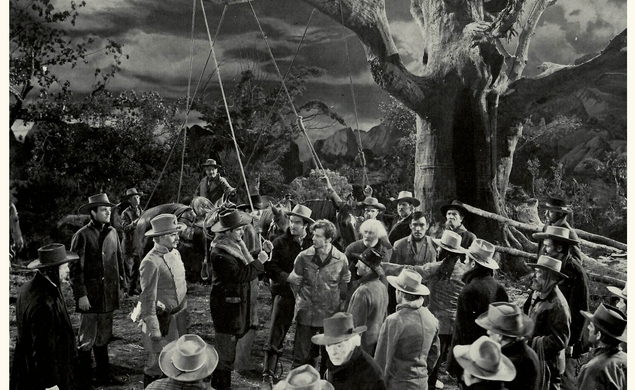
I just watched “The Oxbow Incident,” a cowboy movie about an angry mob that hunts down three innocent men and hangs them before there’s a chance for a fair trial. In one scene the posse agreed to “vote” and anyone who wanted to wait for a trial before hanging these men could step away from the crowd.  Out of fifty people, only seven men stood apart to defy the group. Others in the crowd looked a little ashamed but they didn’t have the courage to walk away. And so the men, who turned out to be innocent, were hanged.   

Oxbow Incident

By the way, the man they thought had been killed wasn’t dead after all. He’d just been out of town.  He walked into the saloon to greet the astonished crowd at the end of the movie. They had killed those men based on a rumor.

I’ve been observing crowds all my life, usually in churches. I’ve seen crowds get sad, anxious, giddy, angry, reactive, and just plain stupid. People who were generally thoughtful as individuals could lose their ability to think for themselves when influenced by a crowd.

Preachers, performers, and politicians know how to influence crowds, using different skills, such as humor, anger, a loud voice, etc. A skillful leader can tap into the angst or general excitement in order to stampede the crowd into doing what he wants. 

I have some of those skills and I tried to be careful that I didn’t manipulate my churches with them.  I had other colleagues who were careful, too.  But I also saw preachers who used those skills unscrupulously.  Some liked to machinegun Bible verses at people, not giving them a chance to breathe. Some screeched, cried, sang, and even babbled. And they could get many people to respond at the end of the service by having them come to the altar call, or perhaps write a bigger check for the collection plate.     

I see people getting lost in other crowds, too, such as at sports gatherings, where they are reactive rather than thoughtful.  A  athlete’s exciting performance,  or how well a play is executed, or a ref’s call… can make the crowd’s mood change instantly.  It scares me when they roar inarticulately in protest or approval. I wonder if anyone is thinking at that point, and I usually leave if I can.

And then there’s politics.  I’m not over the last presidential election and in two years we’ll have another.  I don’t like the guy that got elected.  He uses bravado, ridicule,  and taps into people’s fear and anger to move them. But while I may not like him, I’m even more disturbed by others  who try to stampede the masses both for and against him.

It’s probably too much to ask for, but I wish both sides would calm the heck down, talk reasonably, and make deliberate decisions.  

But maybe before we got out into the crowds, just you and I could agree to stay in control of our minds and be responsible for our thoughts and feelings. If someone comes out screaming that the sky is falling and everyone else goes crazy, you and I could look at each other and quietly remind each other that we choose not to play. We’ll think our own thoughts, make our own decisions and do our best to tune out the craziness.  Then as reasonable humans, we can discuss our differences and work out a plan of action. 

Most people will be slaves to the crowd. But you and I… we could stand apart, couldn’t we?