I Only Work On Sundays

October is designated as Pastor Appreciation month. Someone asked what a week in the Pastor’s life is like. I wrote this to describe the first two hours of a weekday back when I was a pastor.

Nov 27, 2012. Taken from my anonymous blog, “Clergy Guy.”

This morning I stayed home from the office to have some quiet.

I’m trying to write up the advent services for the next few weeks.  I was also hoping to get started on my sermon series.  Plus, I have a little more work to prepare for my college class tonight. 

I awoke in the night thinking of yet another friend in the community who attempted suicide, and has now reached out to me (and a couple of other people). I’ve been facebooking with her this morning. 

A few moments ago, a member of my last church contacted me and asked me for words to help her deal with grief, guilt, and anger, all mixed into one big ball of family confusion. 

And just now, a woman calls me as she drives to another town to look after her grown daughter who is sick, in great pain, and has been so for years. The mother is a wonderful, beautiful person who is desperate for her child and reaching a place of frustration in her faith.  At her request I pray with her on the phone while she drives down the highway.

Come to think of it, I have phone calls that need to be made to two other mothers who are with their children in hospitals. 

Even as I jot these words down, I’m interrupted to answer another text.

And then the phone rings.  The “Wellness” coach from my insurance company called to ask me how I’m doing with my weight loss, rest, and exercise, which almost triggers a spell of maniacal laughter. 

But I’m back in control.

It happens like this sometimes. Everything comes in at once. I actually like moving back and forth from one thing to another. I like being of help to people.   And to be honest, I’d rather do this any day than attend another goddamn church business meeting. 

I just want to have it on record somewhere for those who wonder what I do during the week that this is what I did before 10:30 this morning. 

And I still have my sermon series to write. 

Encouraging My Younger Self

I’m trying something a little different. Writing about my memories as a pastor has been difficult. I tend to relive the pain of the experiences. But I heard something yesterday that made me try to imagine going back as the person I am now to support the person I was back then.

This harkens back to a post I wrote here.

The young pastor had driven the ambulance to the scene and wore the white smock of the volunteer emergency service. He watched as people flailed their shovels into a ton of fertilizer to find their friend who was buried underneath.  The man was going to be dead when they found him, but they worked feverishly with the scant hope that they might yet save him. Two burly young men, the man’s sons, with shovels still in their hands, watched as their father’s body was pulled out.

The pastor also served as a chaplain in situations like these. As he watched the people run and shout and try and fail and cry, he found himself about to burst into tears. But he realized he had to try to comfort them all, including those two young men.  So he swallowed hard and went to work, speaking to the sons, hugging them both. The rest of the afternoon, he listened to the people who had been there and needed to process their shock. 

The pastor was twenty-four years old. 

I go to him and stand invisible beside him. 

“I’m here,” I whisper to him as he watches from the sidelines. “You don’t know it but I’m putting my arms around you and holding you together.

“This is a defining moment for you,” I continue. “You want to run away, but instead you will step into the chaos and try to heal the people who have just been shattered.

“You already know that you have no words, no special skills, and no magic to make it better.  But you’ll still step into the fray to help. You’ll do this over and over again, year after year, when you’re exhausted, sad, and even very sick.”

I point to the people and say, “They don’t know the price you’ll pay. They don’t know how lonely you are and that you feel like a failure.  But you’re the hero of this story.

“Now it’s time to go to work.”

I let him go and watch him wade into the crowd.

The Best Way to Handle a Child’s Fit

When young families first arrive in town for vacation, they come directly from the airport to the store to get groceries for the next week. After a long day of travel, the kids are exhausted and prone to fits, and so are the parents.  I often hear the tired cries of babies erupting throughout the store. I sympathize because I’ve had my times of being tired and cranky too, and so I try to stay courteous as I get the families through the line quickly.  

Some of those fit-throwers stand out in my memory because of the way the adults handled the situation.

Photo by Mitya Zotov on Pexels.com

I remember one particular child who was pitching a lulu—screaming, grabbing things off the rack, colliding with other people.  The tired mom tried several techniques as she unloaded her groceries onto the conveyer belt: an angry glare, threats of no candy, no pool time, and no Mickey.  Finally, she gave up and tried to ignore him as she paid for her purchase. 

An old guy stood behind the boy and watched quietly.  He was tall, with a weathered face and a working man’s hands.  Before placing his groceries onto the conveyer belt, he took the little bar that divides the customers’ groceries and slammed it down, startling the boy into silence.  He looked up, and the old guy loomed over him, offering a friendly gaze.  The child remained quiet and wide-eyed while the mom gathered her groceries, took the boy’s hand, and left. As she exited, she glanced over her shoulder to give the man a grateful look.

I also sympathized with the way another mom handled her obnoxious kid. He was a plump fellow and too old to be riding in the grocery cart—he took up most of the room intended for purchases. With his big boy lungs, he kept yelling at his parents to let him buy something. 

“Give me five dollars, give me five dollars, give me five dollars, GIVE ME FIVE DOLLARS!

The parents did their best to ignore him until the mother had enough. She whirled from the self-checkout screen and shimmered with intensity as she said:

“Say that one more time.”

The message was received. The boy crossed his arms, frowned, snorted, and sputtered, but remained wordless. Evidently, he wasn’t as dumb as he looked.   

My favorite kid moment was between a father and his small child.  The kid was beyond exhausted, crying and screaming. The dad looked tired, but he stayed calm and spoke soothingly to his boy.

“I’m going to count to three,” he said. 

I thought he would use that technique that never works where you raise the threat level with each number. But instead, he used it as a relaxation technique to help his child get calm. 

“One,” he said softly, “Everything is ok.”

“Two, you’re feeling better.”

“Three, you’re getting quieter.”

It didn’t work, so he tried it again. And then again. Not once did the dad raise his voice to the screaming child. 

It would be a great story if I told you that the kid got calm and quiet, but he didn’t, at least not in the store. He was just too overextended. The dad picked him up gently and smiled at me as he left his purchases and walked out the door.

I admire how restrained the father was.  

The next day, they were back.  This time the boy looked rested and calm. I said, “I remember you. How do you feel today?” He smiled shyly. 

“He was very tired last night, wasn’t he?” I said to the father, who sighed and nodded with a bemused look. I think maybe he was still tired from the night before.

“I think you’re the best father in the world,” I said. “I wish I had been more like you while raising my kids.”

In fact, I wish all parents could be as gentle with their kids as this dad was.

Maybe Less Can Be More

In thirty-five years as a minister, I did my share of crisis work where I comforted people who were experiencing their worst and sometimes final moments of life. I was a pastor, a hospice chaplain, and even a volunteer ambulance driver.  I did funerals, visited the hospitals, and went out to scenes where someone had just died, either slowly or suddenly. 

It was rewarding work and after a lot of years I got good at it.

But the work also became more difficult as time went on. I felt the wounds of others more acutely and they accumulated somewhere within me. They’re still there.

In my last year, whenever I visited the hospitals or nursing homes, I’d start shaking before I entered the building. I would become dizzy and my heart would pound. I’d tamp it all down and force myself to go in and comfort the people.

A lot of things contributed to this anxiety, but suffice it to say I simply reached my limit. 

It has been nearly four years since I left professional ministry and I still feel like I’m convalescing.  The anxiety and grief can come flooding back when triggered at unpredictable moments.  A troubled person in the line at my register, a sad drama on TV, or sometimes just my thoughts during a quiet moment will trigger me and I’ll cry and shake like I did during my last year.    

On occasion, I still do funerals for those who need a humanist minister. I’m glad I can still be of help this way, but it costs me emotionally, and it takes at least a day to recover. My counselor suggested I allow myself that time instead of trying to ignore it and jump back into my normal schedule.

Maybe it’s okay to be sad about the past.

But is this all I can do from now on? Am I the guy who was once the starting quarterback but is now diminished to where I only play occasionally off the bench?

I can’t look at it like that. I have a whole life to live and it does not include becoming less as I get older. Maybe I’m quieter and less noticeable but I cannot be just… less. 

Maybe I’m still in the state of becoming and I’m actually more.  Being older, slower, more tender—maybe those are signs of development rather than diminishment.

I think I’ve been expecting to rest enough to where I can reclaim the energy I used to have and then step back into a life as intense as I once led. But I think I’m progressing to the next level of life. I choose to see becoming older and more tender as symptoms of growth and meaning rather than diminishment.

It feels like I’m less but maybe I’m more.

Essential Work (101st Post)

I’m scared like everyone else right now. I have one of those essential jobs where I come out of isolation to sell groceries to people, some of whom could be contagious. The anxiety hangs on me like an extra weight that I carry wherever I go. Sometimes it gets me down but it’s my job and there’s nothing to do but stand back up, carry on, and take precautions as best I can.

I also feel an exhilaration similar to when I was a minister and provided help in times of crisis. These days, while I may be an anonymous cashier, I get the occasional chance to encourage strangers as they pay for their groceries. Somehow, the risk makes the work feel more meaningful.

Many folks go to the supermarket because they’re hungry not only for food but for company and so shopping is their social event for the day. I smile and joke with them about how our only recreation now is Netflix and fattening food. And we’ll laugh about not having any excuses to not clean house now. Then we’ll conclude our transactions and encourage each other to stay safe and healthy.

Some people are glum and focused inward. It’s a judgment call as to whether I should respect their privacy or go in to draw them out.

“It’s kind of scary out there, isn’t it?” I might say. Sometimes it’s enough to get them to share their stories:

“I never dreamed it would get this bad….”

“My mother is 78 years old with a heart condition….”

“I don’t know when I’ll go back to work again….”

“My child has asthma….”

I remember a man who murmured how afraid he was. I said I was too and then I searched for words that wouldn’t sound too preachy and would lend him courage. I said, “There’s nothing to do but hang in there, and that’s what you and I are going to do, huh?” He nodded and squared his shoulders as he walked out.

Another young man came through the line to purchase a cake and candles.

“Whose birthday is it?” I said.

“Mine,” he said shyly.

He was twenty-two that day. I asked if he had anyone who would celebrate with him and he shrugged saying he was by himself, unable to get home to his family who lived across an ocean from him. I thought about my sons who live far from me. I wanted to shake his hand, maybe pat his shoulder… oh hell, I wanted to give him a hug, but of course, we all have to keep our distance now.

So I gave a big smile and pointed at him, saying, “Happy birthday, my friend. I am very glad you were born twenty-two years ago.”

I cried when I told Sylvia about it later.

For me, being amidst the people, saying something that helps a little, and connecting for just a moment, gives me a boost and allows me to carry my own fear with a little more grace.

I like it even though it also brings back an old fatigue that always follows the exhilaration. I let it all go when I left the ministry but I always knew I’d somehow pick it up again, this time without the baggage of religion.

I’m going to work now. It’s essential.

Drowning in the Baptismal Waters

She was eleven years old.

She had been at an evangelical church camp–a week full of morning Bible studies and evening assemblies with emotionally charged music, stories, and sermons. On the final night, the guest preacher spoke of their need to be forgiven of their sins to be saved from eternal hell and to beg for the gift of heaven.   

The girl walked up the aisle and said she wanted to be baptized.  The people applauded and shouted “Amen!” Her tears flowed freely and the preacher explained it was because the Holy Spirit had gotten hold of her.   

I was one of the spiritual guides at that camp and I was assigned to “counsel” her on the spot. While she sat in the pew, sobbing, I knelt in front of her so I could see her face. 

“Have you been baptized before?” I asked. 

“Yes, but I need to do it again,” she said.

“You don’t really have to,” I said. “You’re already saved.”  

“Yes, I do,” she insisted. “Because I’ve been so bad since then!” 

“Why don’t you wait till you go home and you can talk about it with your parents?” I suggested. 

“No! I have to do it now!”

I was afraid she was about to reach a new level of hysteria.  I said, “Okay, but first let’s call your parents on the phone. They’ll want to know.”

She nodded.

As I led her from the crowd, she said in a broken voice: “I’m so happy…”

After talking to her parents, she decided to wait until she got home where she could be baptized in her own church. I was relieved that we slowed things down so she could rest and be with her family first.   

“I’ve been so bad,” she said. 

At eleven years of age, what could she have done that was so bad? Did she sass her parents? Had she snuck out at night to be with her friends? Had she gone “all the way”?

Did these things make her evil? Did she deserve to burn in hell forever? That’s what we taught her.  In fact, there were many lesser things, including “bad thoughts,” that would send her to hell.  Her only escape was to have special words said over her and then dunked (again) underwater.

It was a long time ago and I’ve had darker questions since then.

What if she had been molested?  What if someone had told her it was her fault? It has taken me a long time to see that our religion could be a tool to prey on the vulnerable.  The baptismal waters come closer to drowning them rather than cleansing them.     

I’m ashamed that I was part of a system that says people are evil and deserve to burn eternally.

At the time, I thought of myself as a reformer who was changing the church from the inside in Jesus’ name. I did my best to shield people like this girl from abuse but I was merely helping adjust things enough to allow an unhealthy institution to continue functioning.

I wish I had never been a part of it. Yet I also wish I had helped her more while I was there.

“Honey,” I could have said, “I don’t care what you’ve done, there’s nothing evil about you. You are a wonderful person. You don’t need to be saved. If there is a god, I’m sure he likes you fine.”

In fact, I wish I had stood up and told all the kids the same thing and then said, “You’re all marvelous, just as you are, and you don’t have to listen to this crap.  In fact, we can all stand up, march out of this place, go home, and be happy.

“C’mon. I’ll go first.”   


An Unexpected Gift

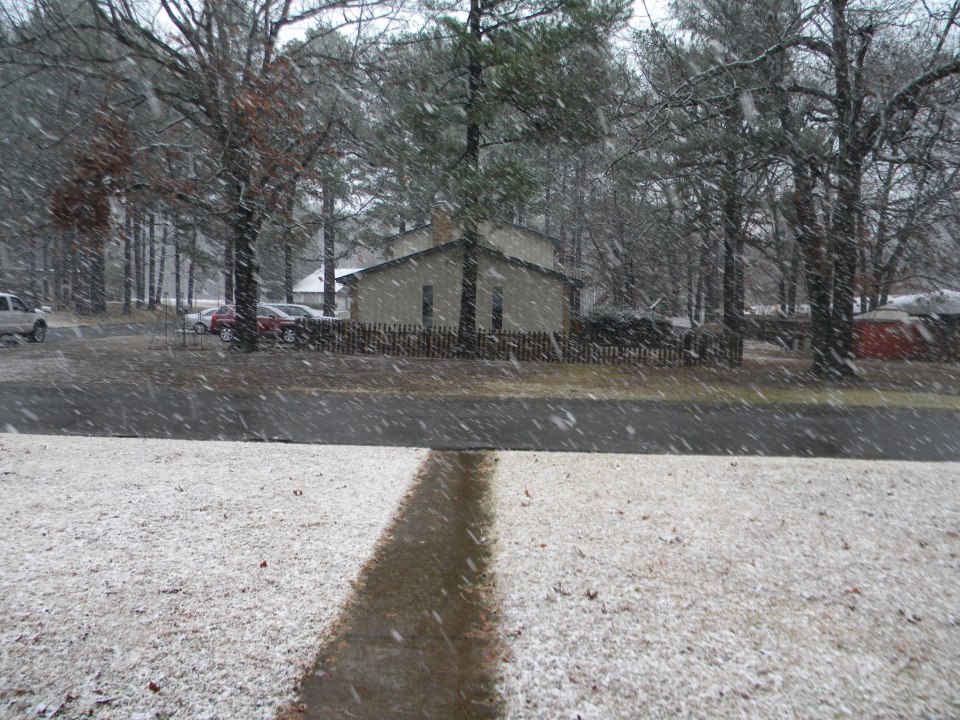
On a cold Christmas morning, I sat by the window to watch snowflakes float to the ground. Once again, I had endured a holiday season of parties, presents, crises, and worship services.  Now that I had a moment to myself, I could breathe deeply and allow the tension to fade.  I was so grateful for the quiet beauty of the moment.

Christmas day 2012

Then the phone rang.

A phone call on Christmas morning was often bad news for a pastor, so I took one last deep breath and answered.

“Hello.”  

“Uh, pastor? Hi, this is —,” and he told me his name, but I had  already recognized his low quiet voice.   

Earlier in the year he had come to me for help.  The first time I met him, he stood before me, trembling. I asked what was wrong and he said, “Well… you see… I just tried to kill myself… but my gun wouldn’t work….” 

I asked permission to give him a hug. When he nodded, I put my arms around him and it felt like I was hugging one of my sons who were close to his age.  I guided him to sit and then I sat next to him. I kept my arm around his shoulders the entire time.  I wasn’t going to let go of him until I knew he was safe.

“I’m glad you came to me,” I began. “Tell me what has happened…”

And he did.  He was embarrassed to be so vulnerable but he was too desperate to hide it anymore. He told me of lots of problems, sadness, and loneliness. The final trigger was that his girlfriend left him. 

I forgot exactly what I said.  Something along the lines of: “You still have a lot of living to do and there are many good things waiting for you.” l wanted him to hear a positive thought even if he couldn’t quite believe it.

“Will you promise me that you won’t try this again?” I asked.

“Yes,” he whispered.

“Will you call me if it gets too hard and you start thinking about doing it again?”

“Yes.”

“Can we talk tomorrow?”

“Yes.”

Only  then did I let go of him. 

I couldn’t wait until the next day, so I called him that night and talked for another hour with him.

The next day, I talked to him again and made sure he went to a counselor I’d recommended. Then I talked to him the next day, and then the next week. By then he was in better shape and I didn’t see him again.

However, several months later, he was calling on me just like I had asked of him if he felt like taking his life again. It happens a lot on the Christmas holiday. 

But as it turns out, not on this one.

“Yeah,” he said, “Pastor, I just wanted to call and say Merry Christmas.”

It took me a moment to change gears. 

“Oh… well…,  I’m glad to hear from you. Tell me what’s going on.”

He had finished his first semester at college, had a new girlfriend, and was out having a good time with her. They spent Christmas Eve driving around town all night with friends. At one point they stopped at an all night diner for pancakes.  It sounded perfect and he sounded happy. 

“I remember that you helped me and I wanted call to say thanks.”

“You’re welcome. You just made my day.”

We hung up. I went back to the window to watch the snow some more.  And then I did something I hadn’t done much over the last year. 

I went to bed and fell asleep.

What Do I Call Myself?

It’s hard to find the words to describe myself.

Am I a nonbeliever? An agnostic? A heretic?  An infidel?  These terms suggest that I have lost my identity and am reacting erratically  like a bouncing pinball. But I haven’t lost myself. I’m growing up.

 “What happened that made you lose your faith?” asked a friend. 

There was no one event.  Others like me have said it is like “dying from a thousand cuts,” meaning that it happened gradually.

I remember the first time I seriously questioned my belief nearly two decades ago. I was sick and unhappy, and I prayed hard for help.  I didn’t need much–just some kind of reassurance, some indication that the loving God about whom I preached was really there.  It never happened.  How could I not question his existence?  With the exception of one friend, everyone shushed me and told me not to let my mind entertain doubts. 

I did what they told me. I decided that no matter what, I would continue to believe. I continued to develop my career as a minister. I went back to school and got my Master of Divinity.  When I felt doubt I told myself what I told other people: “You still have a choice.”

I chose to believe until I gave up. 

You know what? I lost some friends, a career, and a marriage, but life didn’t end for me. It started to get better.  I started to grow rather than diminish.  A year later, I have a little more peace and feel a little less broken. I have love and happiness. I have new thoughts and new opportunities. 

So back to the question: What do I call myself?

That’s easy.  I am David

I Was Tired

“I don’t think any of us knew how tired you were,” my friend said after I moved away. I didn’t realize at first how right he was.

When I arrived in Orlando, I thought I’d find a job right away, but in fact I stayed inside with the lights off and couldn’t move for days which turned into weeks. And I cried every day.

The secrets wore me down. I didn’t dare discuss my thoughts and doubts with anyone. I hid how unhappy I was. I called on every ounce of strength to present myself the cheerful, energetic preacher. I didn’t always succeed.

I don’t think I’m exaggerating when I say I’ve been tired most of my life.  I was always able to mentally move aside the fatigue and move on but it took its toll on my health as I got older.

Now, Sylvia takes care of me. She fed me good food and took me to hear good music. We went to the beach and I walked on the shore where the cool water washed my feet and the waves established a new rhythm inside me.

I’m better. My health issues are fading. I’m able to rest.  For the first time in years I sleep through the night.

I reflect a lot on what led me to this moment even as I begin living again. I still cry every day but it doesn’t last as long.