Mom’s Thoughts

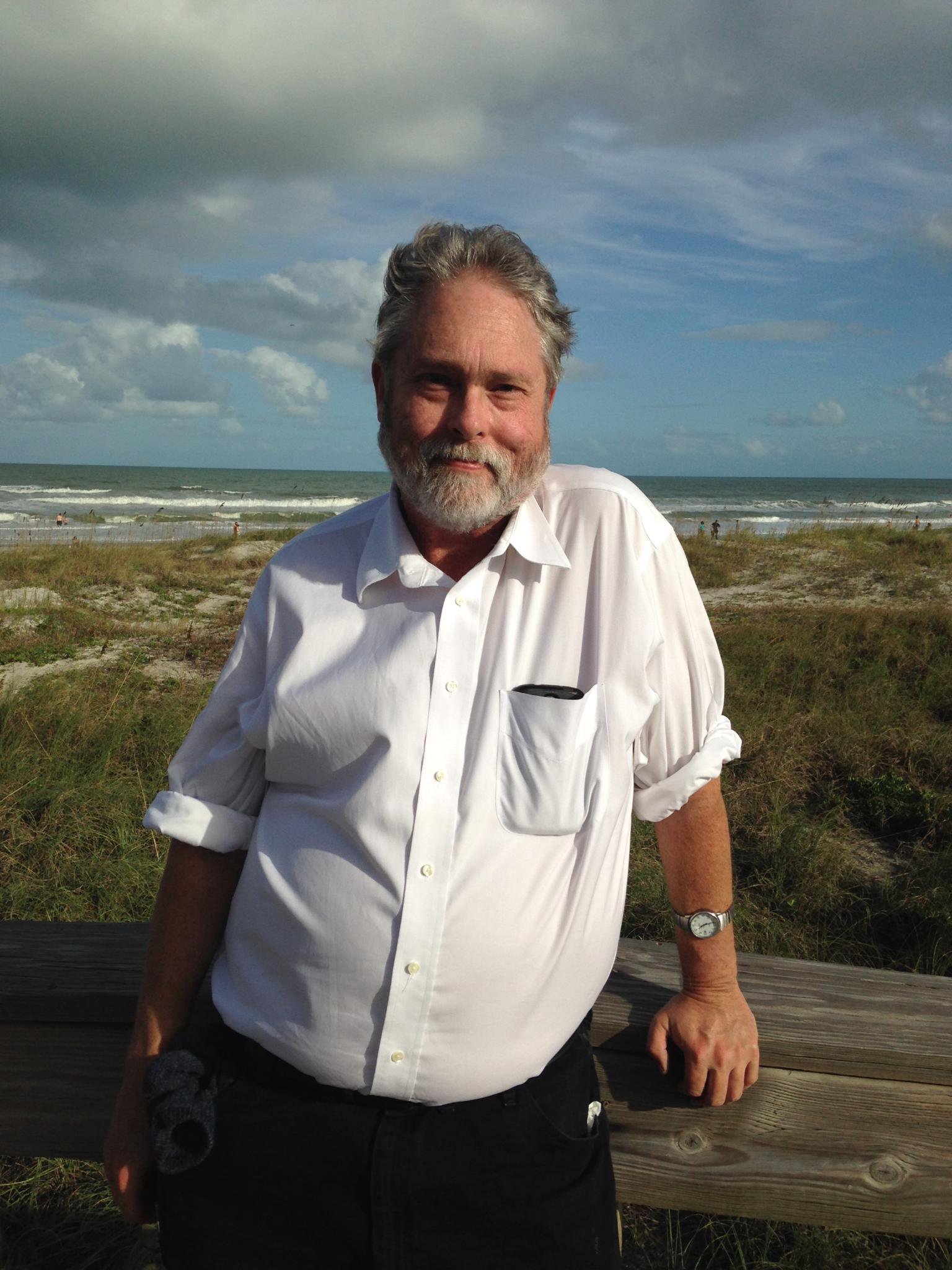
I lost my copy of Mom’s writings so my sister made a copy of hers and sent it to me.  As I read through some of the pages, I experienced a wave of emotion as her presence came back to me through her words.

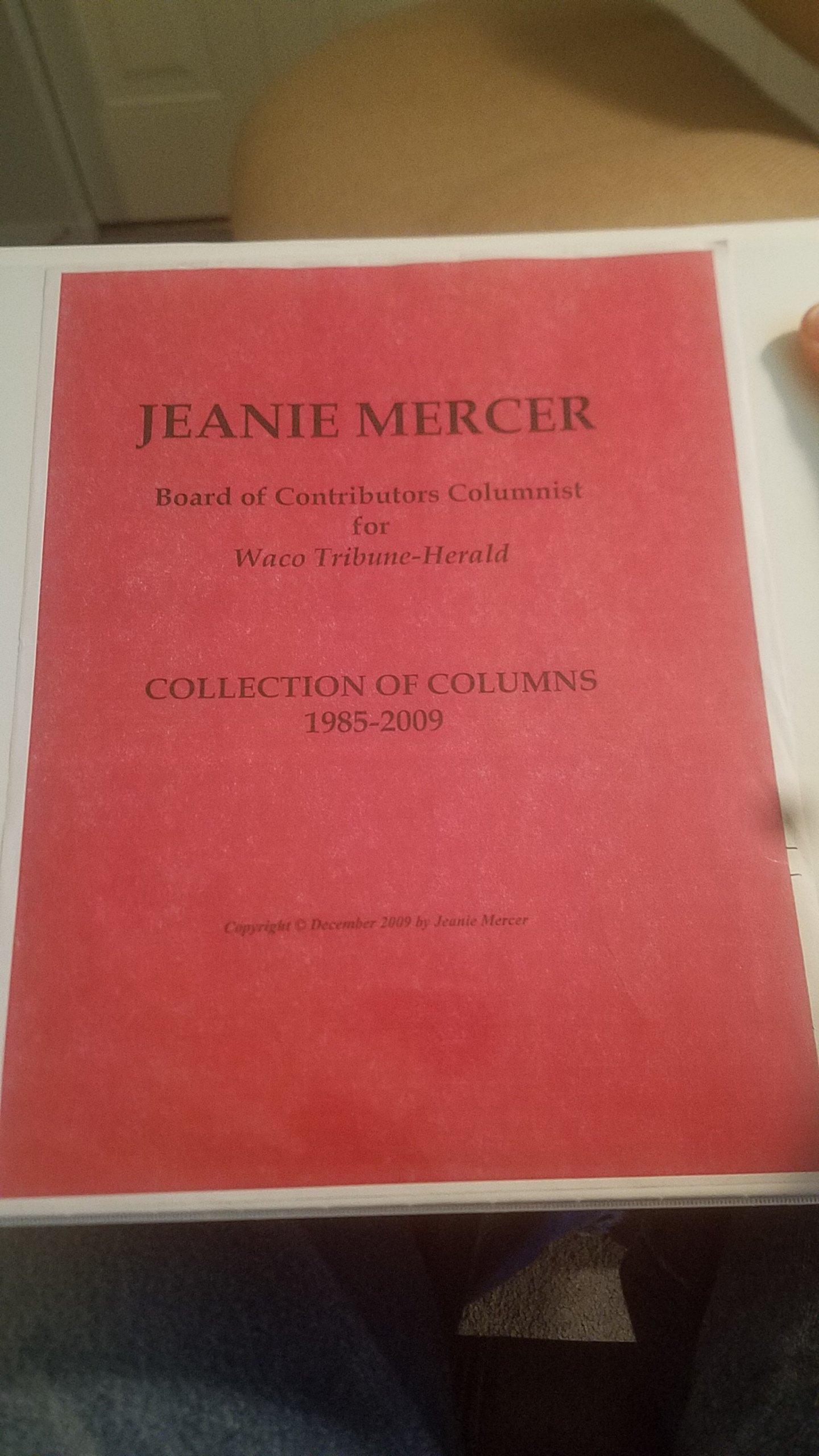
For someone who described herself as one who stammered, Mom had plenty of words that flowed from her pen to paper. She wrote opinion articles for the Waco Tribune. Her work also appeared in the Waco Magazine.   She wrote a book for women called, Her Whole Heart, and another called, God is Still My Friend, a paraphrase of the Book of Job.  She also wrote three books of poetry. 

Mom was a self described “Write-aholic.” She carried a steno notepad everywhere she went and she couldn’t have a real conversation unless she had a pen in hand to take notes. I think we kids may have enabled her, even when we teased her. “Hi Mom,” I’d say over the phone; “I just called to talk. You got your pen in your hand?”  

When I was growing up, she sat in “her” chair in the den during the early morning hours and handwrote her journals, books, and poetry.  But she could also type… like, a jillion words a minute.  I think I have my small collection of old typewriters because I remember her tapping out her thoughts on her old manual.  Later, when she got a computer, there was no stammering at the keyboard as she made it literally buzz. 

Her stroke affected her speech, as well as her mobility and dexterity, but while her writing was curtailed it was not stilled. The keyboard no longer whirred but she still produced her emails and letters painstakingly without grammatical flaw, as always. .   

All of her kids inherited our writing inclinations from her. She passed away a couple of years ago, but she is still the audience I write for first. She was an enthusiastic audience, laughing long at my humor, and marveling at my insights. I still want to call her and say, “Hey Mom, what do you think of this?”

I never told her I ‘d become an atheist. She knew of my struggles over the years but she was struggling too much with her physical ailments for me to unburden myself to her. Yet, somehow I feel like she intuitively knew anyway. I would like to have had the time to talk with her about it but I can almost feel what she would say… words of concern, empathy, and encouragement..

I take comfort that her thoughts have been returned to me and reside on a bookshelf in my study.
Postscript: I Was Wrong

So it turns out I was wrong about Trump.  He didn’t try to seize the military and keep the presidency. He didn’t plunge us into civil war. Instead, he spent his last night pardoning a bunch of his political cronies.  On inauguration morning, he got on his plane at Andrews AFB and made his way home. They had music accompanying him as he was boarded:  “YMCA,” by the Village People. “Tiny Dancer,” by Elton John.  And the final phrase of Sinatra’s “I Did it MY Way,” as the plane lifted up into the skies to make its way to Miralago.  Those songs alone should be good for a Stephen Colbert monologue. 

The QAnons are despondent.  Their conspiracy theories didn’t pan out and for the moment they have to face the fact that they live in this world with a new President who is cleaning up the messes of the last guy.

I hate to admit that I had something in common with QAnon.  I thought something bad was going to happen, too—I just wasn’t fervently hoping for it. It takes me back to the days of my childhood when I scoffed at religious neighbors who swore the end of the world would be coming on a designated day, but deep down I feared they might be right.

To tell the truth, I feel a little sorry for the QAnon.  Hear me out:

As his plane took to the skies, a friend started celebrating a little prematurely, I thought. I said he was still President and I would not breathe easy until noon when Biden took the oath. She told me that we all have battered wife syndrome.  Actually, a number of people have been saying they feel like they’ve come out of an abusive situation. 

Maybe that’s why I feel a little sorry for the conspiracy cadre. They’re the people of my childhood and they’re victims of abuse, too.  Now they’re unhappy and confused until they can find something else to fill the void of paranoia. 

I’m sure they’ll find something—imagination is limitless. 

Meanwhile, we have a new administration. Biden isn’t God and his supporters won’t be worshiping him like some of Trump’s supporters did. Maybe we can all put the worship aside and simply work together, which means expressing our disagreements with the hope of resolving them. 

I Hope I’m Wrong About This Prediction

I’ve always felt gratitude and respect for the service of the outgoing Presidents, even the ones for whom I didn’t vote. Until this one.

It’s the last twenty-four hours of his term, and I’m not breathing a sigh of relief just yet.

In every church I ever served, there was a Trump personality who grasped for leadership positions because they craved the spotlight and delighted in control.  As a new pastor, I had to consider my options carefully.  Should I leave them in place and let them have their little fiefdoms while I did my own work? Would I try to work with them because it would be professional suicide to oppose them? It was often a mistake to leave them in place because they tended to bungle their tasks, causing harm to the people around them. So I usually made a quiet decision that it was time for them to go.

It was a matter of mitigating their damage, fending off their attacks and peeling away their layers of influence. However, even if I was successful in removing them from power, they stood in the shadows, waiting for an opportunity to harm me, which, let’s face it, they succeeded in doing more than once in my career. 

I KNOW that Trump is not going to fade quietly away in shame or embarrassment.  He’ll say something wretched or do one last thing to cause wreckage.  Will he try to spur his crazy lackeys to commit more violence? 

He won’t be able to help himself.  And he can’t really be contained because up until noon tomorrow, he’s still President. And when he’s gone from the White House, he’ll bide his time until he can do more damage. 

I speak of this with dread; however, I know others are hoping he will try one last thing. Some of them are my fellow Americans and some of them are in the Russian government.

Maybe he’ll just join a church.  Some of them still like him, I imagine. They probably think he has money left to build them a new sanctuary. Or maybe he can get Mexico to pay for it.

Conservatives, This is Your Fault!

Daniel Hodges was the DC cop who was crushed by the insurgents at the Capital last week.  I’m very glad to read that he is recovering and going to be okay. Other people died in this riot including a cop who was beaten.

I don’t think I’ll ever forget seeing this young man’s face and hearing his cries as those angry, plaid-wearing, redneck morons tried to wreck the Capitol. 

His cries ripped me to pieces, and as I cried for him, I felt rage well up from my gut. Many thoughts and feelings have been churning inside me since then.

I’ve always been proud of our country’s peaceful presidential transitions. Even after bruising campaigns, both winners and losers promised to work together for the good of the country.  So I’m sad, as well as embarrassed, that this outgoing President has caused so much strife by screaming that the other side cheated. 

When the President of the United States, even a delusional loser like him speaks, people listen, and he bears a lot of the blame for this debacle at the Capitol. He may eventually be tried for tax evasion and dishonest business dealings but I hope he goes to prison for inciting this riot. 

Daniel Hodges’ cries made me hear younger children in cages at the border who cry for their parents.  I also hear the cries of LGBTQ people who are threatened.  I hear the cries of the homeless who can’t work because of the pandemic. And I see the people who can’t cry because they can’t breathe, and their loved ones who can’t be there to cry for them in their final moments. 

Like many Americans, I’m scared.  Heavily armed soldiers and police will be at the inauguration and if those yahoos show up again like they did last week, a lot more blood will be shed.

Over the last four years, I have tried to reason with my family and friends who are politically conservative. I was one of them once. When I grew to change my views, I thought I could influence their thinking and help them change. On several occasions I defended their honor to people who criticized them. Even now, I remember the good deeds they have done.

However, to those family and friends, as well as the millions of others, I want to say clearly that I’m angry because you put this jackass in the White House.

What exactly were your reasons? Because you don’t like Mexicans crossing the border? Because you hate Muslims? Because you’re scared of “those LGBT perverts” ? Because you thought a loudmouthed huckster who got rich by not keeping his promises would make you a little wealthier?

Or did you vote for him because he was male and taller than his opponent?

You have contributed toward making this world sicker, weaker, and crazier. You’re blaming everyone but yourselves for the riot, the spread of the pandemic, and the collapse of the economy. 

Frankly, even if you do have a change of heart, I don’t know that it will help at this point. The havoc will continue on its crazy way because while the guy you put in the White House got his Twitter account taken away, he remains Commander in Chief of the armed forces and has control of the nuclear launch codes. 

It’s not done yet. Before we are past this, a lot more of our children may be crushed and cry out from the pain you helped cause.

Becoming Aware

I was reading how many Native American cultures viewed people of the LGBTQ with heightened respect, often referring them as “Two Spirit” people. They were seen as more capable, able to do more creative work, taking on the roles of healers and leaders in their tribes (https://www.ihs.gov/lgbt/health/twospirit/).  In fact, many cultures have an elevated regard for the LGBTQ even while others, including our Western culture, regard them with fear and violence. 

I was often told that the LGBTQ, especially transgender persons, are immoral, perverted, and somehow a danger to society. It took me a long time to see what utter nonsense it is. 

My child is now grown and has recently told me that she is transgender.  Including her, I know six transgender people and they are some of the finest people I know… brilliant and kind, with minds that reach out to the beyond, embracing spirituality, art, music. They are not aberrations to be tolerated, feared, or pitied. They are often the best of humanity.

Does their being transgender put them more deeply in touch with humanity even while our society relegates them to the outer margins?

A Google search reveals remarkable transgender people in history—Athletes, soldiers, actors, activists,… and martyrs.  

See also:

https://www.weforum.org/agenda/2019/12/transgender-history-celebrity-2019-supergirl/

Today, November 20 is Transgender Day of Remembrance, where we recognize people who have died for being transgender.

This is new to me, but I’m going to start paying attention and speaking up. 

“At least 37 transgender and gender-nonconforming people have been killed this year, most of them Black and Brown transgender women. It’s intolerable. This Transgender Day of Remembrance, we honor their lives—and recommit to the work that remains to end this epidemic of violence.”  –President Elect Joe Biden at: https://twitter.com/JoeBiden/status/1329815608469368832?ref_src=twsrc%5Egoogle%7Ctwcamp%5Eserp%7Ctwgr%5Etweet

Sustained Wounds

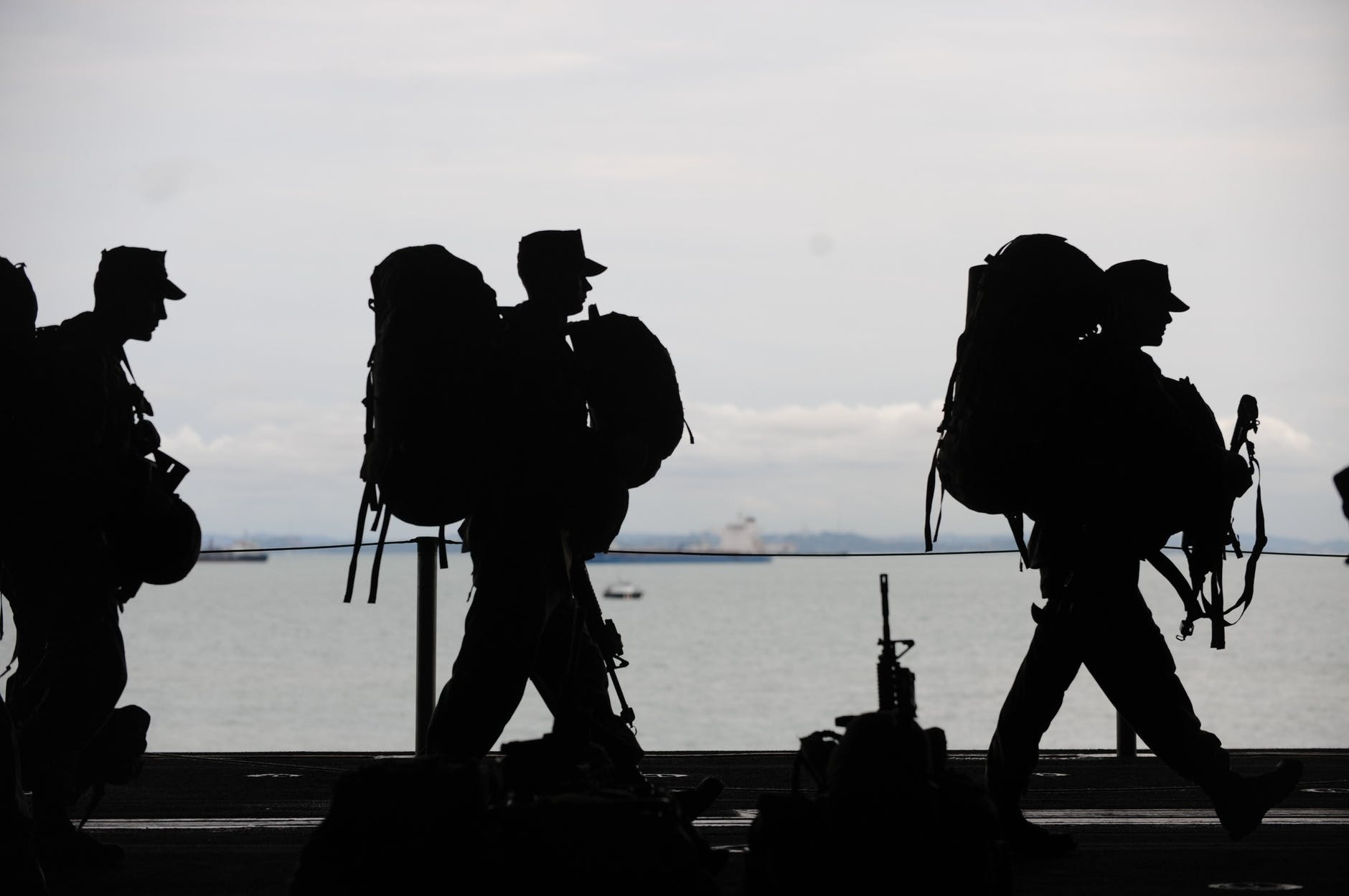
Photo by Pixabay on Pexels.com

Happy Veterans’ Day to men and women who have served.

Several years ago, I watched a news special filmed by a reporter who traveled with soldiers stationed in the cold mountains of Afghanistan. I saw a soldier wailing because his friend had just been killed in action the night before. While he sobbed he stood on a small cliff, rifle in his hands, watching for the enemy to attack again.

I often wonder how that soldier is doing now. Did he come home? Did he get hurt? If he never engaged in another battle, he still carried trauma in his heart and mind, and chances are that he will never speak of it, at least to the civilian world.

Men and women come home from the war with varied wounds, many of which are on the inside, and although they may function well, they still feel the pain.

When I was a young minister, I visited an eighty year old man on one of his bad days. He wouldn’t tell me what was wrong, except to say in a soft voice, “I fought in the Battle of the Bulge.” I nodded like I understood but of course I didn’t. I couldn’t. But I could see that it still hurt his spirit even after many decades.

I enjoy the freedom of expression and so today, I want to express my gratitude to that older former soldier, and the soldier who once served in Afghanistan, and every other person who has served in the military. I thank them for their time, pain, and the wounds they still sustain in their bodies, memories, and emotions.

Who Cares About the Election?

Although I changed the names, the following two incidents are true to the best of my recollection.

In the second grade, Randy was a class hero of mythological proportions.  He was regarded as the fastest runner, the best ballplayer, and the smartest student. He was a good looking kid, yet in reality he was not the best or the brightest… far from it. 

However, he was the cockiest kid–arrogant beyond his years. And he was mean and aggressive, getting his way through intimidation. He had a powerful influence on his classmates especially when it came to making fun of the most vulnerable. He labeled them fat, ugly, and dumb, and most of the class followed his lead in sneering at them because it was easier than resisting or even thinking for themselves. 

However, he stopped being the leader when he was expelled from school for physically harming one of the girls in our class.  

******

Then there was Jerry, the hero of our ninth grade class in another school and another city. He wasn’t smart or handsome and he was far from a star athlete, but it didn’t matter because he was charming and aggressive. Just like the kids in second grade, the ninth grade students were under his influence. 

He was elected prom king (or something equivalent) and there’s a picture of him in our school yearbook wearing a tux with his arm around the prom queen (or the equivalent). 

In the summer after ninth grade, Jerry shocked the whole town, including the school that revered him, with a  monstrous act of violence.   One afternoon, he knocked on the door of a neighborhood house. A pregnant woman answered and he asked to use the phone. When she declined, he stepped into the entranceway of her home and stabbed her to death. Then he went into the home to use her shower before he went to the park to swim with his friends.  

******

I have often wondered why these two separate communities of children regarded these boys so highly. How could the whole group be so influenced?  Was it because they were so young?

I see adults acting this way, too, allowing predators the freedom to harm the more vulnerable. Whole communities, even nations, allow individuals the power to harm others.  Think about leaders in our American society: the clergymen, Hollywood producers, elected politicians, and athletic coaches, to name a few, who have taken money, molested the vulnerable, and abused children—often for decades before they were called to account.  They could have been stopped much earlier but people allowed it to happen.  And even after the deeds were made public, people adored them.

Which brings me to the presidential election. Actually, I’m thinking of 2016 where the  nation elected an abusive,  unqualified person to the office. He cheated on his wives and people didn’t care. He bragged about groping women and people didn’t care. Like a bratty kid, he insulted people, especially women, referring to them as fat and ugly. And people didn’t care.He mocked a disabled person while on camera and people didn’t care.

He actually joked about being able shoot people without losing any of his followers. At times, I have feared he was right.

In the time since he took office, he hasn’t can’t kept his staff intact… he keeps firing people. His followers don’t care.

He’s a terrible statesman, insulting our allies and toadying to our enemies. His followers don’t care.  He has kept his finances secret so we don’t know if he has benefited personally from his national economic changes. His followers don’t care.

He has bungled the pandemic crisis  and is still bungling it while blaming it on others.  Nearly a quarter of a million people are dead because of his ineptitude.  And his followers don’t care.

He has been the darling of the Evangelical Christian movement even though he does things that these religious folk teach against.  However, it doesn’t surprise me that evangelical Christians follow him. Through history they have blindly followed many of their own immoral leaders. They have a history of not caring.  

What would happen if people cared more? 

What if the communities of Randy, Jerry, and Donnie had been more functional? What if no one had bought into their superficial charm? What if the people had chosen not to elevate them or give them so much power? Would they have been better men? Would more people be alive? 

And what would it be like if we had a whole  nation of grownups who knew how to think critically and cared enough to resist the hysteria of crowds? What kind of leaders would be chosen?

If people cared more, they wouldn’t choose people like Randy, Jerry, or Donnie.

Please Don’t Despise Poor People

She came to my office in tears and showed me a cut-off notice for her electricity. A lot of people passed through our small town and stopped at church to ask for help. We tried but we often had to turn people down because of our limitations. However, this woman was a local whom I often saw working at two different jobs: one at the convenience store, the other at the café. I also knew that she cleaned several houses in the community. 

But as hard as she worked, she couldn’t pay all her bills. She applied for food stamps and had been turned down. 

I arranged for the church pay her bill and then I went with her to the Department of Human Services to help her apply again for aid.

The ridiculous amount of paperwork was daunting, even to me, and I was a college graduate.  The forms were in English and while the woman spoke the language well enough, she didn’t read it well.  When we waded through it all and turned it in, the case manager glanced at it and immediately gave her some emergency food stamps, then arranged for her to get regular aid. 

I’ve been hearing from some of my friends that they are tired of their tax dollars being used to enable people who were too lazy to work.  But this lady wasn’t lazy in the least. She worked as hard as anyone I knew.

There are many working poor in this country, as well as unemployed people who aren’t lazy. 

These days, I’m a cashier at the grocery store and people often buy their food with funds from the state.  They have to shop carefully because the state will only buy certain brands and amounts.  If they pick up the wrong brand or size of package, it holds up the line until we can resolve the issues.  Many of them are young women with small children and English is not their first language.  They’re often tired, frustrated, and embarrassed.

I often share with them that if it hadn’t been for food stamps when I was a young father, my own children would have gone hungry, even though I often worked two jobs at the same time. I never have the time to tell them that my wife’s family had to have help when her father became ill and couldn’t work anymore. Plus, I have a friend who often tells how her family depended on government aid when she was a child—she grew up to be a teacher and a counselor. 

I’ve been hearing from friends who are expressing their outrage that they work very hard, making it on their own, and they don’t expect the government to bail them out. Why should they be expected to share with others?

First, they’re not sharing that much.  The percentage of our taxes that go to caring for the poor is quite low compared to the cost of military expense, Social Security, Medicare, and even administrative costs. 

Second, I want to point out to people who are able to pay their bills aren’t really doing it on their own. They often have deep rooted family and community support.  Plus, we all benefit from government funds through public education, police protection, as well as a vast infrastructure that provides highways, electricity, and communication. 

Finally, I want to ask specifically some of my longtime friends: What about your Christian values? Your Bible talks a lot about caring for the poor.  Do the words of Jesus mean something to you, or is it just Sunday morning chitchat? By the way, I can tell you that your churches aren’t getting the job done.

I know that life is hard even those who have enough money (for now). But I wish folks would speak of their frustrations with more precision and knowledge without insulting people. Those people have names and like you, they’re doing the best they can.

And if you want things to change, do your homework and get in touch with your elected officials, rather than quoting wildly inaccurate, as well as hurtful, things on Facebook. 

Maybe Less Can Be More

In thirty-five years as a minister, I did my share of crisis work where I comforted people who were experiencing their worst and sometimes final moments of life. I was a pastor, a hospice chaplain, and even a volunteer ambulance driver.  I did funerals, visited the hospitals, and went out to scenes where someone had just died, either slowly or suddenly. 

It was rewarding work and after a lot of years I got good at it.

But the work also became more difficult as time went on. I felt the wounds of others more acutely and they accumulated somewhere within me. They’re still there.

In my last year, whenever I visited the hospitals or nursing homes, I’d start shaking before I entered the building. I would become dizzy and my heart would pound. I’d tamp it all down and force myself to go in and comfort the people.

A lot of things contributed to this anxiety, but suffice it to say I simply reached my limit. 

It has been nearly four years since I left professional ministry and I still feel like I’m convalescing.  The anxiety and grief can come flooding back when triggered at unpredictable moments.  A troubled person in the line at my register, a sad drama on TV, or sometimes just my thoughts during a quiet moment will trigger me and I’ll cry and shake like I did during my last year.    

On occasion, I still do funerals for those who need a humanist minister. I’m glad I can still be of help this way, but it costs me emotionally, and it takes at least a day to recover. My counselor suggested I allow myself that time instead of trying to ignore it and jump back into my normal schedule.

Maybe it’s okay to be sad about the past.

But is this all I can do from now on? Am I the guy who was once the starting quarterback but is now diminished to where I only play occasionally off the bench?

I can’t look at it like that. I have a whole life to live and it does not include becoming less as I get older. Maybe I’m quieter and less noticeable but I cannot be just… less. 

Maybe I’m still in the state of becoming and I’m actually more.  Being older, slower, more tender—maybe those are signs of development rather than diminishment.

I think I’ve been expecting to rest enough to where I can reclaim the energy I used to have and then step back into a life as intense as I once led. But I think I’m progressing to the next level of life. I choose to see becoming older and more tender as symptoms of growth and meaning rather than diminishment.

It feels like I’m less but maybe I’m more.

A Pin, a Bracelet…, and Community

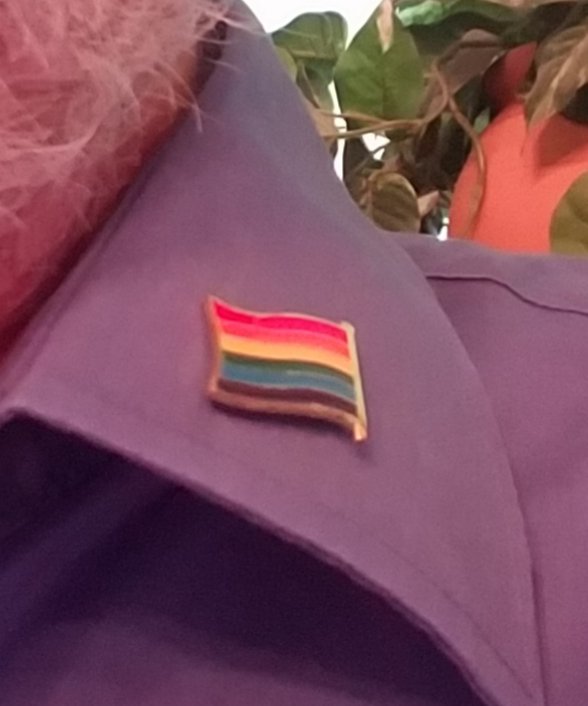
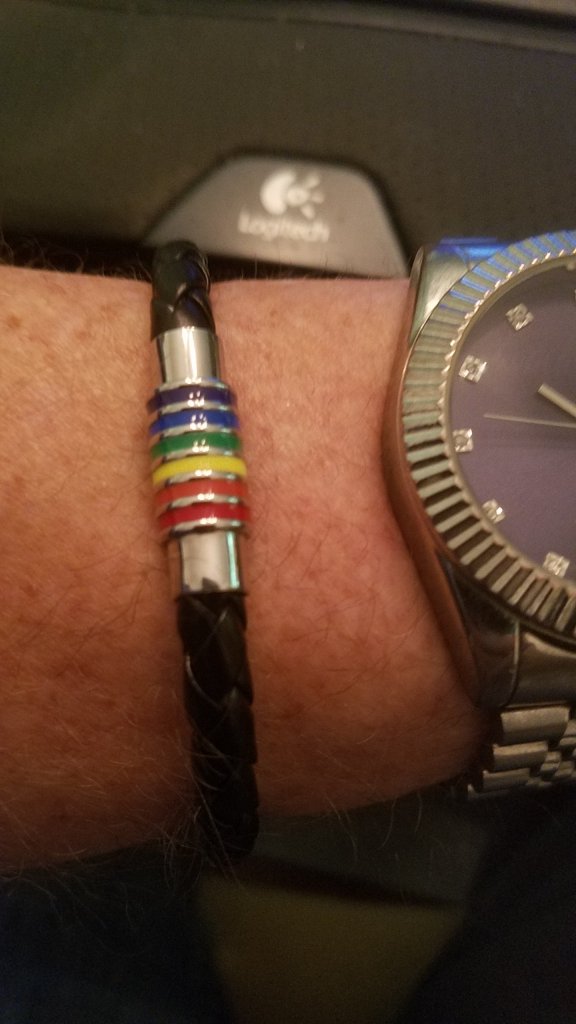
I wear a lapel pin of the LGBTQ flag and a bracelet with rainbow colors. I rarely go without them because it’s my way of showing support to people I love.

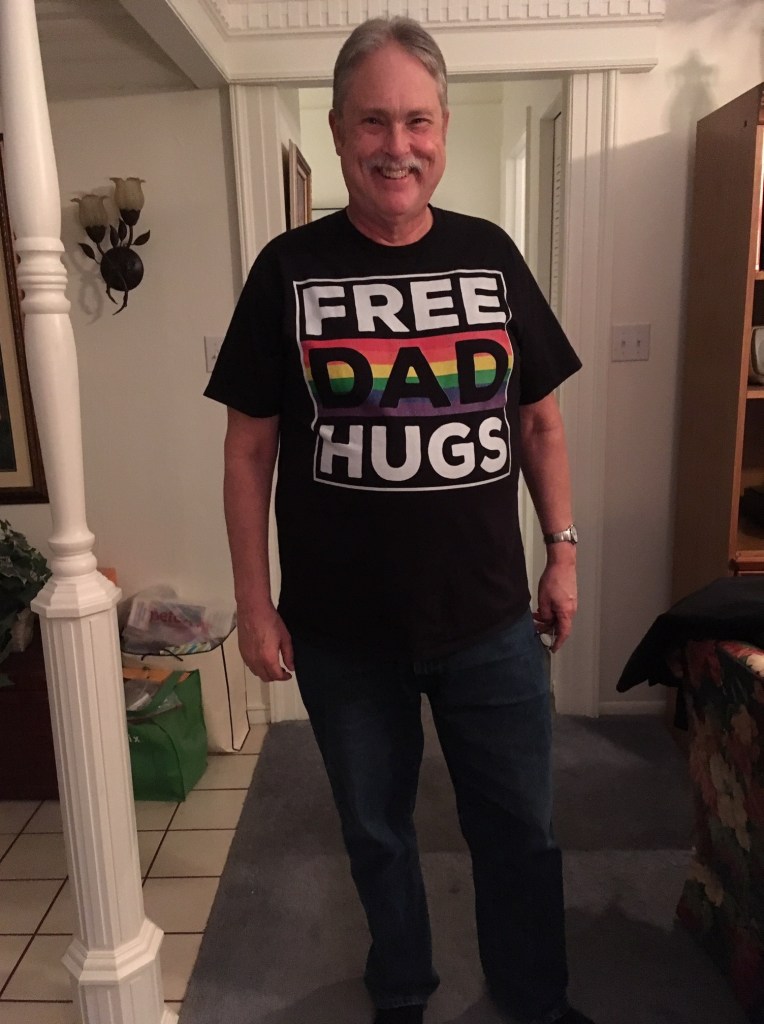
A lesbian couple comes into the store regularly to shop for and deliver groceries to homes.  I commented on the Pride shirts they wore and showed them my pin and bracelet. They said I needed a shirt and I told them about the one I wear that says “Free Dad Hugs.” It made them smile and they told me I “rocked.” (I’m pretty sure that’s a good thing.) I look for them every day and wave when I see them.  

Recently, I worked at a different store and my first customer noticed the lapel pin. She spoke very little English and it took me some time to understand that she liked it. I had the feeling that we were addressing each other as parents as we smiled and wished each other well.

Later in the evening a young man came through the line and admired the pin and bracelet. He said, “Last month was Pride Month, you know.” I told him I had been aware of it. 

His eyes were a haunted mix of fatigue and defiance, as well as a touch of joy, I think.

“I’m proud of who I am,” he told me.

I said, “If it’s worth anything, I’m proud of you, too.

Then just last night, a beautiful teenage girl who bagged the groceries at my counter told me how much she appreciated my pin and my bracelet. “I haven’t told my parents yet,” she confided. She shared more with me, enough for me to realize she was probably right to wait.

She came up to me later and said, “I’ve gotten to do a lot of different tasks tonight… not just bagging. It makes me feel like I’m part of something bigger.”

Wearing the pin and the bracelet makes me feel that way too. I wonder if she and I were actually feeling the same thing: part a much bigger community.