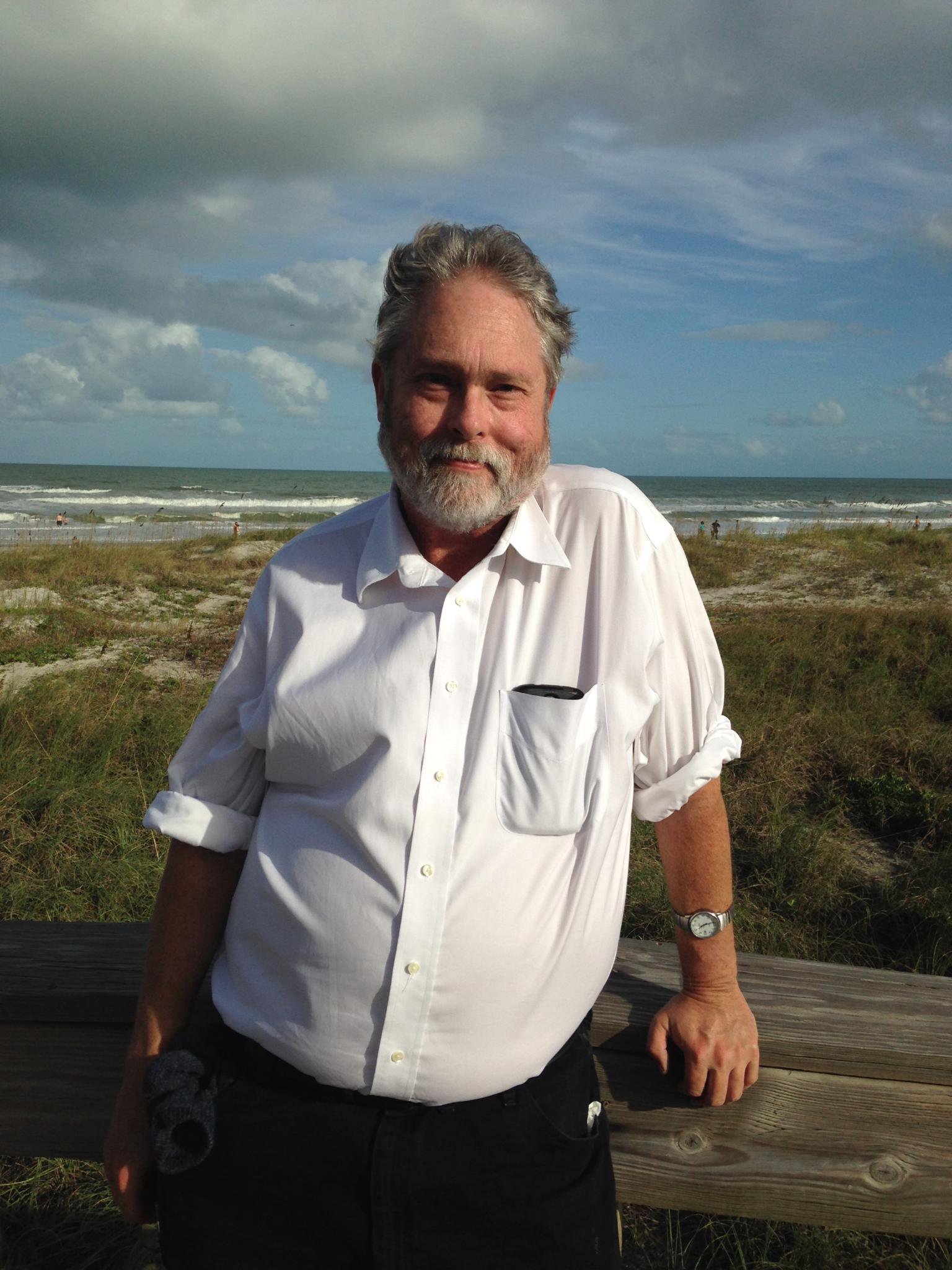
The Brotherhood of Fatherhood

With Father’s Day approaching, I thought I’d share this from an old blog:

They entered the restaurant exhilarated: an old man carrying a small boy, probably a grandchild. The man’s hand cradled the back of the child’s head, holding it close to his own. I wondered if this was the first time these two had ventured out just by themselves. I imagined a houseful of relatives from which they had escaped.

They discussed their order at length, which was a complicated affair: Burgers or chicken nuggets? Fries? Milk or soda? A chocolate shake instead? And which small toy to choose?

That task completed, they reached their table where the man began to set out their meal. But the boy darted away, I think in search of a restroom. The man did a doubletake as he realized that his charge had vacated the vicinity.

I had been enjoying watching them, and when the boy took off I kept my eyes on him until the man could catch up. The boy turned a corner, and I saw another man come to attention to keep watch over him. The old man scurried past, muttering something about how fast the little guy could move. I pointed him in the right direction. The second man also pointed.

The old man caught up with him and they continued their outing. The other man and I relaxed our vigil and resumed our respective meals.

There was something significant about that moment when all three of us men, strangers to each other, shared guardianship over the child. I have no doubt that each of us was a father because we each automatically slipped into the role of protector. It’s what we do for our children and when necessary, for each others’.

My sons are grown and pursuing their destinies. Like that child, they have darted away outside my range of protection. I’m sure they’re fine but I hope there are some dads out there who would lend a hand to help if I couldn’t be there. I’ll do the same for the young ones around here.

Presumably, one day my sons will become fathers, and the moment it happens they will understand me a little better. We will look into each other’s eyes and recognize the protective quality we share for the children.

Batman’s Adam West Dies

Adam West, the actor who played Batman in the sixty’s campy series died last Friday at the age of 88.

batman and robin
Adam West and Burt Ward as Batman and Robin

The show was humorous and kind of goofy.  But when it was first broadcast, I was little and I took him seriously as a hero.  He fought bad guys with brains and brawn and I wanted to grow up to be him. I safety-pinned a towel around my neck and let it drape down my back and I knew I looked just liked the caped crusader as I tore about the house.

batman and robin
David Mercer and Amy Mercer Enoch as Batman and Robin

A part of my core personality still wants to stand up for what’s right, to fight the bad guys and rescue people. I know it’s naïve in a complicated world where bad guys and good guys are not clearly defined and no one dresses to show which is which.  But there’s something good about kids who want to grow up to be heroes. I’m grown now, on the verge of being old, but I’m not willing to let it go yet.

I just wanted to say I’m thankful for the role Adam West had in my growing up.  I hope his loved ones find comfort as they contemplate their loss.

From Believing to Seeing

20161226_130736

I really wanted magic to exist. Not the abracadabra stuff. But something spiritual, mystical and transcendent.  We’re told that the key to seeing these things is belief, that doubt shuts the door to the miraculous.  And if I have faith but still don’t see, well then I just don’t have enough of it.

I don’t know how I could have shown more faith. I put everything I had into it, not just personal convictions and thoughts, but I also dedicated my profession to it.  My bachelor degree is in Bible and my master is Divinity. I lived in the barren plains and worked long hours for small churches.  I endured sadness, loneliness, and sickness because I believed that one day if I just had faith I would no longer be sad, lonely, and sick. And even when I questioned the validity of my belief, I toiled on and hoped that all the good things would come after I died.

And then I stopped believing.

Enough is enough.

But I haven’t stopped searching and seeing. I can drive an hour to Cocoa Beach  where I walk on the side of a huge ocean full of mystery.   A little further down the road at Cape Canaveral, NASA sends up telescopes, satellites, and people for deeper glimpses of the cosmos.  Or instead of a telescope, I can get a microscope and look more at the smallest building blocks of matter. Or I can walk the aisles of the library surrounded by the thoughts of humanity.

Speaking of which, there are fascinating people who come from all over the world with different accents, traditions, clothing, food, and art. And I’m not forgetting myself, where with pen and paper I can explore my own fears, biases, loves, and passions.

Perhaps it’s better to observe what’s there rather than insist on the existence of things that aren’t there.

*Photo by David Mercer. A rocket thruster at Kennedy Space Center.

Bloody Love

“God so loved the world that he gave his only son….”

The older I get, the less I can accept this idea. When my own sons were born, I discovered a depth of love that I didn’t know I had and I went a little crazy thinking about how to care for them. They’re grown now but I would still fight tigers, armies, and hurricanes to protect my sons. I have cried in frustration and shame when I failed to care for them adequately.

How am I supposed to respond to a heavenly father who hands his child over to be sacrificed and says he did it for me?

Child sacrifice. It’s an old concept where cultures thought it would protect them from disaster or perhaps give them a good harvest. Butcher a child, sacrifice a virgin, throw someone into the mouth of a volcano, and the village would be saved. Nowadays we know better and we understand that human sacrifice is reprehensible.

Except when God does it. For some reason, we don’t say it’s awful. Instead, we say it’s beautiful—a gesture of God’s love and we sing lovely songs about it.

We especially sing of the blood of Jesus spilled on our behalf.

There is a fountain filled with blood.
Are you washed in the blood?
What can wash away my sin? Nothing but the blood.
Oh, the blood of Jesus!

But wait, there’s more! We have a special ceremony, a commemorative meal, where the bread is his body and wine is his blood. Some Christians say it miraculously changes to actual flesh and blood as it enters us. “Take this body, take this blood,” we say, “remember what was done for you and be grateful.”

No.

No more.

I do not accept.

I do not celebrate the blood of anyone’s child.

Is The Story of Jesus’ Resurrection True? You Decide

Mark’s gospel is the earliest account of Jesus’ life, and includes details left out in others’ accounts. However, it comes to an abrupt end. 

Two days after Jesus was crucified, three women went to the tomb to attend to his body.  When they arrived, they saw the stone rolled away from the entrance and a young man waiting for them.  He told them Jesus was not there and that he was alive again. The last sentence of Mark’s gospel says that the women left the tomb bewildered and afraid. 

That it. That’s where it ends.  An empty tomb. 

Evidently, people were dissatisfied so two different endings were attached at later times. One was short; the other was longer and more detailed. Take your pick. There’s been much discussion but most scholars think the endings are not part of the original text.

The writers of the later gospels changed the ending, too. Instead of one guy at the tomb there are two angels. John says Mary Magdalene returned to the tomb and actually saw Jesus (she even hugged him). Then Jesus appeared to disciples in different places for the next forty days. A handful of those disciples watched him rise into the air and disappear into the heavens with a promise to return. 

But not Mark. The earliest account ends with fearful women looking at an empty tomb. If we look through the whole text we can see that it’s his style to end a story abruptly, leaving the reader to ask, “What happened? What does this mean?” I think he meant to challenge people to find answers within themselves. 

So…

You’re looking at an empty tomb and a stranger saying Jesus has risen from the dead.  What do you think?

A lot of preachers say, “Here’s what really happened, and this is what you should believe about it.” Many of them also say, “Everything is pointless until you agree that it actually happened.” If they refer to the later gospels, picking the passages carefully, they may find something to back up their assertions. 

But it boils down to this. A story is told that a long time ago, there was a great teacher who worked miracles. He was executed and became a martyr. But he didn’t stay dead and the evidence of his resurrection is an empty tomb. 

Did any of it happen? We don’t know. Did Jesus rise from the dead? We don’t know. Is Jesus a deity worthy to be worshiped? You get to decide.

A lot of people have insisted it’s all true, including the parts that are added later.  They have the right to believe it. They also have the right to speak up and say they believe it. 

But they don’t have the right to force others to believe it. They don’t have the right to insist that it be taught as history in our schools.  They don’t have the right to legislate belief in any form. Even if they did have the right they still wouldn’t have the power, no matter how hard they try, to force someone to believe. 

Preachers can preach. Teachers can teach. Parents can read it to their children at bedtime.  Movies can depict the story with stirring music and graphic detail.  But none of that makes it true and people don’t have to accept it as such.

However, if you want to believe it, by all means do so. It’s your choice.  

I Didn’t Kill Jesus

In recent years, this would have been a big week for me.  Palm Sunday, Maundy Thursday, and Good Friday.  For a few years, the town’s musicians, especially the high school students would do a Dixieland Jazz style concert on Saturday at our church.  And then there was Easter Sunday with a Sunrise Service, breakfast, Egg Hunt, and Sunday School.  Then we had the big worship service where attendance would be high and we’d wear our best clothes and play our best music and I’d give my best effort at preaching.

This year, I thought I’d quietly skip the whole thing. But I can’t.

To begin, Good Friday is problematic for me.  It has been for a while but I couldn’t articulate what agitated me. 

Tonight a few preachers will give graphic descriptions of Jesus’ physical suffering, turning it into a CSI episode.  I hasten to say, however, that most preachers will be more restrained in their presentation.  Nonetheless, people will weep, often tapping into recent, more personal grief.  Many will also tap into the general guilt and anxiety most of us carry within, and they’ll find themselves feeling personally responsible for Jesus’ suffering.

Our doctrine encourages that.   

I ignored my inner conflict and I played my part. Some years, I played the part of Jesus in church musicals and reenacted the crucifixion scenes.  Most years for Good Friday service, I’d have someone bang a hammer against metal to make people think of the nails driven in Jesus’ hands and feet. Or I’d have people come forward and hammer their own nails into a cross.  But my last group was too sensitive for that and it caused them too much pain. So I modified the ritual and had people come to the cross simply to touch it—that was powerful enough. 

Nowadays, I’ve become clearer in my objection to the “Atonement Model,” as some theologians call it. It’s the explanation that Jesus died on the cross as the ultimate sacrifice for the sins of the world.  This concept goes back to the priest Martin Luther. Before him was the monk Anselm, and earlier still was Bishop Augustine. Most of their thoughts are developed from Pauline passages of scriptures.  I understand how Paul, who reportedly murdered people for their faith, would be comforted by the thought that his sins were forgiven by the atoning sacrifice of Christ. 

But I have a problem with it.  If God required a blood sacrifice to mollify his rage… well, it isn’t forgiveness, is it?  I also have a problem with making everyone take responsibility for the actions of a murderous mob, some corrupt religious leaders, and two cowardly politicians of the day.  

I have done some bad things for which I take responsibility but I did not murder Jesus, and I won’t carry that burden anymore.  Nor will I put that burden on anyone else ever again.  I’m not telling any more children that it was their fault. I’m not telling decent people who work hard and do good things, that they should carry such a monumental burden of shame. 

I’m sorry that I did for so long. 

Science and Religion

As a minister, who has been formally trained in theology and biblical texts, I’ve been sucked into the conflict between these two disciplines innumerable times and I’m sick of it.  

Anyone who insists that we should get our science from the Bible doesn’t really understand the Bible, much less science. Anyone who discounts the Bible because it does not measure up to scientific discovery also does not understand the Bible.

Science and theology are two different disciplines pursuing two different directions. There is no competition between the two although occasionally we might see some overlap in topics.

For hundreds of years, we’ve been pitting faith against science and it has been a colossal waste of time, distracting us from doing actual good. Could we please go fight some real battles like famine, human trafficking, loneliness, violence, sickness, poverty, and ignorance? 

We could use both disciplines to make things better. Want to be a scientist? Be a thorough, honest one and quit spending time fighting the theologians. Are you a Christian? Then for Christ’s sake, do Christ’s work and stop trying to bully science with your religion.

Where is Hope?


Hope lies within us.  It is part of that soulful mix that weaves the events of life into a tapestry that can be beautiful. It’s a tapestry of our making.  It isn’t waiting for us to discover it. It has to be composed with the raw elements of reality, using our creativity, optimism, and determination to make it meaningful. 

Hope doesn’t passively wait for life to get better. It’s an active ingredient within the person that makes life good.  

Photo by David Mercer

Watching the Violence

The little boy clenched his fists as he took on an unfamiliar fighter’s stance. His opponent was unworried, more experienced, and a LOT bigger. The little guy swung wildly. The big boy blocked it and countered with one hard blow to the belly that put his opponent down. The young crowd that had gathered to watch were shocked into silence at the fast brutality.

The boy lay in a ball, face buried in the dirt to hide his tears while his chest heaved silently. He refused to get up until the rest of us left. The big boy left first, laughing.

I didn’t know either of the boys. I never learned the context of the moment. I only encountered the conflict because I was on my way home from school. But forty-five years later I still feel the heat rise within me when I think about it.

The next day I sought out the bigger boy and taunted him, suggesting he fight me. He demurred since I appeared to be a more formidable adversary. I challenged him several more times over the school year but he never accepted. I think he was honestly puzzled at my hostility. I guess maybe I am too.

He didn’t have to hurt the smaller boy. He was big enough that a simple shove would have finished the match before it started. He didn’t have to laugh, either. I was just a kid but I could see the angst in the little guy. He was in pain before he ever got hit. I wonder what he feels now when he remembers that moment.

I think I also feel ashamed that I let it happen. I know it wasn’t my business but if I had thought quicker perhaps I could have intervened. I didn’t like being a spectator and then walking away just like everyone else.

Over the years, I’ve had occasion to be of help, to intervene in a crisis, or at least help someone who was down. But often I still feel that same helplessness as I watch everything that goes on around me: violence, injury, sickness, and loss. And sometimes the aggressors are also victims so in addition to the anger and the shame, I feel confusion.

Now, after so many years in ministry, I feel something else.

Tired.

I Do Again

For the second time I will say, “I do.”  
 
I’ll say it again, and mean it again,
But without the naïve confidence of youth. 


The first time it was an oath in church
In front of my father, the presiding minister. 
Our families and hundreds of friends
Looked on with pride and sentiment. 
I wore the tux and she the white gown.
We had groomsmen and bridesmaids,
And a trunk full of wedding gifts. 


Tomorrow, at the courthouse,
Just the two of us will stand before
A stranger who will perform the ceremony.
I will say the words again with less drama,
No audience, no music, no solemn oath before God,  
Just a quiet promise offered only to her. 


“I do.”