
Evolution and Those Left Behind

I’ve had a recurring nightmare for the last three years: 

The water is deep and after struggling to stay afloat for a long time, I’m about to drown. I see land in the distance. With what little strength I have left, I swim for it.  I don’t think I can make it but somehow I do.

I crawl onto the shore and feel glad to be alive. But then I hear cries for help. I look back to where I had been and see that I left others behind and they still struggle against the deep. 

I shouldn’t have left them. I should dive back in and go get them but I can’t because I am so tired and I can’t survive going out to the deep again.

I wave my arms and yell out to them. “There’s land here!  Swim this way!”

Some don’t hear me. Others hear but refuse to move.  Nevertheless, they continue to cry for help.

I’m out of my mind because I can’t help them.  I should leave and press further inland to explore but I can’t just walk away and leave them behind.  So I sit on the shore and weep as I listen to them cry out.  

And that’s when I wake up.

I still love the people of the church. I cared for them my entire life.  I visited the hospitals, sat with the dying, comforted the grieving, and counseled the troubled.  I helped them when they were in a jam, celebrated with them during happy times, led them to acts of service, and taught them to the best of my ability.  

I didn’t want to leave them behind but I couldn’t be like them anymore.  I assumed that they wouldn’t want me in their lives if they knew how much I’d changed. Some did cut me off. Others haven’t but they don’t know what to do with me. 

Many scientists say that humans come from creatures who lived in the sea and at some point in time, they came up out of the water to live on land.  Maybe that’s what I’ve done mentally—evolved. 

I think it’s fair to say that everyone is evolving at their own pace in their own direction.  Maybe my nightmare is wrong and no one is really drowning but simply making their own way.

And maybe we’re not so far apart that we can’t still engage with each other.  You know: talk… encourage… criticize… challenge… help… even argue. 

Some people hope that I’m going to come back to their religion, but I’m hoping they’ll come forward and join me where I am.  Maybe none of us will change but is there a context where we can talk reasonably? I admit it’s a struggle but isn’t it possible? 
Standing Apart from the Crowd

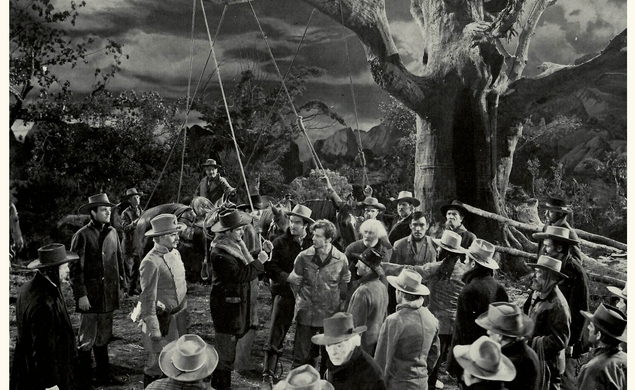
I just watched “The Oxbow Incident,” a cowboy movie about an angry mob that hunts down three innocent men and hangs them before there’s a chance for a fair trial. In one scene the posse agreed to “vote” and anyone who wanted to wait for a trial before hanging these men could step away from the crowd.  Out of fifty people, only seven men stood apart to defy the group. Others in the crowd looked a little ashamed but they didn’t have the courage to walk away. And so the men, who turned out to be innocent, were hanged.   

Oxbow Incident

By the way, the man they thought had been killed wasn’t dead after all. He’d just been out of town.  He walked into the saloon to greet the astonished crowd at the end of the movie. They had killed those men based on a rumor.

I’ve been observing crowds all my life, usually in churches. I’ve seen crowds get sad, anxious, giddy, angry, reactive, and just plain stupid. People who were generally thoughtful as individuals could lose their ability to think for themselves when influenced by a crowd.

Preachers, performers, and politicians know how to influence crowds, using different skills, such as humor, anger, a loud voice, etc. A skillful leader can tap into the angst or general excitement in order to stampede the crowd into doing what he wants. 

I have some of those skills and I tried to be careful that I didn’t manipulate my churches with them.  I had other colleagues who were careful, too.  But I also saw preachers who used those skills unscrupulously.  Some liked to machinegun Bible verses at people, not giving them a chance to breathe. Some screeched, cried, sang, and even babbled. And they could get many people to respond at the end of the service by having them come to the altar call, or perhaps write a bigger check for the collection plate.     

I see people getting lost in other crowds, too, such as at sports gatherings, where they are reactive rather than thoughtful.  A  athlete’s exciting performance,  or how well a play is executed, or a ref’s call… can make the crowd’s mood change instantly.  It scares me when they roar inarticulately in protest or approval. I wonder if anyone is thinking at that point, and I usually leave if I can.

And then there’s politics.  I’m not over the last presidential election and in two years we’ll have another.  I don’t like the guy that got elected.  He uses bravado, ridicule,  and taps into people’s fear and anger to move them. But while I may not like him, I’m even more disturbed by others  who try to stampede the masses both for and against him.

It’s probably too much to ask for, but I wish both sides would calm the heck down, talk reasonably, and make deliberate decisions.  

But maybe before we got out into the crowds, just you and I could agree to stay in control of our minds and be responsible for our thoughts and feelings. If someone comes out screaming that the sky is falling and everyone else goes crazy, you and I could look at each other and quietly remind each other that we choose not to play. We’ll think our own thoughts, make our own decisions and do our best to tune out the craziness.  Then as reasonable humans, we can discuss our differences and work out a plan of action. 

Most people will be slaves to the crowd. But you and I… we could stand apart, couldn’t we? 

Chicken in Church (and It’s Not Potluck)

I also offered last week’s posting to a Facebook page for conservative Christians.  To repeat, I was posing the challenge: “Can you describe God without using scripture or imagery?” As with progressive Christians, I received some thoughtful responses but they were almost drowned out by a few angry individuals.

I grew up with Christian conservatives and I was one of them for a long time. I’m still friends with a number of conservative ministers, and while we disagree these days, they’re good folk.

But not these guys. I think they use conservative Christianity as cover for their domineering tendencies.   

My goodness, they were energetic. They criticized, ridiculed, and occasionally threatened me with hellfire. Instead of answering what should have been a basic question for them, they tried to change the conversation, countering with their own challenges.    

“You atheists are so arrogant.  How do YOU think the world was made? Huh? Are YOU smarter than GOD? Do you know more than THE BIBLE? You’re nothing but a HYPOCRITE!  And you’re so ANGRY!”    

I tangled with them more than I meant to, and of course it was a waste of time. However, here is my final response:  

Bwak bwak bwak bwaaak….

I call “chicken.”

They blustered and bloviated because they didn’t have an answer.  And that’s just chicken.

Honestly, if I was still a believing conservative minister, I’d have been embarrassed at how poorly they responded. 

But more than embarrassed, I’m outraged at their bullying behavior. I’m immune to their tactics but not everyone is.  I’ve seen how people like them treat the vulnerable. I’ve seen how they rail at their own congregations. I’ve seen them intimidate the children into believing.  

When I was a pastor, I often comforted those who had been savaged by “ministers” like them. It made me mad then and it makes me mad now.

I see they’re still out there using religion to dominate people.  

I’m still here too. 

And not only do I say they’re chicken. I’m calling foul. 

I Won’t Stay Quiet

David, you’re hurting the church.  Why can’t you just be quiet?

I’ve been told all my life to be quiet for the sake of the church. Sure, I can preach, teach, guide, and help. But don’t challenge anyone or ask questions or express doubts because it hurts the church and I’ll go to hell Plus I could lose my job.

How do my words hurt anyone? The church claims to be an instrument of truth. How do people find truth if they are not allowed to ask, seek, and knock? Is the institution really so fragile that it can’t handle my voicing my thoughts?

When I was a young preacher in the churches of Christ, they taught that instrumental music in worship was evil. I thought it was ridiculous but I had to be careful with my words or I could lose my job. Later, I learned to refrain from voicing a dissenting opinion on baptism in the United Methodist church because I wanted to keep my job. For the same reason, I also kept quiet about much bigger issues, including our relationship with the LGBTQIA.

Yet job security was rarely mentioned. Instead, we spoke of how damaged the church could be if we even brought up these subjects. It’s interesting that an institution with the power to affect my life so dramatically could be so fragile.

Now, I’m still being urged to stay quiet. But I’m not going to. Silence makes us sick. It can even kill. I always wanted to be a healer so I’ll continue to speak up.

I’ll try to be respectful and reasonable. Just not quiet.

What Do I Call Myself?

It’s hard to find the words to describe myself.

Am I a nonbeliever? An agnostic? A heretic?  An infidel?  These terms suggest that I have lost my identity and am reacting erratically  like a bouncing pinball. But I haven’t lost myself. I’m growing up.

 “What happened that made you lose your faith?” asked a friend. 

There was no one event.  Others like me have said it is like “dying from a thousand cuts,” meaning that it happened gradually.

I remember the first time I seriously questioned my belief nearly two decades ago. I was sick and unhappy, and I prayed hard for help.  I didn’t need much–just some kind of reassurance, some indication that the loving God about whom I preached was really there.  It never happened.  How could I not question his existence?  With the exception of one friend, everyone shushed me and told me not to let my mind entertain doubts. 

I did what they told me. I decided that no matter what, I would continue to believe. I continued to develop my career as a minister. I went back to school and got my Master of Divinity.  When I felt doubt I told myself what I told other people: “You still have a choice.”

I chose to believe until I gave up. 

You know what? I lost some friends, a career, and a marriage, but life didn’t end for me. It started to get better.  I started to grow rather than diminish.  A year later, I have a little more peace and feel a little less broken. I have love and happiness. I have new thoughts and new opportunities. 

So back to the question: What do I call myself?

That’s easy.  I am David

Hell: NO!

Tis the season for Halloween.  Many churches object to the holiday, calling it satanic, yet at the same time, some of those churches will offer alternatives that are truly satanic. Their haunted houses (often called, “Hell House”) offer images of hell complete with fire, demons, and torture. You know, fun for the whole family. 

Did you know the word for hell is not in the Hebrew Bible (Old Testament) at all? It’s only mentioned once in the New Testament (2 Peter 2:4).  A few other verses speak of something we assume refers to hell but there’s a lot of room for discussion about it. 

Our concept of hell comes from Dante or perhaps Milton and we’ve added to it over the centuries.  We’ve certainly used it to frighten and control people, especially the children, and that troubles me greatly. Fear of hell was always a rotten motivator, however it can stoke the general anxiety of people.  

I always soft pedaled the eternal punishment part of my preaching even in my early period when I was a conservative fundamentalist.  A few years back I quit believing the church’s teaching on it because it just didn’t hold up theologically.  In my final years, I did not speak of it at all from the pulpit and I quietly told individuals that my thoughts had changed on the subject.

I observe that hell has lost a lot of its fire these days.  It doesn’t appear to scare us so much anymore, which suits me fine. 

So About Church Politics….

If by politics, we mean communicating, negotiating, and even persuading each other… well, those are good things.  It makes sense to engage in them because a church depends on people working together in a mature, respectful fashion.  In the best circumstances, there can be disagreement, flared tempers, and hurt feelings but they are resolved when people practice open, caring communication.

However, when we speak of church politics, we usually refer to those who gossip and manipulate to get their way. Some are looking to impede change. Others entertain themselves by assassinating the reputation of persons.  Then there’s that special cadre dedicated to undermining the preacher with the ultimate goal being to get rid of him or her. Sometimes these people cling to leadership positions; others prefer to stay hidden, doing their work with whispered conversations.

Much as I wanted to, I couldn’t ignore them.  I also couldn’t negotiate with them because they couldn’t tolerate the openness of honest discussion. As a result, I spent too much energy protecting myself and others.  It was easier when leadership protected me but that meant they couldn’t focus their energy on anything else either.

Every church I’ve known since childhood has this dysfunctional element. Every minister I know describes similar dysfunctions. No wonder membership continues to decline–although they’re not the only reason for it.

To the surviving handful of people who tried so hard to get rid of me over the last three decades, feel free to claim your victory. Congratulations… I’m out.  However, I didn’t leave because of you.

I’m out but I’m not done. I have more to say.

Angry Outcasts

I want to talk about those people who didn’t just fade away from church. They walked out and slammed the door, stating they will never enter a church building again.

They once participated wholeheartedly in their churches. They were bathed in church customs, learned the doctrines, memorized biblical passages, and took notes with pens of different colors during the sermon.  They went to Sunday school, prayer meetings, Vacation Bible School, and church camp. They evangelized their friends and went on mission outreaches. They tithed. They came early and stayed late, often doing menial chores in the church building. They weren’t just faithful members… they were the best members.

But…

At some point they began to be plagued by nagging doubts and questions:

“If God loves the world so much why does he allow…?”

Or…

“If God is so powerful, why doesn’t he…?

Or…

“How can the pastor and my teachers be so certain that they are right?”

And…

“What if none of this is true?”

When they gave voice to these unwelcome thoughts, their friends, family, and pastors shushed them, warning them to guard their minds against such things.  When they persevered with their questions, loved ones reacted with even more pressure, warning them not to let the Devil seduce them lest they fall from the kingdom of God.

Finally, they could no longer tolerate the force-feeding. They summoned every ounce of courage they had to say aloud that they just didn’t believe anymore.  As a result, they lost everything: family, community, often their jobs. The people they once depended on for love and acceptance now despised and rejected them.

Is it any wonder they’re angry? From their perspective, they’ve been lied to all their lives.  They’re not just angry–they are enraged because they feel like they were brainwashed.  They look around and see that much of the world still believes the things they once believed and they want to scream, “NO, THIS IS NOT TRUE!

Yet as furious as they are, they’re also lonely and displaced, and they miss that sense of belonging they once had. They hear the siren’s song of the hymn: “come home… come home….” But most of them can’t. They won’t ever again relinquish the right to think for themselves.

I have many things to say about this subject. But I want to end this post by saying something that I wish I’d been saying from the pulpit for the last thirty-five years:

Parents, your children are more important than your religion.

As they become grown, you have to respect their right to believe (or not believe) as they wish. You want them to visit you? You want to see your grandchildren? Then stop trying to force them back into your religion.

I know, I know. You don’t want to lose them to hell.  But you could lose them right now if you don’t back off.  Religion is about faith. So how about showing some faith in the people you love that they’ll find their own way? They might even turn out to know more than you.

Crazy Conversations on the Bible

I have a bachelor’s degree in Bible and a master of divinity. I taught a college course in Biblical literature.  I still have a high regard for scripture but not for those who use it amateurishly to bully people.

I grew up in the conservative, evangelical, Bible focused communities. I preached for them for a long time until I grew past it.  The following is a conversation I wish I could have with some of the people I encountered there.  But it doesn’t usually happen because they shout or use some other form of intimidation once they’ve been challenged. I’m not presenting this discussion for their benefit because they won’t understand it. It’s for those of you who sincerely long for truth and perhaps search for God.

See if this is familiar to you:

*********

“I follow the Bible!”

Really?  You speak as if it is a deity in itself. I thought Christians followed Jesus.

We do that by following the Bible.  We believe the Bible is the inspired Word of God.

Why?

Because it says so in 2 Timothy 3:16. 

Yes, it does. But if you’re trying to convince someone that it’s inspired, this statement doesn’t get the job done. It’s the tightest bit of circular reasoning I’ve ever heard.  By the way, what do you mean by “inspired?”

It’s Greek for “God Breathed.”

Actually, it’s Latin but never mind.* I don’t want to do one of those tedious “word studies” you guys are famous for.

I believe the Bible is inerrant. Everything we need can be found in the Word of God. 

Yeah, well, I have a problem with the word “inerrant.” It’s an absolute term meaning it is without any flaw whatsoever. But the Bible on your bookshelf  is a flawed translation of a series of manuscripts that scholars have pieced together. None of them think they did it perfectly.  And I haven’t even gotten to the theological contradictions, yet.

There are no contradictions because the Bible is inerrant.

Okay, whatever. But if the Bible is inerrant, why do you leave out so much?  You’re pretty bad about picking and choosing what you insist everyone should obey.  Most of you don’t insist that women should have their heads covered. You don’t stone children for being disobedient. You don’t have slaves. I don’t see many of you fasting or honoring the Sabbath or marrying your dead brother’s wife.  I’m not saying you should do those things, by the way…

You’re very clever with your words. But the Word of God reigns supreme.

Okay, well… I have another question. You like to quote the verse Rev. 22:18-19** where a person should never add to or take away from the scripture, don’t you?

Yes.

Then I don’t understand why you guys are so wordy. Why do you have so many arguments, debates, and sermons?  What’s with all the commentaries? Why do so many of you come up with additional doctrines and creeds? If the Bible is enough, then why isn’t it… enough?

You obviously don’t believe in the Bible.

*********

I’ll stop here and shift this conversation back to normal folk.

Do you know why you can’t understand them? It’s because they’re crazy.  It’s way past time to stop letting them hijack your minds.  You believe in Jesus? Fine, but don’t follow the crazy people, no matter how dedicated they seem or how many Bible verses they quote.

*********

*The Greek word in the text is θεόπνευστος, and it does indeed mean “God-breathed.”

**Also in Deuteronomy 4:2 and Deuteronomy 12:32


I’m not a Sinner. I’m a Person

I’m not a sinner. I’m a person. 

I posted this on Facebook and received some powerful reactions.  My minister pals responded with gentleness and support.  Other friends, though they were kind, equated my statement with total rejection of the Christian doctrine and it confused them to hear this coming from a pastor.   Some cheered me on even as they poured out their stories of having been rejected by their Christian communities.

Is it really so shocking that I insist I am a whole person complete with conflicting attributes? And excuse me if I sound guilty of the sin of pride, but  I’m pretty damned interesting.  I can be brilliant, dumb, generous and petty.  I sing, whisper, yell, and mumble.   I laugh loud, wail inconsolably, burn with rage, and love with passion. I work hard and occasionally I struggle through the minutia to accomplish big things. I’ve also helped people throughout my life. 

All these things count.  I won’t exclude them all and focus only on the bad stuff.

But let’s think this through.  Am I a sinner? I’ve searched myself all my life like a good little Christian to ferret out all my inner evil and I’ve enjoyed about as much of that misery as I can stand.  But if I must, I’ll give myself one final quickie—oops, using that word is probably a sin.  But let’s move on.    

Have I hurt others? Yeah, so okay, those are sins.  Additionally, others have said I have hurt them and they expect me to hang my head and feel bad. I can’t argue because that would probably be a sin, too. On the other hand, I’ve avoided the biggies—murder, robbery, tearing labels off mattresses.  But it’s a sin to brag about the bad things I’ve avoided.  Also, I’ve done some pretty good things, but thinking about how good I am is a sin, too.

Then there are the sins of omission—the endless list of things I am not doing but should be.  Also, my inner thoughts of the bad things I wish I could be doing—they’re sins too.  And then the feelings—jealousy, fear, anger, sexual desire, grief—I shouldn’t have them so those are also sins. 

Finally, we say that sin is anything less than perfection.  So as I sit here with imperfect posture, my fingers using the backspace key while I type in my flawed thoughts, I’m supposed to agree that there’s never a moment when I’m not sinning. 

Fine. You win. If we exclude every other fact about me, we can call me a miserable, scum sucking, sinner.  And so are you.  And so is everyone. 

It’s probably a sin to say this is crazy.  But it is. 

Quote a Bible verse or two, or a hundred, but it’s doesn’t make it less crazy. Weave your thoughts into a weird doctrinal narrative and call it “God’s love,” and that makes it more crazy.  Shout it from ten thousand protestant pulpits and the craziness grows. Teach it lovingly to the children in classrooms and we’ve elevated it to wickedness.   

So I want to say sincerely, I’m sorry but I’m not a sinner.  I’m sorry I ever believed that I was.  I’m sorry I told others they were sinners.  I’m sorry I preached it in the pulpit and taught it in the classroom and shared it to families in their living rooms. 

I repent. I take it back. 

Condemn me for it if you must, but I’m not a sinner. And neither are you.  We are persons.