Who Cares About the Election?

Although I changed the names, the following two incidents are true to the best of my recollection.

In the second grade, Randy was a class hero of mythological proportions.  He was regarded as the fastest runner, the best ballplayer, and the smartest student. He was a good looking kid, yet in reality he was not the best or the brightest… far from it. 

However, he was the cockiest kid–arrogant beyond his years. And he was mean and aggressive, getting his way through intimidation. He had a powerful influence on his classmates especially when it came to making fun of the most vulnerable. He labeled them fat, ugly, and dumb, and most of the class followed his lead in sneering at them because it was easier than resisting or even thinking for themselves. 

However, he stopped being the leader when he was expelled from school for physically harming one of the girls in our class.  

******

Then there was Jerry, the hero of our ninth grade class in another school and another city. He wasn’t smart or handsome and he was far from a star athlete, but it didn’t matter because he was charming and aggressive. Just like the kids in second grade, the ninth grade students were under his influence. 

He was elected prom king (or something equivalent) and there’s a picture of him in our school yearbook wearing a tux with his arm around the prom queen (or the equivalent). 

In the summer after ninth grade, Jerry shocked the whole town, including the school that revered him, with a  monstrous act of violence.   One afternoon, he knocked on the door of a neighborhood house. A pregnant woman answered and he asked to use the phone. When she declined, he stepped into the entranceway of her home and stabbed her to death. Then he went into the home to use her shower before he went to the park to swim with his friends.  

******

I have often wondered why these two separate communities of children regarded these boys so highly. How could the whole group be so influenced?  Was it because they were so young?

I see adults acting this way, too, allowing predators the freedom to harm the more vulnerable. Whole communities, even nations, allow individuals the power to harm others.  Think about leaders in our American society: the clergymen, Hollywood producers, elected politicians, and athletic coaches, to name a few, who have taken money, molested the vulnerable, and abused children—often for decades before they were called to account.  They could have been stopped much earlier but people allowed it to happen.  And even after the deeds were made public, people adored them.

Which brings me to the presidential election. Actually, I’m thinking of 2016 where the  nation elected an abusive,  unqualified person to the office. He cheated on his wives and people didn’t care. He bragged about groping women and people didn’t care. Like a bratty kid, he insulted people, especially women, referring to them as fat and ugly. And people didn’t care.He mocked a disabled person while on camera and people didn’t care.

He actually joked about being able shoot people without losing any of his followers. At times, I have feared he was right.

In the time since he took office, he hasn’t can’t kept his staff intact… he keeps firing people. His followers don’t care.

He’s a terrible statesman, insulting our allies and toadying to our enemies. His followers don’t care.  He has kept his finances secret so we don’t know if he has benefited personally from his national economic changes. His followers don’t care.

He has bungled the pandemic crisis  and is still bungling it while blaming it on others.  Nearly a quarter of a million people are dead because of his ineptitude.  And his followers don’t care.

He has been the darling of the Evangelical Christian movement even though he does things that these religious folk teach against.  However, it doesn’t surprise me that evangelical Christians follow him. Through history they have blindly followed many of their own immoral leaders. They have a history of not caring.  

What would happen if people cared more? 

What if the communities of Randy, Jerry, and Donnie had been more functional? What if no one had bought into their superficial charm? What if the people had chosen not to elevate them or give them so much power? Would they have been better men? Would more people be alive? 

And what would it be like if we had a whole  nation of grownups who knew how to think critically and cared enough to resist the hysteria of crowds? What kind of leaders would be chosen?

If people cared more, they wouldn’t choose people like Randy, Jerry, or Donnie.

This Is Not New

Today’s guest blogger is my wife, Sylvia Kirkendoll, who shares her observations of how racial injustice has changed so little in her lifetime. 

**************

This is not new.  And it shouldn’t be a surprise. The only thing that should shock anyone is that rioting still seems to be a necessary last resort because things have changed so little. 

Sure, many laws and regulations have changed. Opportunities have opened.  We elected a President who is a man of color. But those are only a start. The cancer was treated enough to reduce its outward symptoms for a time but It is still there.  Far too many people are infected with the same bigotries as their grandparents and parents and continue to pass the disease to their children and grandchildren. 
 
It’s usually not quite so blatant as it was in 1971 when buses of black children arriving at the previously all-white junior high school I attended were greeted with jeers and epithets spewing from angry white parents.
 
I’d like to say things have changed since 1978 when I watched a friend save a toddler’s life by snatching her from the path of a bus, only to have the parents react in horror that a black man had the temerity to put his hands on their child.
 
I’d like to say things have changed since 1967 when a neighbor called my mother to warn her that a young black man was trying to sell magazines door-to-door. At the time the call came, Mom was fixing the young man a cup of coffee and they were talking about his plans for college and eventually law school. Mom told the neighbor that no, she’d damned well better not call the police
 
I’d like to say that things have changed since the time the evening news played alternating clips of protests, riots, and white folks blaming it all on agitators who just want to make trouble. Mom went ballistic that time. “It’s a good thing I’m not a black man cause I sure wouldn’t live long. I’d take a gun and kill as many of the white bastards as I could before they got me.” That was more than 50 years ago, but it could be today.
 
Picnicking while black. Jogging while black. Birding while black. Gardening in your front yard while black. Taking out the trash while black. Vacationing while black. It’s just a variation on the same old theme: selling magazines while black, saving a child’s life while black, attending school while black, and on and on and on. 
 
“…I think America must see that riots do not develop out of thin air. … And so in a real sense, our nation’s summers of riots are caused by our nation’s winters of delay. And as long as America postpones justice, we stand in the position of having these recurrences of violence and riots over and over again.” 1967 – Martin Luther King, Jr.
******************
Sylvia Kirkendoll is an artist, photographer, singer, and private pilot. She works for a title company as Manager of Strategic Analytics and is married to David Mercer.

bio pic of sylvia and me
Sylvia Kirkendoll and David Mercer

A Conspiracy of Silence

My aunt was funny, brash, and loving. Athletic and adventurous in her younger days, tender and caring until the day she died, she was adored by everyone.

But she had a secret, sort of….

She was a lesbian.

Everyone knew but they never spoke of it. Perhaps it was best that way since everyone thought it was shameful and wicked. Silence saved us all from discomfort and embarrassment. It was easier.

Okay, maybe not easier, but silence at least made life safer because if she had been open about herself, she could have been in physical danger at times. More recently, I’ve wondered about the emotional and psychological pain she suffered as a consequence of her (and our) silence.

I was still a minister when I had my last face-to-face conversation with Mom before she died. It was early in the morning and we sat at the kitchen table while I told her that Christianity had been wrong to condemn the LGBTQ and I had been wrong in standing by silently. It was my intention, I told her, to begin a support group within my church where the LGBTQ in our community could come to talk and worship. However, while most of my congregation was on board, I still had to find a way to provide privacy for them because Oklahoma, like a lot of regions, is still not friendly to the LGBTQ*

Mom showed a great deal of interest, which surprised me. I thought she’d be uncomfortable, maybe even a little afraid for me. However, she asked me more about my thoughts regarding the scriptures and church doctrine. I told her that Jesus never made an issue of people’s sexuality, and he defended those who had been shamed by society. He said that people would be welcomed into heaven based on acts of love, not their religion.

She nodded and then she told me about her recently deceased sister.

Years before when they were much younger, they had attended a weeklong religious revival. On the last evening, the preacher gave the invitation and while the song played “Just As I Am,” he waited for people to come down the aisle to repent publically of their sins so they could gain forgiveness and redemption.

My aunt looked at Mom who nodded to her in encouragement. And then Mom’s sister went to the front of the church where she was baptized.

For a few moments, my aunt felt forgiven and clean. Her sins were washed away and she was now acceptable in the eyes of God. But redemption doesn’t last long in the church. My aunt remained a lesbian and she went on to have a relationship with her partner that lasted the rest of her life.

My aunt was one of the kindest people the world has known. She checked on the people around her, asking after their health and other concerns. People loved her and opened up to tell her all their problems. And she was generous, giving her time and energy to make people more comfortable. Mom said that she once watched her sister literally give away her last nickel.

“You tell me,” Mom blurted out to me that day in the kitchen, “that a woman like my sister didn’t make it to heaven!”

I assured her that she did.

I don’t believe in heaven or hell or God and Jesus anymore. They’re not real. However, the church and its conspiracy of silent condemnation are quite real.

I find myself shocked at what we did to my aunt and others like her. I’m horrified that we locked my sweet, loveable, funny aunt into a prison of silence, where she dreaded the day she would die and go to the hell we had created. And I think of my mom, who worried that she would never see her sister in heaven. And I think of the people in the LGBTQ who are offered only condemnation by their churches.

I deeply regret that I was a leader in that culture and that I stood by while the silent ones were alone in shame and fear.

I’m so sorry.

_ _ _ _ _ _ _ _ _

*I moved away from town soon after and never started that support group.

Will God Answer for His Actions?

The following questions often lurk in the believer’s mind, especially at times like these when we are dealing with the COVID-19 virus.

Over my time as a minister, people whispered these questions to me, often ashamed to put them into words. I’m articulating them in hopes of engaging their thinking.
I’m not asking anyone to justify their theology to me. I don’t need to have answers to these questions anymore. However, I’m happy to have a discussion and I promise to reply back gently and genuinely. I’ll monitor the comments and omit any that are hostile or disrespectful.  


Why does God allow any disease to afflict us?

I used to deflect this one by saying God isn’t really doing this to us, but that in some way we’re doing it to ourselves. But if God is Lord of everything, doesn’t that make him responsible for everything including the COVID-19 virus?


Why does he indiscriminately hurt everyone?

Some say sickness is punishment for specific sins that some people are committing. For instance, it’s popular to blame the LGBT, saying we are all suffering for their sinful lifestyle. It’s an ugly accusation, and it makes no sense. Why wouldn’t God specifically target a group with whom he is angry?

Others say we’re being punished for the general sinfulness of the world, but that’s not really fair, either. Some are worse than others and some are more innocent.

I know–one sin is as bad as another in the Christian religion (James 2:10). But c’mon! We all know that isn’t so. Angry babies aren’t as guilty as bank robbers.


How does our suffering prove God’s love for us?

Some refer to Hebrews 12:6, saying that God isn’t out to hurt us but in fact is disciplining us because he loves us so much.

Really? Abusive parents say the same thing when they beat their children.


How does allowing us to suffer reveal God’s mercy?

Many say our suffering is a natural consequence of our actions. We bring it on ourselves and we have to get ourselves out of it. The babies have to suffer right along with the bank robbers because we brought it on ourselves collectively.

So… God won’t help us out with this because it’s our fault? Isn’t he supposed to be merciful? Isn’t he interested in “saving us from our sins?” When my kids were about to hurt themselves seriously, I intervened. The heavenly father doesn’t do that, too?


Is God just… mean?

Could it be that God doesn’t really love us? Is he playing with us for his amusement and then demanding us to believe he isn’t mean, but in fact is loving and kind.? Again, I refer back to the comparison of an abusive parent.


Is God limited in his power?

Maybe God does care for us but he’s not infinitely powerful, as he’s purported to be. After the creation, the plagues, and the resurrection, maybe he tapped out and now we’re on our own.

Anytime we get this far in the conversation, someone wants to say that God’s ways are not our ways and God’s thoughts are not our thoughts (Isaiah 55:8-9), meaning that we’re not smart enough to comprehend the ways of God.

You’re telling me that God, who supposedly had a whole Bible to reveal himself to us, whose son spent all that time teaching about the kingdom of heaven, has failed in the attempt to communicate? Isn’t he great enough to overcome our weaknesses?


Is it wrong to ask questions?

Now we’re at the point where someone says I should have faith in God’s power and good intentions. We shouldn’t allow ourselves to question God. Such questions create doubt. We should not “allow Satan a foothold….”

Really? No questions at all? We’re all sort of an interested party here when it comes to COVID-19. If he’s doing this to us or simply allowing this to happen when he could stop it, is it fair for him to get angry when we ask questions?

Let’s just concede that I’m being deliberately dense, that I can’t see the truth because I don’t want to see it, and I would be much better off if I accepted God’s will without question.

Is that working for you? Are you relieved of fear? Are you experiencing that peace that passes understanding?

If you say yes, I don’t believe you.

I spent thirty-five years trying to allay the fear and anxiety that people in my churches experienced. I tried to explain away the inconsistencies. I tried to help them feel better with the blessed assurance that Jesus was theirs. But it was a temporary fix, at best.


Final Questions:

Why spend time praying to a God who doesn’t answer back, who doesn’t explain himself, and who doesn’t intervene like He promises? Why sing to him and dedicate group praise to him? What exactly has he done to deserve any of our attention as a time when we need each other so much?

Drowning in the Baptismal Waters

She was eleven years old.

She had been at an evangelical church camp–a week full of morning Bible studies and evening assemblies with emotionally charged music, stories, and sermons. On the final night, the guest preacher spoke of their need to be forgiven of their sins to be saved from eternal hell and to beg for the gift of heaven.   

The girl walked up the aisle and said she wanted to be baptized.  The people applauded and shouted “Amen!” Her tears flowed freely and the preacher explained it was because the Holy Spirit had gotten hold of her.   

I was one of the spiritual guides at that camp and I was assigned to “counsel” her on the spot. While she sat in the pew, sobbing, I knelt in front of her so I could see her face. 

“Have you been baptized before?” I asked. 

“Yes, but I need to do it again,” she said.

“You don’t really have to,” I said. “You’re already saved.”  

“Yes, I do,” she insisted. “Because I’ve been so bad since then!” 

“Why don’t you wait till you go home and you can talk about it with your parents?” I suggested. 

“No! I have to do it now!”

I was afraid she was about to reach a new level of hysteria.  I said, “Okay, but first let’s call your parents on the phone. They’ll want to know.”

She nodded.

As I led her from the crowd, she said in a broken voice: “I’m so happy…”

After talking to her parents, she decided to wait until she got home where she could be baptized in her own church. I was relieved that we slowed things down so she could rest and be with her family first.   

“I’ve been so bad,” she said. 

At eleven years of age, what could she have done that was so bad? Did she sass her parents? Had she snuck out at night to be with her friends? Had she gone “all the way”?

Did these things make her evil? Did she deserve to burn in hell forever? That’s what we taught her.  In fact, there were many lesser things, including “bad thoughts,” that would send her to hell.  Her only escape was to have special words said over her and then dunked (again) underwater.

It was a long time ago and I’ve had darker questions since then.

What if she had been molested?  What if someone had told her it was her fault? It has taken me a long time to see that our religion could be a tool to prey on the vulnerable.  The baptismal waters come closer to drowning them rather than cleansing them.     

I’m ashamed that I was part of a system that says people are evil and deserve to burn eternally.

At the time, I thought of myself as a reformer who was changing the church from the inside in Jesus’ name. I did my best to shield people like this girl from abuse but I was merely helping adjust things enough to allow an unhealthy institution to continue functioning.

I wish I had never been a part of it. Yet I also wish I had helped her more while I was there.

“Honey,” I could have said, “I don’t care what you’ve done, there’s nothing evil about you. You are a wonderful person. You don’t need to be saved. If there is a god, I’m sure he likes you fine.”

In fact, I wish I had stood up and told all the kids the same thing and then said, “You’re all marvelous, just as you are, and you don’t have to listen to this crap.  In fact, we can all stand up, march out of this place, go home, and be happy.

“C’mon. I’ll go first.”   


Atheism Versus the Easter Bunny

Referring to a prominent atheist, the Christian comedian would say,

“Hey, I don’t believe in the Easter Bunny but I don’t make a career out of it.”

The Baptist performer made his career traveling the world using his funny stories as a tool for evangelism.  He was, and still is quite effective, with his blend of humor and pathos and I used to think his line about the Easter Bunny was funny.  

But let’s turn this around a bit and say, hypothetically, that instead of God, the comedian believed in something silly, like… the Easter Bunny, and made his career out of that belief.  What if he performed all over the country basing his message on this belief? 

And what if, when challenged, he took on a serene, sanctimonious look as he gave his witness: 

“I know it’s true,” he might say, “because I feel the Easter Bunny in my heart.  My parents taught me it was true and I still get a warm feeling when I sing the sweet childhood songs that proclaim the power of the Bunny.  I meet regularly with others to have special Bunny Study Groups and we encourage each other when our doubts haunt us.  Plus, once when I was hunting Easter eggs I had almost given up hope but then the Spirit of the Bunny spoke to my heart and showed me where I could find some—and I did! More than my basket could hold! So don’t tell me the Bunny isn’t real!” 

What if billions of people said the same thing? 

In that context, I think I could understand how someone might choose to make a career arguing against the existence of the Easter Bunny.   

Sure, it’s a silly scenario.  However, billions of people actually do profess a belief in a deity they have never seen, heard, or smelled, and they use the same, uh, reasoning to justify their belief.  And so, yes, some of us resist the concept although we rarely make a living from doing so.

Someone might ask me, “Why make things so unpleasant by arguing? Why not go on with your life and let people believe as they do?  Why can’t we all have mutual respect for each other?” 

Mutual respect sounds pretty good to me, and it would be a great starting place.  We could all be quiet and let everyone have their own thoughts.

So how about this:

I’ll get quiet when the Evangelical Christians do.  When they stop their global campaign, I’ll stop writing and talking.  I’ll stop speaking up when they stop trying to condition the minds of little children with songs, stories, and threats.  When they quit trying to force the schools and the government to carry their message for them, I’ll stop protesting.

Many Christians accuse atheists of having a hidden agenda, which I think takes a special blend of nerve and insanity, considering that their highest priority is to convert the entire world.

By the way, there’s nothing secret about the atheist agenda.  Simply stated, we won’t be forced to believe in God.

It may not be much of a career but it’s a powerful cause.  

Standing Apart from the Crowd

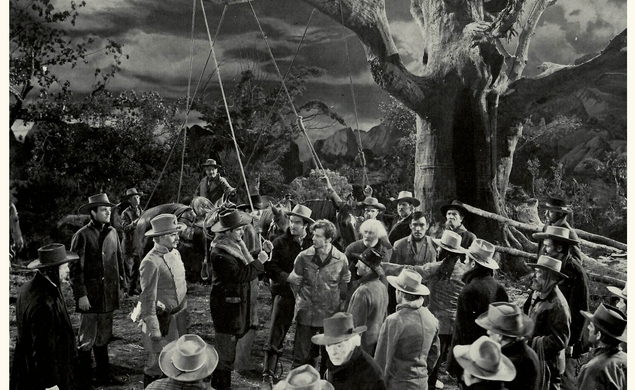
I just watched “The Oxbow Incident,” a cowboy movie about an angry mob that hunts down three innocent men and hangs them before there’s a chance for a fair trial. In one scene the posse agreed to “vote” and anyone who wanted to wait for a trial before hanging these men could step away from the crowd.  Out of fifty people, only seven men stood apart to defy the group. Others in the crowd looked a little ashamed but they didn’t have the courage to walk away. And so the men, who turned out to be innocent, were hanged.   

Oxbow Incident

By the way, the man they thought had been killed wasn’t dead after all. He’d just been out of town.  He walked into the saloon to greet the astonished crowd at the end of the movie. They had killed those men based on a rumor.

I’ve been observing crowds all my life, usually in churches. I’ve seen crowds get sad, anxious, giddy, angry, reactive, and just plain stupid. People who were generally thoughtful as individuals could lose their ability to think for themselves when influenced by a crowd.

Preachers, performers, and politicians know how to influence crowds, using different skills, such as humor, anger, a loud voice, etc. A skillful leader can tap into the angst or general excitement in order to stampede the crowd into doing what he wants. 

I have some of those skills and I tried to be careful that I didn’t manipulate my churches with them.  I had other colleagues who were careful, too.  But I also saw preachers who used those skills unscrupulously.  Some liked to machinegun Bible verses at people, not giving them a chance to breathe. Some screeched, cried, sang, and even babbled. And they could get many people to respond at the end of the service by having them come to the altar call, or perhaps write a bigger check for the collection plate.     

I see people getting lost in other crowds, too, such as at sports gatherings, where they are reactive rather than thoughtful.  A  athlete’s exciting performance,  or how well a play is executed, or a ref’s call… can make the crowd’s mood change instantly.  It scares me when they roar inarticulately in protest or approval. I wonder if anyone is thinking at that point, and I usually leave if I can.

And then there’s politics.  I’m not over the last presidential election and in two years we’ll have another.  I don’t like the guy that got elected.  He uses bravado, ridicule,  and taps into people’s fear and anger to move them. But while I may not like him, I’m even more disturbed by others  who try to stampede the masses both for and against him.

It’s probably too much to ask for, but I wish both sides would calm the heck down, talk reasonably, and make deliberate decisions.  

But maybe before we got out into the crowds, just you and I could agree to stay in control of our minds and be responsible for our thoughts and feelings. If someone comes out screaming that the sky is falling and everyone else goes crazy, you and I could look at each other and quietly remind each other that we choose not to play. We’ll think our own thoughts, make our own decisions and do our best to tune out the craziness.  Then as reasonable humans, we can discuss our differences and work out a plan of action. 

Most people will be slaves to the crowd. But you and I… we could stand apart, couldn’t we? 

People Are Being Beaten

He was cautious. Forty years ago, life was risky for a gay person. He approached a young acquaintance and asked if he was interested in a sexual encounter. The young man seemed to agree with him and they decided to meet at a deserted location. But when they met, the young man beat the guy.

The young man told his friends about it, bragging about how he had blackened the guy’s eyes, broken his nose, and cracked his ribs. His pals approved figuring the gay guy had it coming.

Forty years later, some progress has been made but it’s still risky for people of the LGBT community. They can still get beaten and in some parts of the world, they’re killed. However even if they don’t risk physical injury, they’re still often targets of ridicule and derision. They’re still regarded as unworthy of equal consideration even if the law says they must be given equal rights.

How would you feel to be regarded as “not normal”?

What if your family was embarrassed about you? How would it feel to be told that living alone was the only honorable path for you? What would you think if your church told you that they loved you “anyway,” even if you are an abomination—and, by the way, those are some of the more tolerant churches. Most churches still blame the LGBT for natural disasters and the fall of civilizations—and I wish I was joking.

It’s a sin, the religious folk say. It goes against the Bible.

I don’t care what the Bible says–they’re wrong. Quoting the Bible and claiming to speak for God makes them even more wrong.

I’ve been hoping the United Methodist Church, the denomination where I served as a minister, would make some changes in their attitude toward the LGBT. They’re going to have an expensive, divisive conference to talk about the ordination of non-heterosexual people and same sex marriage. I’ve only just now realized that no one is going to change their minds. The only thing I see happening is that the LGBT will be more resented afterwards.

I want to shout at my former colleagues: “Come on! We were supposed to be the world changers! We were supposed to be champions of the oppressed!”

Come on!

People are being beaten!

Chicken in Church (and It’s Not Potluck)

I also offered last week’s posting to a Facebook page for conservative Christians.  To repeat, I was posing the challenge: “Can you describe God without using scripture or imagery?” As with progressive Christians, I received some thoughtful responses but they were almost drowned out by a few angry individuals.

I grew up with Christian conservatives and I was one of them for a long time. I’m still friends with a number of conservative ministers, and while we disagree these days, they’re good folk.

But not these guys. I think they use conservative Christianity as cover for their domineering tendencies.   

My goodness, they were energetic. They criticized, ridiculed, and occasionally threatened me with hellfire. Instead of answering what should have been a basic question for them, they tried to change the conversation, countering with their own challenges.    

“You atheists are so arrogant.  How do YOU think the world was made? Huh? Are YOU smarter than GOD? Do you know more than THE BIBLE? You’re nothing but a HYPOCRITE!  And you’re so ANGRY!”    

I tangled with them more than I meant to, and of course it was a waste of time. However, here is my final response:  

Bwak bwak bwak bwaaak….

I call “chicken.”

They blustered and bloviated because they didn’t have an answer.  And that’s just chicken.

Honestly, if I was still a believing conservative minister, I’d have been embarrassed at how poorly they responded. 

But more than embarrassed, I’m outraged at their bullying behavior. I’m immune to their tactics but not everyone is.  I’ve seen how people like them treat the vulnerable. I’ve seen how they rail at their own congregations. I’ve seen them intimidate the children into believing.  

When I was a pastor, I often comforted those who had been savaged by “ministers” like them. It made me mad then and it makes me mad now.

I see they’re still out there using religion to dominate people.  

I’m still here too. 

And not only do I say they’re chicken. I’m calling foul. 

Church Camp

I tried to love church camp like my colleagues claimed to, but I couldn’t. Being away from my family for a week or two, exposed to nature’s bugs, skunks, and snakes, plus sleeping in an unairconditioned cabin with a bunch of preadolescent boys was never my idea of a good time.

Call me a poor sport. Call me a sissy. Just don’t call me to be a camp counselor ever again.

But more importantly than my discomfort, I have some real concerns for the kids that attend.

First, let me say I’ve hesitated to speak about this because I have dear friends who have invested themselves in giving kids good experiences in camp. They have no intention of engineering a manipulative atmosphere as revealed in the documentary, Jesus Camp.  I’ll even agree that many camp leaders, especially in United Methodist camps, are diligent in showing respect for the campers.  Furthermore, many people tell me they have great memories of attending church camp.

I believe them but I’m still concerned. I say that even with the best intentions, there’s a great deal of manipulation happening in church camps.

Tell me I’m wrong… that these elements are not in church camps:

Isolation where young ones are away from home and family.

Sleep deprivation where they wake up early and stay up late.

Exhaustion from physical activities including long hikes.

Indoctrination from the small group sharing sessions, exciting music, emotional storytelling, using scripture like incantations, and pressuring the children to give their hearts to Jesus.

Of course the kids respond to the invitation… sobbing as they stumble up the aisles, offering themselves to God, mistaking their fatigue for spirituality.

I actually helped at these camps, thinking it was good for the kids. But I’ve changed my mind and I’m sorry I was ever a part of them. Again, I don’t think those who led these camps meant to hurt anyone. They were trying to help, to give kids a good experience.

But I still think it’s wrong.