
Standing Apart from the Crowd

I just watched “The Oxbow Incident,” a cowboy movie about an angry mob that hunts down three innocent men and hangs them before there’s a chance for a fair trial. In one scene the posse agreed to “vote” and anyone who wanted to wait for a trial before hanging these men could step away from the crowd.  Out of fifty people, only seven men stood apart to defy the group. Others in the crowd looked a little ashamed but they didn’t have the courage to walk away. And so the men, who turned out to be innocent, were hanged.   
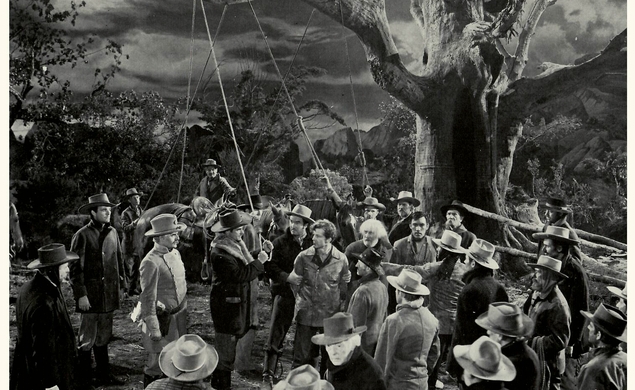
Oxbow Incident

By the way, the man they thought had been killed wasn’t dead after all. He’d just been out of town.  He walked into the saloon to greet the astonished crowd at the end of the movie. They had killed those men based on a rumor.

I’ve been observing crowds all my life, usually in churches. I’ve seen crowds get sad, anxious, giddy, angry, reactive, and just plain stupid. People who were generally thoughtful as individuals could lose their ability to think for themselves when influenced by a crowd.

Preachers, performers, and politicians know how to influence crowds, using different skills, such as humor, anger, a loud voice, etc. A skillful leader can tap into the angst or general excitement in order to stampede the crowd into doing what he wants. 

I have some of those skills and I tried to be careful that I didn’t manipulate my churches with them.  I had other colleagues who were careful, too.  But I also saw preachers who used those skills unscrupulously.  Some liked to machinegun Bible verses at people, not giving them a chance to breathe. Some screeched, cried, sang, and even babbled. And they could get many people to respond at the end of the service by having them come to the altar call, or perhaps write a bigger check for the collection plate.     

I see people getting lost in other crowds, too, such as at sports gatherings, where they are reactive rather than thoughtful.  A  athlete’s exciting performance,  or how well a play is executed, or a ref’s call… can make the crowd’s mood change instantly.  It scares me when they roar inarticulately in protest or approval. I wonder if anyone is thinking at that point, and I usually leave if I can.

And then there’s politics.  I’m not over the last presidential election and in two years we’ll have another.  I don’t like the guy that got elected.  He uses bravado, ridicule,  and taps into people’s fear and anger to move them. But while I may not like him, I’m even more disturbed by others  who try to stampede the masses both for and against him.

It’s probably too much to ask for, but I wish both sides would calm the heck down, talk reasonably, and make deliberate decisions.  

But maybe before we got out into the crowds, just you and I could agree to stay in control of our minds and be responsible for our thoughts and feelings. If someone comes out screaming that the sky is falling and everyone else goes crazy, you and I could look at each other and quietly remind each other that we choose not to play. We’ll think our own thoughts, make our own decisions and do our best to tune out the craziness.  Then as reasonable humans, we can discuss our differences and work out a plan of action. 

Most people will be slaves to the crowd. But you and I… we could stand apart, couldn’t we? 

People Are Being Beaten

He was cautious. Forty years ago, life was risky for a gay person. He approached a young acquaintance and asked if he was interested in a sexual encounter. The young man seemed to agree with him and they decided to meet at a deserted location. But when they met, the young man beat the guy.

The young man told his friends about it, bragging about how he had blackened the guy’s eyes, broken his nose, and cracked his ribs. His pals approved figuring the gay guy had it coming.

Forty years later, some progress has been made but it’s still risky for people of the LGBT community. They can still get beaten and in some parts of the world, they’re killed. However even if they don’t risk physical injury, they’re still often targets of ridicule and derision. They’re still regarded as unworthy of equal consideration even if the law says they must be given equal rights.

How would you feel to be regarded as “not normal”?

What if your family was embarrassed about you? How would it feel to be told that living alone was the only honorable path for you? What would you think if your church told you that they loved you “anyway,” even if you are an abomination—and, by the way, those are some of the more tolerant churches. Most churches still blame the LGBT for natural disasters and the fall of civilizations—and I wish I was joking.

It’s a sin, the religious folk say. It goes against the Bible.

I don’t care what the Bible says–they’re wrong. Quoting the Bible and claiming to speak for God makes them even more wrong.

I’ve been hoping the United Methodist Church, the denomination where I served as a minister, would make some changes in their attitude toward the LGBT. They’re going to have an expensive, divisive conference to talk about the ordination of non-heterosexual people and same sex marriage. I’ve only just now realized that no one is going to change their minds. The only thing I see happening is that the LGBT will be more resented afterwards.

I want to shout at my former colleagues: “Come on! We were supposed to be the world changers! We were supposed to be champions of the oppressed!”

Come on!

People are being beaten!

Too Busy Living to be Held Back by Religion

Emma was confined to her wheelchair, but her eyes twinkled as she regaled me with many stories about herself.  Despite having suffered from polio at an early age, she grew up to have many adventures: swimming the deepest lakes, diving from the highest cliffs, riding fast cars, and dancing late into the night.  And she had romantic relationships with many men though she never married.

She was now in her eighties and while she seemed full of life, her time was short and a fear was bubbling to the surface.  So she decided to confide to the young minister who had come to visit her. 

“David, I’m afraid I’m going to hell.”

I was only twenty-three but it wasn’t the first time someone told me that and it wouldn’t be the last time.

“Why do you think so, Emma?” I asked.

“Because of all the men I was with,” she said.

I nodded.

“Why did God make me such a passionate woman,” she wailed, “if he didn’t want me to act this way?” 

It seemed like a fair question to me.

At the beginning of my ministry, even when I was ultra conservative, I differed with church doctrine. While others might have given Emma a verbose lecture about the virtue of morality, I opted to reassure her. I said God loved her and whatever sins she thought she had committed were already forgiven, and I was sure she was safe from eternal damnation.

If I was wrong, then God could come down, shut my mouth, and explain how could he be anything but delighted with this woman. But since he remained silent, I went with my own thoughts.

I encountered many people like Emma over the years.  They traveled, partied, had interesting hobbies, cherished their loved ones, fought their battles, and made their peace. They may have been religious but they rarely had time for church.  Often, they felt the same anxiety that Emma did, but like her they couldn’t let it tie them down.

Concepts like faith, spirituality, and religion ought to expand our lives, helping us to see further, live fully, and feel more deeply. Yet religion often restrains us, makes us second guess ourselves, and leads us to frown on those who have too much fun. 

Emma lived a rich life that could not be restrained by polio or religion.  When she died a few weeks later, people came to cry and laugh as they told stories about her.  And no one wondered about her eternal destiny. 

The UMC Is Up At Bat

The United Methodist Church is ripping itself apart over how they will regard members of the LGBT. Because I was a United Methodist Minister for a long time, I have an interest in the direction they will choose, and so I have repeatedly expressed my views and urged them to be fully inclusive.

Before I say anything else about them I should note that at least the UMC is grappling with the issue. The Southern Baptists aren’t . The Assemblies of God aren’t. The Latter Day Saints aren’t. All the little independent fundamentalist churches aren’t.

They’re still intact with their love-the-sinner-hate-the-sin motto. They’re still taking cold comfort in their righteous indignation. They’re still spreading anxiety with a false notion that a people that make up less than five percent of the population are taking away our rights, corrupting everyone’s morals, and causing God to inflict natural disasters on all of us.

So I appreciate the UMC for struggling over this. Sometimes I complain because it’s taking so long but they’re further along than many other Christian organizations. I would love to see the UMC lead the rest of Christianity in taking a small step forward in showing dignity and respect to an oppressed minority.

They are up at bat while the other churches haven’t even made it to the ball field.

man holding baseball bat
Photo by Tim Eiden on Pexels.com

Chicken in Church (and It’s Not Potluck)

I also offered last week’s posting to a Facebook page for conservative Christians.  To repeat, I was posing the challenge: “Can you describe God without using scripture or imagery?” As with progressive Christians, I received some thoughtful responses but they were almost drowned out by a few angry individuals.

I grew up with Christian conservatives and I was one of them for a long time. I’m still friends with a number of conservative ministers, and while we disagree these days, they’re good folk.

But not these guys. I think they use conservative Christianity as cover for their domineering tendencies.   

My goodness, they were energetic. They criticized, ridiculed, and occasionally threatened me with hellfire. Instead of answering what should have been a basic question for them, they tried to change the conversation, countering with their own challenges.    

“You atheists are so arrogant.  How do YOU think the world was made? Huh? Are YOU smarter than GOD? Do you know more than THE BIBLE? You’re nothing but a HYPOCRITE!  And you’re so ANGRY!”    

I tangled with them more than I meant to, and of course it was a waste of time. However, here is my final response:  

Bwak bwak bwak bwaaak….

I call “chicken.”

They blustered and bloviated because they didn’t have an answer.  And that’s just chicken.

Honestly, if I was still a believing conservative minister, I’d have been embarrassed at how poorly they responded. 

But more than embarrassed, I’m outraged at their bullying behavior. I’m immune to their tactics but not everyone is.  I’ve seen how people like them treat the vulnerable. I’ve seen how they rail at their own congregations. I’ve seen them intimidate the children into believing.  

When I was a pastor, I often comforted those who had been savaged by “ministers” like them. It made me mad then and it makes me mad now.

I see they’re still out there using religion to dominate people.  

I’m still here too. 

And not only do I say they’re chicken. I’m calling foul. 

Not Experiencing God

In the last blog entry I asked readers, “Can you describe God without quoting the Bible or using imagery?” I was trying to show that it can’t be done because God can’t be proven.

Several people communicated their thoughtful replies. I want to be respectful but I’m going to argue back.  

Some said that there had to be someone who created everything that exists. “Just look around you, David. Does it make sense that all this just HAPPENED?”  

I’m told that physics actually does explain how everything “just” happened.  However, I’m not a scientist and neither are the people who posed this argument and it didn’t seem productive to continue this discussion.

Except I want to make this observation:

This argument reduces God to a vague entity, a hint that something out there might be behind the appearance of the universe. This is very different from the God of Christianity, which describes a heavenly father who loves people passionately, responds to prayer, communes with our spirits, and remains in charge of everything that is. 

Christianity has formed massive bureaucratic institutions, produced endless volumes of doctrine, and has influenced governments. And the argument for this God’s existence is that there might be something out there that created everything?  

That’s very weak. 

Another argument is that God is immeasurable and the fact that God cannot be proven indicates that God actually exists.  So, not seeing any evidence of God actually reveals his existence…?    

That’s very weak, too. 

Some admitted that their understanding of God was based only on personal experience: their inner feelings and thoughts. They saw God through their interpretation of events in their lives.

I am reluctant to refute someone’s subjective experiences. But I’ll offer my experiences in comparison:    

By faith I believed God to be true. I committed a life of service to this God. I did my best to help the people who followed him. I spent years in school honing my theology as well as my skills as a pastor. I prayed, meditated, worshiped, and studied. My experience is that no one answered me except my own thoughts. 

At some point when my energy failed and I felt utterly alone, I gave up believing. And I’ll tell you something else. If this God really does exist, I don’t care. I won’t continue to pursue a relationship with someone who has ignored me my entire life.

I know there are other people who are haunted by similar thoughts but are reluctant to tell anyone. So I’m saying it for them and I’m here if they want to talk. 

A Challenge to My Christian Friends

Tell about your theology using critical reasoning.  How do you know that what you believe is true? 

Everybody in seminary has to do this. It’s an exercise to separate fact from feeling and truth from bias.  Many are quite shaken by the assignment.

Which reminds me… before you read further, let me say two things. First, if you’re in a vulnerable state, such as grief or illness, just skip over this post. Second, if you read further and it’s too disturbing, please understand that you can walk away from your computer screen and go right back to the security of your faith. I’ll understand.

I’m asking you to show me that your God is real.  Don’t tell me to go read a book or watch a movie or listen to your special preacher.  1 Peter 3:15 says to always be ready to give an account of your hope to someone who asks. So here I am, asking. 

Ready? Let’s begin.   

Can you describe God without using imagery? 

A clever story isn’t going to get the job done.  I’ve heard a lot of them and at one time I told them from the pulpit.  Metaphors, analogies, illustrations, and other literary devices can be valuable in their descriptive powers but they don’t prove anything. 

I’m aware that this takes out your best stuff: All those great preacher stories. And the biblical images: God is love. God is light. He is Abba Father. God is a nursing mother,  the Lord is our Shepherd.  Don’t forget the more severe ones where God is a Judge or a defending warrior.  And then there’s all that stuff in Revelation.

It’s all quite dramatic but it’s not proof.  If your God is real, you shouldn’t have to rely on imagery to talk about him. 

On to the next question:  

Can your God be described without quoting the Bible?

I’m a skeptic, and you can understand that your telling me the Bible is the inspired Word of God because the Bible says so just isn’t going to cut it.  Besides, truth is truth and it can stand on its own without having to quote chapter and verse.  So tell me something true.  

And don’t tell me to just open my eyes, look up, and see…. That’s subjective stuff.  Pointing to a flower, or a rhinoceros, or the sky and telling me that God made it… that’s not proof.  Neither is it proof when events worked out favorably after you prayed–that’s still subjective.  

This is the point where most people get exasperated, throw up their hands and mutter something about casting their pearls before swine.  You’ll want to dismiss me by saying God will remain a mystery as long as I refuse to believe.  But I don’t refuse to believe. I always wanted to believe.  I’ve spent my life trying to believe.  

So don’t be ashamed of your gospel.  You want to stand up for Jesus, don’t you?  You want to win me over don’t you? Wouldn’t that be a feather in your cap?  

However, you should be fair.  I want the chance to persuade you, too, not because I want you to come over to my side and not because I’m trying to deliver you to the devil.  I aim to win you over to yourself where you can own your thoughts and make your choices.   

I want to engage in real conversation.  I’ll try very hard to be respectful. I know that many of us atheists can get cranky and perhaps you can understand where that comes from when you realize that many of them have been ridiculed, excluded, and attacked by the people they love. Some have lost everything—jobs, marriages, family, children…. But I promise I won’t be mean to you, and I’ll ask my atheist friends who comment here to do the same.  

So talk to me in the comment section. Or you can email me, if you like, at damercer1961@gmail.com.  

What It’s About

I wrote this two years ago before I gave up my work as a United Methodist minister. In view the the General Conference meeting next month, I decided to reprint it. I did not leave over the issues regarding inclusion of the LGBTQ. Rather, I left because my thoughts evolved to the level of atheism and so I could not stay. Although I no longer believe in God, I still believe in the people of the UMC. I know they are capable of doing what is right. Please, my friends, do what it is right and good.

David Mercer's avatarDeep Calls

This is what I’m thinking before the General Conference of the United Methodist Church:

It’s about right and wrong. It’s about good and evil. 

It’s not about the decline of the church nor its financial welfare. 

If we must choose between goodness and the preservation of an institution, even if it’s the church, then choose goodness.

When all the anger, shouting, abuse, scripture hurling, threatening, fear mongering, hateful confusion is swept aside, I want it to be clear that I said this:

Anything less than love, respect, dignity, and full recognition of rights for the LGBTQ community is wrong.   

View original post

A Place at the Table

I wrote this several years ago when I was still a preacher and I published it in my anonymous blog, Clergy Guy. Maybe it will help some understand more about real ministers.

I was at a ministers’ meeting feeling grumpy because I didn’t want to be there. I sat at a table with colleagues who didn’t want to be there either.  I didn’t know them all, but I could see they were all ministers.  Trust me, we recognize each other.

However, there was one man at the table whom I was sure was not a minister, although he was dressed like one with his dark suit and tie. He looked a little like most of us, too–big, overweight, with that indefinable quality of oddness we persons of the cloth often possess.  But he wasn’t one of us, no matter how much he looked the part. I can’t tell you how I knew that, but I did.  Trust me, we recognize each other. 

After a few minutes, he leaned over to me and gestured toward the rest of the room where hundreds of other ministers were gathered.

“All these people sit with their classmates from seminary.” he said. “It happens at all these events.  They only talk to people in their class.  You ever noticed that?” 

“Not really,” I said. 

“Oh, it’s true,” he assured me.

No it wasn’t but I didn’t argue.

“I notice things like that,” he said importantly, “I’m a people watcher.”

“Really?” I said.

“Yeah. It’s kind of my hobby.  When my wife makes me go to the mall with her, I’m never bored. I just watch all the people go by. It’s very entertaining .”

I smiled and nodded just as if I was interested.  I didn’t like him. What was this guy doing here?

I looked at a friend sitting across from me.  He was a high mileage minister like me who, also like me, had eschewed the conventional coat and tie for this event. He’s goofy and quite outrageous in a soft spoken manner, but he still has the pastor’s presence–that carriage of caring authority. Other ministers, who were better dressed than him or me, sat on either side of him.  We like to be around him because he makes us laugh. Not the fake life-of-the-party kind of laugh that we use at church socials, but the helpless belly busting laughter that sad ministers don’t get enough of. 

He’s sad, too, because like the rest of us, he struggles to run a church, arbitrate ludicrous conflicts, raise money, and attract new members, while all the time he is aware that his real job is to calm the turmoil in others, comfort the grieving, and sit with the dying. Another reason for his sadness is that like the rest of us, he feels inadequate for the job.

The man who liked to watch people for entertainment did not belong with us at this table. 

You see, unlike him, we don’t watch people. We watch over people. We watch for the ones who need rescue.  We see the wounds and try to heal them. It’s hard work with a high failure rate, and it’s rarely entertaining.  But it’s the real work that we squeeze in around the committee meetings, training seminars, building campaigns, and potluck socials.

Inside, I sneered at this guy who watches people. But now that I’m alone and have time to process, I think about what he really said to me. 

He watches people who don’t see him and perhaps like me they are irritated when he insists on being noticed.  

Yesterday he sat, invisible again, in a room of hundreds of ministers. He was dressed the same as everyone else, but wasn’t really one of us and he thought he had an explanation: 

I’m not in their class. 

Sigh. He was one of those that I’m supposed to be watching for and he was right next to me. 

Like I said. High failure rate. Inadequate for the job.  

An Unexpected Gift

On a cold Christmas morning, I sat by the window to watch snowflakes float to the ground. Once again, I had endured a holiday season of parties, presents, crises, and worship services.  Now that I had a moment to myself, I could breathe deeply and allow the tension to fade.  I was so grateful for the quiet beauty of the moment.

Christmas day 2012

Then the phone rang.

A phone call on Christmas morning was often bad news for a pastor, so I took one last deep breath and answered.

“Hello.”  

“Uh, pastor? Hi, this is —,” and he told me his name, but I had  already recognized his low quiet voice.   

Earlier in the year he had come to me for help.  The first time I met him, he stood before me, trembling. I asked what was wrong and he said, “Well… you see… I just tried to kill myself… but my gun wouldn’t work….” 

I asked permission to give him a hug. When he nodded, I put my arms around him and it felt like I was hugging one of my sons who were close to his age.  I guided him to sit and then I sat next to him. I kept my arm around his shoulders the entire time.  I wasn’t going to let go of him until I knew he was safe.

“I’m glad you came to me,” I began. “Tell me what has happened…”

And he did.  He was embarrassed to be so vulnerable but he was too desperate to hide it anymore. He told me of lots of problems, sadness, and loneliness. The final trigger was that his girlfriend left him. 

I forgot exactly what I said.  Something along the lines of: “You still have a lot of living to do and there are many good things waiting for you.” l wanted him to hear a positive thought even if he couldn’t quite believe it.

“Will you promise me that you won’t try this again?” I asked.

“Yes,” he whispered.

“Will you call me if it gets too hard and you start thinking about doing it again?”

“Yes.”

“Can we talk tomorrow?”

“Yes.”

Only  then did I let go of him. 

I couldn’t wait until the next day, so I called him that night and talked for another hour with him.

The next day, I talked to him again and made sure he went to a counselor I’d recommended. Then I talked to him the next day, and then the next week. By then he was in better shape and I didn’t see him again.

However, several months later, he was calling on me just like I had asked of him if he felt like taking his life again. It happens a lot on the Christmas holiday. 

But as it turns out, not on this one.

“Yeah,” he said, “Pastor, I just wanted to call and say Merry Christmas.”

It took me a moment to change gears. 

“Oh… well…,  I’m glad to hear from you. Tell me what’s going on.”

He had finished his first semester at college, had a new girlfriend, and was out having a good time with her. They spent Christmas Eve driving around town all night with friends. At one point they stopped at an all night diner for pancakes.  It sounded perfect and he sounded happy. 

“I remember that you helped me and I wanted call to say thanks.”

“You’re welcome. You just made my day.”

We hung up. I went back to the window to watch the snow some more.  And then I did something I hadn’t done much over the last year. 

I went to bed and fell asleep.